
Side Dishes
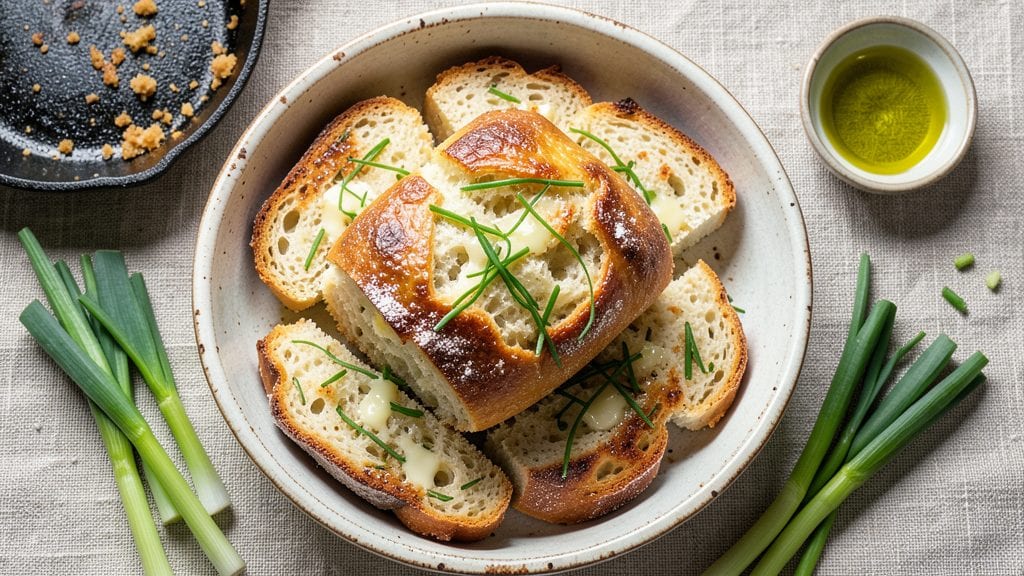
This scallion bread recipe transforms simple dough into a fragrant, golden loaf with layers of savory onion-garlic crust and herby butter swirls—perfect for elevating any meal. The secret lies in a precise blend of scallions, garlic, and butter folded into the dough, creating bursts of flavor in every bite.
I've perfected this technique over years of baking, ensuring the crust stays crisp while the interior remains tender and aromatic.
The process begins with a straightforward dough recipe that requires just five ingredients, including active dry yeast and all-purpose flour. After kneading and the first rise, you'll fold in the scallion-garlic butter mixture, which is key to achieving that signature flavor.
This recipe delivers professional results without requiring advanced skills—ideal for both beginners and experienced bakers.
By the time it emerges from the oven, your scallion bread will have a golden, crackly crust with visible swirls of herby butter peeking through. The aroma alone will draw everyone to the table, and the first bite reveals layers of savory, garlicky goodness.
Serve it warm alongside soups, stews, or as a standalone appetizer—it's a crowd-pleaser every time.
For added texture, sprinkle sesame seeds or chili flakes on top before baking, or experiment with a sourdough starter for a tangier twist. The versatility of this recipe makes it a staple for any kitchen. Let's get started on making your scallion bread from scratch!
Ingredients for scallion bread
Five core ingredients plus a fragrant scallion-garlic butter blend for professional results.
| Ingredient | Amount | Notes |
|---|---|---|
| All-Purpose Flour 🌾 | 4 cups | Sifted for even texture |
| Active Dry Yeast 🍞 | 0.01 oz | 1 packet (2.25g) |
| Granulated Sugar 🍚 | 0.03 cup | For yeast activation |
| Unsalted Butter 🧈 | ½ cup | Cold, cubed for butter swirls |
| Large Eggs 🥚 | 1 whole | Room temperature |
| Milk 🥛 | ¼ cup | Warm, 110°F for yeast |
| Salt 🧂 | 1 tsp | Kosher or sea salt |
| Scallions 🧅 | ¾ cup | Thinly sliced, white/green parts |
| Garlic Cloves 🧄 | 4 cloves | Minced for butter mixture |
| Fresh Parsley 🌿 | ¼ cup | Chopped, for butter mixture |
| Sesame Seeds 🌰 | 1 tbsp | Optional for topping |
| Flaky Sea Salt 🧂 | 1 tsp | For finishing crust |
The flour is your foundation—King Arthur or Gold Medal brands yield the best texture. Yeast quality matters: Saf-Instant or Red Star are reliable, but check the expiration date. For the scallions, farmers market bunches have more flavor than grocery store pre-sliced packs. The butter should be cold when cubed—Plugrá or Land O'Lakes unsalted work perfectly. If you can't find fresh parsley, dried Italian seasoning at half the amount works in a pinch, though fresh is ideal.
No sesame seeds? Poppy seeds or everything bagel seasoning add a similar crunch. Substituting milk? Warm water plus a pinch of sugar mimics its effect on yeast. For the garlic, roasted garlic paste can replace minced if you prefer milder flavor. The butter mixture can be prepped a day ahead and stored in the fridge—just let it soften slightly before folding into the dough. If you're short on time, pre-shredded Parmesan in the butter swirl adds another layer of flavor.
The dough rises best in a warm spot (75-80°F)—place it near the oven with a bowl of hot water for consistent heat. After shaping, let the loaf rest 20-30 minutes before baking to prevent collapsing. For storage, wrap cooled bread in a clean kitchen towel and keep at room temperature for 2 days. Reheat slices in a 350°F oven for 5 minutes to restore crispness. Freeze shaped loaves (unbaked) for up to 3 months—thaw overnight in the fridge before baking.
Why You'll Love This Recipe
- No-Knead Magic: I swear by this dough—just mix, let it rise, and shape. No stand mixer, no arm workout, just 10 minutes of hands-on time before you walk away. That butter-in-the-dough trick? It makes every bite buttery without tasting like you tried too hard.
- Scallion Obsession: The moment you pull it from the oven, the aroma hits you like a warm hug. Those crispy scallions caramelize into something sweet and savory, while the soft interior soaks up just enough butter to feel luxurious. (Yes, I eat it straight from the pan.)
- Breakfast to Brunch: This bread is my lazy weekend hero—toss it in a basket for Sunday morning toast, slice it for a charcuterie board, or freeze half for when you’re too tired to bake. The yeast keeps it fresh for days, and the egg wash gives it that golden, bakery-worthy shine every time.
- Budget-Friendly Staple: Flour, yeast, butter—these are ingredients I already have. No specialty items, no markup, just pure, reliable comfort food that stretches across meals. Honestly, I’ve made this for $2 a loaf and still felt like I fed the whole family a treat.
Step-by-step instructions for scallion bread recipe
Here's the method—simple yet precise—for crafting golden, aromatic scallion bread with herby butter swirls.
Activate the Yeast for Maximum Rise
In a small bowl, combine the 0.25 cup warm milk (about 110°F) and 0.025 cup granulated sugar. Sprinkle the 0.014 oz active dry yeast over the mixture and let it sit for 5-10 minutes until it becomes frothy. This step ensures your dough will rise properly—if it doesn't foam, your yeast may be inactive.
In a separate large bowl, whisk together the 4 cups all-purpose flour, 1 tsp salt, and the activated yeast mixture. Stir until a shaggy dough forms. This initial combination creates the foundation for your bread's structure, so don't rush it. The dough should be slightly sticky but manageable.
Knead and Develop Gluten for Perfect Texture
Turn the dough onto a lightly floured surface and knead for 8-10 minutes by hand, or use a stand mixer with a dough hook for 5-6 minutes on medium speed. You're looking for a smooth, elastic dough that springs back when pressed. This kneading step builds gluten, which gives your bread its chewy texture and helps trap those flavorful scallion and garlic notes.
After kneading, place the dough in a lightly oiled bowl, cover with a damp towel, and let it rise in a warm place for 1 hour or until doubled in size. The dough should feel light and airy when pressed gently. This first rise develops the bread's structure and allows the yeast to work its magic before shaping.
Prepare the Scallion-Garlic Butter Swirl
While the dough rises, prepare the herby butter swirl. In a small bowl, combine the 0.5 cup unsalted butter (cold, cubed), 4 cloves minced garlic, 0.25 cup chopped fresh parsley, and 0.75 cup thinly sliced scallions. Mix with a fork until just combined—you want the butter to remain slightly chunky for maximum flavor distribution. This mixture will create those beautiful, flavor-packed swirls throughout the bread.
Chill the butter mixture for 20 minutes to firm up slightly. Cold butter creates clean, defined swirls that won't melt prematurely during baking. This step is crucial for achieving those professional-looking, herby layers in your finished loaf.
Shape and Swirl the Dough
Once the dough has risen, punch it down to release air, then divide it into 4 equal pieces (about 8 ounces each). Roll each piece into a 12-inch log and place them side by side on a parchment-lined baking sheet. Cover loosely with a towel and let them rest for 15 minutes—this prevents the dough from shrinking when you add the butter.
Uncover the dough and press a 1-inch deep well down the center of each log. Spread ¼ of the herby butter mixture down each well, then fold the sides over to create a sealed swirl. Gently press the seams to seal and shape the loaves. The butter should be visible through the dough—this ensures maximum flavor infusion during baking.
Bake to Golden Perfection
Preheat your oven to 375°F. Bake the loaves for 25-30 minutes until they're golden brown and sound hollow when tapped on the bottom. The internal temperature should reach 190°F—this guarantees a fully baked, tender crumb. For extra crispiness, brush the tops with a little water before baking and sprinkle with 1 tbsp sesame seeds and 1 tsp flaky sea salt right after removing from the oven.
Let the bread cool on a wire rack for 10 minutes before slicing. This resting period allows the steam to escape, preventing a gummy interior. The finished loaf should have a crisp crust with those beautiful herby butter swirls visible throughout. Serve warm with your favorite soup or spread with additional herbed butter for dipping.
Pro Tips For Making Scallion Bread
- Use Room-Temp Butter: Cold butter creates pockets of steam that make your scallion bread dense instead of light. Let that block sit out for 30–45 minutes until it’s soft enough to press through a fork—no melting required. (Yes, even if you’re impatient like me.)
- Knead Until Silky: The dough should stretch like window glass, not tear like wet paper. After 8–10 minutes of kneading, do the "windowpane test": pull a small piece and hold it up to the light—if you see through it, you’re golden. Over-kneading? The bread turns tough. Under-kneaded? It collapses.
- Proof in a Warm Spot: Skip the oven light trick—it’s unreliable. Instead, place the dough in a bowl over a pot of barely simmering water (cover the bowl loosely). The steam keeps it at a steady 80°F (27°C) and doubles its size in 1–1.5 hours. No thermometer? Press a finger into the dough—if it springs back slowly, it’s ready.
- Score Before Baking: Use a sharp razor or lame (not a dull knife) to cut a ½-inch-deep cross on top before baking. This lets steam escape, preventing a blowout while keeping the crust crisp. Angle the blade slightly—straight cuts make the bread look like it’s been hit by a meteor.
Essential equipment for great scallion bread
Dough Prep Tools
Start with a stand mixer like the KitchenAid Artisan Series for consistent kneading—its dough hook attachment makes this step effortless. For hand-kneaders, a wooden dough scraper (I love the OXO Good Grips model) helps prevent sticking during shaping.
A digital kitchen scale ensures precise dough division into 8-ounce portions for even baking. 🥖
Butter Swirl Essentials
The herby butter swirl requires a microplane for garlic and a sharp chef's knife to thinly slice scallions. I recommend Plugrá unsalted butter for its high fat content, which creates cleaner swirls.
A small offset spatula helps spread the mixture evenly down the dough wells without tearing. Keep everything chilled to maintain butter firmness during folding.
Baking Must-Haves
A baking stone or steel (like the Lodge Cast Iron) conducts heat evenly for that perfect crisp crust. I preheat mine for 30 minutes before baking. For shaping, a bench scraper (again, OXO Good Grips) creates clean edges when dividing dough.
A parchment-lined baking sheet prevents sticking and makes transferring loaves easier. 🔥
Finishing Touches
For that restaurant-quality finish, keep sesame seeds and flaky sea salt (like Maldon) on hand. A fine-mist spray bottle helps create steam for extra crispiness.
I also keep a wire cooling rack nearby—it prevents soggy bottoms by allowing air circulation. A thermometer ensures the internal temp hits 190°F for perfect doneness.
Budget Alternatives
No stand mixer? A wooden rolling pin and strong arms work fine for kneading. Skip the baking stone and use a heavy cast iron skillet on the oven rack for similar results. For scaling, measuring cups work in a pinch (though a scale is more accurate).
A pizza peel can double as a dough transfer tool if you don't have parchment. Every home kitchen can adapt with these swaps! 💡
Nutrition facts
Frequently asked questions
Why does my scallion bread taste bland?
The flavor comes from the scallion-garlic butter swirl and proper yeast activation. Double-check that your yeast is fresh—if it doesn't foam in warm milk, replace it. Also, ensure the butter mixture is well-distributed throughout the dough before baking. Taste your butter blend before folding it in; if it lacks punch, add an extra minced garlic clove or 1 teaspoon of fish sauce for depth.
Can I make scallion bread without kneading?
Yes, but the texture won't be as chewy! For a no-knead version, mix the dough ingredients, cover, and let it rise for 2 hours until doubled. Then proceed with shaping and baking. The gluten won't develop as much, so the bread will be softer but still flavorful. For best results, use a stand mixer for 5 minutes on low speed if you want that classic texture.
How do I prevent my scallion bread from collapsing during baking?
Collapsing happens when the dough isn't rested properly before baking. After shaping the swirls, let the loaves rest 20-30 minutes uncovered at room temperature. This allows the gluten to relax and the structure to set. Also, avoid overhandling the dough when shaping, and ensure your oven is preheated to the correct 375°F before baking.
Can I substitute fresh scallions with dried?
Fresh scallions are ideal, but if you must use dried, reduce the amount to 1 tablespoon for every 0.75 cup of fresh. Dried scallions lose potency, so boost flavor by adding an extra minced garlic clove or ½ teaspoon of onion powder to the butter mixture. Rehydrate dried scallions in warm water for 10 minutes before slicing for better texture.
What’s the best way to reheat scallion bread?
Slice the bread and reheat in a 350°F oven for 5-7 minutes until crisp again. For a quick fix, wrap slices in foil and place them on a baking sheet in the oven. Avoid microwaving, as it makes the bread soggy. For extra flavor, brush the warm slices with melted herbed butter before serving.