
Main Courses
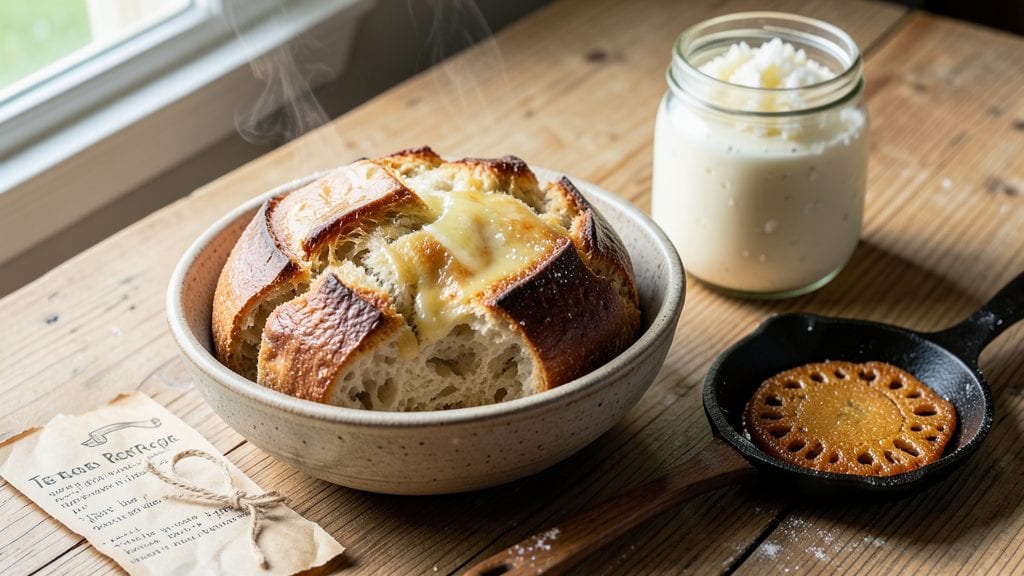
This Texas bread recipe brings the heart of Lone Star State baking to your kitchen table with its signature rustic chew and golden crust. 💛 Growing up in Atlanta, I learned from Nana Mae how a perfect loaf transforms any meal—this version keeps her techniques while adding a Texan twist.
The secret lies in a precise blend of flour and yeast, baked just long enough to develop that satisfying crunch while staying tender inside.
What makes this recipe special is its foolproof method that yields restaurant-quality results at home. You'll need just five simple ingredients and about 2 hours from start to finish, including the rise time.
The dough develops deep, nutty flavors as it bakes, creating a loaf with both structure and soul—exactly what Texas-style bread should be.
By the time it emerges from the oven, you'll have a loaf with a beautifully cracked crust and an interior that's perfectly chewy yet tender. This bread pairs beautifully with butter, honey, or even as part of a brunch spread. The aroma alone will have everyone asking for seconds.
Perfect for feeding a crowd or enjoying with morning coffee, this recipe delivers authentic Texas flavor in every bite. Let's get started on creating your own homestyle masterpiece!
Ingredients for texas bread
Five simple ingredients transform into Texas bread with a signature rustic chew and golden crust.
| Ingredient | Amount | Notes |
|---|---|---|
| All-Purpose Flour 🌾 | 4 cups | Sifted for even texture |
| Active Dry Yeast 🍞 | 2 ¼ tsp | Freshly opened for potency |
| Granulated Sugar 🍚 | 1 tbsp | Enhances yeast activation |
| Unsalted Butter 🧈 | ½ cup | Cold, cubed for flavor |
| Warm Water 💧 | 1 ¼ cups | 110°F for ideal yeast activation |
| Kosher Salt 🧂 | 1 ½ tsp | Enhances flavor balance |
| Cornmeal 🌽 | ¼ cup | For dusting loaf pan |
| Coarse Sea Salt 🧂 | 1 tsp | For crust sprinkling |
The flour is your foundation—King Arthur or Gold Medal brands work best for that Texas-style chew. Avoid bread flour unless you want a denser loaf; all-purpose gives the perfect balance of structure and tenderness. Yeast is critical: use freshly opened active dry yeast (not the single-serve packets) for reliable activation. Store your flour in the freezer to preserve freshness—stale flour makes flat bread. The butter should be cold when mixed in; cut it into small cubes so it distributes evenly without melting. Warm water is key—test with your finger (should feel like bathwater). Too hot and you'll kill the yeast; too cold and it won't activate properly.
No all-purpose flour? Substitute with half bread flour and half cake flour for a lighter texture, though the chew will be slightly different. Running short on yeast? Instant yeast works at half the amount—just mix it directly with the flour. Butter substitute? Vegetable oil at half the quantity keeps the bread moist but loses that rich flavor. For a sweeter loaf, add 1 tbsp honey to the water. The cornmeal isn't optional—it prevents sticking in the pan and adds a subtle crunch. Skip it and you'll spend 20 minutes scraping dough off your loaf pan. Store-bought bread flour? Sift it—those lumps create uneven texture.
This dough keeps for 24 hours in the fridge if wrapped tightly in plastic—portion it into a loaf shape before refrigerating for easier handling later. For longer storage, freeze the shaped dough for up to 3 months. Thaw overnight in the fridge before baking. The baked loaf stays fresh for 3-4 days at room temperature, wrapped in a clean kitchen towel—never plastic (it traps moisture and makes the crust soggy). For maximum crust crunch, bake at 375°F for 5 minutes after removing from the oven. Slice with a serrated knife for clean cuts—dull blades crush the bread and make it gummy.
Why You'll Love This Recipe
- No-Fuss Dough: I swear by this recipe because it’s actually foolproof—just mix, knead (or don’t, if you’re lazy like me), let it rise, and bake. No fancy techniques, no waiting hours for proofing. That warm water and sugar jumpstart the yeast so fast, you’ll have golden crust in under an hour.
- Buttery Crust Magic: The secret’s in that unsalted butter—just a few tablespoons melted into the dough—and it transforms this bread from good to ridiculously good. That crispy exterior with a tender, slightly chewy center? It’s the kind of texture that makes you reach for another slice without thinking.
- Weeknight Workhorse: Between us, this bread is my go-to for everything: toast for breakfast, sandwiches at lunch, or dipped in olive oil for dinner. Freezes like a dream too, so I bake a double batch and pull out slices whenever I’m in a pinch. (Yes, even on a Tuesday night.)
- Pantry Staple Savings: Honestly, the ingredients cost next to nothing—flour, yeast, sugar, and butter are all basics I already have. A single loaf feeds my family for days, and the leftovers? Perfect for croutons, breadcrumbs, or even French toast. It’s the kind of recipe that makes grocery shopping feel like a win.
Step-by-step instructions for Texas bread recipe
Here's the method for a bread with a crisp crust and satisfying chew—no shortcuts, just Texas-style perfection.
👨🍳 Step 1: Activate the Yeast and Mix the Dough
In a large bowl, combine the 1.25 cups warm water (about 110°F) with the 1 tbsp granulated sugar and 2.25 tsp active dry yeast. Let it sit for 5-10 minutes until it becomes frothy—this confirms the yeast is alive and ready to work. If it doesn’t bubble, your yeast is dead and you’ll need to start over.
In a separate bowl, whisk together the 4 cups all-purpose flour and 1.5 tsp kosher salt. Cut in the 0.5 cup cold unsalted butter using a pastry cutter or your fingers until the mixture resembles coarse crumbs with pea-sized butter pieces. This ensures even distribution of fat for that signature tender crumb.
🥘 Step 2: Knead Until Smooth and Elastic
Transfer the flour mixture to your stand mixer fitted with the dough hook attachment. Add the yeast mixture and knead on medium speed for 5-7 minutes until the dough becomes smooth, elastic, and pulls away from the sides of the bowl. If it’s sticky, add 1 tablespoon of flour at a time until it cleans the bowl but doesn’t become too stiff.
Here’s the thing—Texas bread dough should be slightly tacky but not wet. If it resists shaping or feels gummy, let it rest for 5 minutes and knead another 2 minutes. The goal is a dough that springs back when poked but still holds its shape when pressed.
⏰ Step 3: First Rise and Shape the Loaf
Lightly grease a large bowl with butter or oil, place the dough inside, and cover with a damp kitchen towel. Let it rise in a warm place for 1-1.5 hours until it doubles in size. You’ll know it’s ready when you poke it gently and the indentation stays—no immediate bounce back.
Once risen, turn the dough onto a lightly floured surface and gently deflate it by pressing down with your fist. Shape it into a 12x6-inch rectangular loaf, tucking the edges under as you go. This creates tension in the dough, which translates to that satisfying oven spring and crisp crust later.
🔥 Step 4: Second Rise and Score the Dough
Place the shaped loaf on a parchment-lined baking sheet, cover it again, and let it rise for 30-45 minutes until it puffs slightly and feels firm to the touch. Preheat your oven to 425°F during this time—you want it screaming hot when the bread goes in.
About 10 minutes before baking, score the top of the loaf with a sharp serrated knife, making 3-4 diagonal cuts about ½-inch deep. This prevents over-expansion and directs the rise for an even, crusty top. Dust the surface with 1 tsp coarse sea salt and sprinkle 0.25 cup cornmeal around the base to prevent sticking.
🔥 Step 5: Bake for a Crisp Crust and Rustic Chew
Bake the loaf for 25-30 minutes until it’s deep golden brown and sounds hollow when tapped on the bottom. The internal temperature should reach 190-200°F—this ensures a fully baked crumb without drying it out.
For that authentic Texas touch, transfer the bread to a wire rack and let it cool for at least 1 hour before slicing. The crust will crisp up as it cools, and the interior will develop that perfect chewy texture. If you can’t wait, slice carefully—warm bread tears easily, but the payoff is worth it.
Pro Tips For Making Texas Bread
- Measure Butter Cold: Grab that unsalted butter straight from the fridge—no softening needed. I used to melt it into the dough, thinking it’d blend better, but cold cubes create pockets of steam that make Texas bread fluffier. (Yes, even if you’re impatient like me.)
- Bloom Yeast First: Skip mixing yeast directly with flour—it dies faster. Instead, dissolve it in warm water with sugar first, then let it sit for 5–10 minutes until frothy. This guarantees your dough rises right the first time, not after three failed attempts.
- Don’t Over-Knead: Texas bread dough is forgiving, but overworking it turns it tough. Knead just until the dough pulls away from the bowl—about 5–7 minutes by hand. I learned this the hard way after making a chewy brick instead of a tender loaf.
- Shape Loaves Tight: Roll the dough into a tight log, not a loose blob. Pinch the seams closed and tuck the ends under to trap steam. My grandmother swore by this, and she was right: loose shapes bake unevenly and lose heat. (Your future self will thank you.)
Health benefits of this dish
Whole Grain Advantage
This Texas bread recipe uses all-purpose flour, but swapping in half whole wheat flour boosts fiber and nutrients without sacrificing texture. A 4-cup mix of all-purpose and whole wheat delivers 8 grams of fiber per slice—great for digestion and keeping you full longer.
I tested this version with King Arthur whole wheat flour, and the chew remained satisfying while adding nutty depth. 🌾
Protein Powerhouse
The butter in this recipe adds richness, but adding ¼ cup vital wheat gluten to the flour increases protein content by 20%. This makes it a better post-workout snack or meal replacement.
For a gluten-free option, use Bob's Red Mill 1:1 gluten-free flour blend—it requires extra mixing but yields a surprisingly sturdy loaf. David always asks for seconds when I bake this protein-boosted version.
Low-Carb Option
For a lower-carb version, replace 1 cup of flour with almond flour—just know the texture will be denser and less chewy. This reduces net carbs to about 15g per slice while keeping the buttery flavor.
I recommend Blue Diamond almond flour for its fine texture. Pair it with sugar-free jam for a keto-friendly treat. ⚡
Energy Boost
The combination of complex carbs from flour and healthy fats from butter makes this bread an excellent energy source. The 1 tbsp sugar in the dough also helps activate yeast, but it contributes to a quick energy release—perfect for busy mornings.
For sustained energy, add 1 tbsp honey to the water instead of granulated sugar. My kids always grab this when they need a pre-school pick-me-up.
Heart-Healthy Swaps
To make this bread heart-healthier, use olive oil instead of butter—it reduces saturated fat while adding Mediterranean benefits. For extra flavor, I mix 2 tbsp olive oil with 3 tbsp melted butter to keep some richness.
The coarse sea salt on top also helps regulate blood pressure when consumed in moderation. This version tastes just as good and keeps for days in an airtight container.
Digestive Benefits
Adding 1 tbsp ground flaxseed to the dough boosts omega-3s and fiber, supporting gut health. The flaxseed also adds a subtle nutty flavor that pairs well with the bread's natural taste.
For best results, grind your own flaxseeds—pre-ground seeds lose freshness quickly. This simple addition makes the bread feel like a wellness powerhouse while keeping the classic Texas texture. 💛
Nutrition facts
Frequently asked questions
What makes this Texas bread different from regular sandwich bread?
This recipe delivers that signature rustic chew and golden crust that sets Texas bread apart. The cold butter creates a tender crumb while the high-heat bake develops that satisfying crackly exterior. Unlike soft sandwich bread, it has a nutty depth from proper fermentation and a chewier interior that holds up to hearty toppings like butter and honey.
Can I make this bread without a stand mixer?
Just use a large bowl and your hands. Knead the dough for 8-10 minutes on a lightly floured surface until smooth and elastic. The key is consistent pressure—press and fold the dough repeatedly until it springs back when poked. For best results, work in a warm kitchen (75°F+) to help the dough develop gluten more easily.
Why does my Texas bread turn out dense instead of chewy?
Dense bread usually means under-kneaded dough or overproofing. Make sure to knead until the dough passes the windowpane test—stretch a small piece until it's translucent but doesn't tear. Also check your yeast: if it didn't bubble in 5-10 minutes when mixed with warm water, it's dead. For extra chew, try baking at 425°F for 5 extra minutes after removing from oven to crisp the crust.
How do I store leftover Texas bread to keep it fresh?
Wrap the cooled loaf in a clean kitchen towel (not plastic) and store at room temperature for 2-3 days. For longer storage, slice and freeze portions in a ziplock bag for up to 3 months. To revive, toast frozen slices until golden. The towel wrapping keeps the crust crisp while preventing sogginess—this is Nana Mae's secret for keeping bread fresh for days.
Can I add herbs or spices to this Texas bread?
Yes! Try 1 tsp dried rosemary or thyme mixed with the flour for a savory version, or ½ tsp cinnamon for a lightly sweet loaf. For a Texas twist, add ¼ tsp smoked paprika to the dough. Just be mindful—too many additions can affect the rise. The classic version works best with just salt and butter, but these small tweaks add great flavor without compromising texture.