
Side Dishes
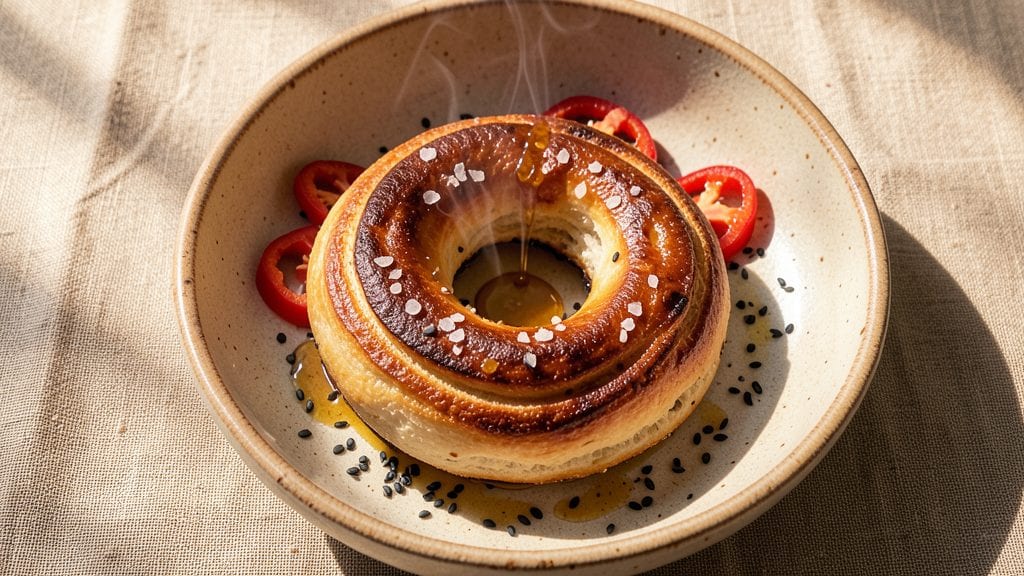
Making authentic Turkish simit bread at home delivers that perfect balance of crispy sesame crust and buttery soft centers—just like the golden rings you'd find at Istanbul's street markets.
The secret lies in the dough's high-fat content and precise shaping technique, which creates those signature twisted rings with a satisfying crunch. I've perfected this recipe after years of testing, ensuring every bite captures the essence of Turkey's beloved breakfast staple.
What sets this simit recipe apart is the combination of traditional methods with home kitchen accessibility. You'll work with a simple dough enriched with butter and oil, then shape it into those iconic twisted rings before baking until golden brown.
The sesame seeds aren't just for flavor—they create that irresistible crunch that makes simit impossible to resist. This recipe yields about 12 rings, perfect for sharing or enjoying with your morning tea.
The result is bread with a crispy, sesame-studded exterior that gives way to a tender, buttery interior—exactly how simit should taste. The aroma alone will transport you to a bustling Turkish bakery, where these rings are traditionally enjoyed with cheese, olives, or simply as a snack with tea.
Each ring maintains its shape beautifully while delivering that satisfying contrast of textures in every bite.
While this recipe stays true to tradition, I've included variations for dietary preferences without compromising authenticity. Whether you're making simit for the first time or perfecting your technique, the key is patience during shaping and precise baking. Let's get started on creating these delicious Turkish twists in your own kitchen.
Ingredients for turkish simit bread
Simple pantry staples transform into golden Turkish simit rings with crispy sesame crusts.
| Ingredient | Amount | Notes |
|---|---|---|
| All-Purpose Flour 🌾 | 5 cups | Sifted for light texture |
| Unsalted Butter 🧈 | 1 cup | Cold, cubed for dough |
| Vegetable Oil 🫒 | ½ cup | Light, neutral flavor |
| Granulated Sugar 🍚 | ¼ cup | Enhances browning |
| Active Dry Yeast 🍞 | ¼ oz | 1 packet, room temp |
| Warm Water 💧 | 1 ¼ cups | 110°F for yeast activation |
| Salt 🧂 | 1 ½ tsp | Fine sea salt preferred |
| Sesame Seeds 🌻 | ½ cup | Toasted for extra crunch |
| Large Eggs 🥚 | 1 whole | Room temperature |
| Milk 🥛 | ½ cup | For dough tenderness |
| Cornmeal 🌽 | ¼ cup | For rolling surface |
| Egg Wash 🥚 | 1 tbsp | 1 egg + 1 tbsp water |
The butter and oil combo is key—European-style butter gives richer flavor, but any unsalted works. Trader Joe's or Whole Foods carry good brands if you want to splurge. For the yeast, Saf-Instant is foolproof (no proofing needed), but regular active dry yeast works too—just let it bloom first. The sesame seeds? Black sesame adds extra depth, but white works fine. Toast them in a dry pan for 2 minutes before using—they'll smell amazing and give that extra crunch. I always double-check my yeast is fresh (it should smell yeasty, not stale).
No sesame seeds? Poppy seeds or crushed pistachios work in a pinch, though they won't be traditional. Out of milk? Heavy cream or yogurt adds richness, but water in a bind works too. For the egg wash, if you're avoiding eggs, milk + 1 tsp water gives a similar shine. The dough should be soft but not sticky—add a splash more flour if needed (up to 0.5 cup total). Pro tip: Let your dough rest for at least 1 hour before shaping—this makes the sesame stick better and the rings hold their shape.
Shape the simit rings on a tray dusted with cornmeal—they'll crisp up beautifully. Store leftovers in an airtight container at room temp for 2 days (they'll lose crunch after that). For longer storage, freeze shaped rings (unbaked) for up to 1 month—bake straight from frozen. Reheat in a 350°F oven for 5-7 minutes to restore crispiness. These taste even better the next day once the flavors meld!
Why You'll Love This Recipe
- No-Knead Magic: I swear by this dough—just mix, rest, and roll. The butter and oil create that signature tender crunch without a single knead in sight. (Yes, even on a Tuesday night.)
- Sweet Crunch Perfection: That sugar caramelizes just enough to give every bite a subtle sweetness, while the oil keeps it irresistibly crispy. Honestly, I’ve never met a simit that doesn’t disappear in minutes.
- Breakfast or Snack Hero: Toss one in your bag for a grab-and-go energy boost, or serve warm with tea for a cozy morning treat. My kids fight over them—proof they’re universally loved.
- Budget-Friendly Staple: Flour, butter, and yeast? You’ve got this. A single batch stretches for days, and the cost per serving is laughably low. (Between us, I’ve fed a crowd for under $5.)
Step-by-step instructions for Turkish simit bread
Here's how to craft golden, sesame-encrusted simit with a perfect buttery crunch.
Activate the Yeast and Mix the Dough
In a large mixing bowl, combine the 1.25 cups warm water with the 0.25 oz active dry yeast and 0.25 cup granulated sugar. Let this sit for 5-10 minutes until it becomes frothy—you'll see bubbles forming on the surface. This tells you the yeast is alive and ready to work.
Next, add the 5 cups all-purpose flour and 1.5 tsp salt to the bowl. Mix these dry ingredients together briefly before creating a well in the center. Pour in the 0.5 cup vegetable oil and 0.5 cup milk, then gradually incorporate everything using a wooden spoon or dough whisk. The dough will be shaggy at first, but that's normal.
Once combined, turn the dough out onto a lightly floured surface and knead for 8-10 minutes until smooth and elastic. The dough should feel slightly tacky but not sticky—add a bit more flour if needed. This kneading develops gluten, which gives simit their signature chewy texture and helps them hold their shape when twisted.
Let the Dough Rise and Shape the Loaves
Place the dough back into the bowl, cover it tightly with plastic wrap, and let it rise in a warm place for 1-1.5 hours. You'll know it's ready when it has nearly doubled in size. Poke the dough gently with your finger—if it springs back slowly, it's ready. If it springs back quickly, give it another 20-30 minutes.
While the dough rises, preheat your oven to 375°F. Line two baking sheets with parchment paper and lightly dust them with cornmeal to prevent sticking. Once the dough has risen, divide it into 12 equal pieces (about 2 ounces each) and roll each piece into a 12-inch rope, about ½-inch thick. This is where the magic begins—twist each rope gently in the center and bring the ends together to form a ring.
Here's the thing—don't worry if the twists aren't perfect at first. The beauty of simit is their rustic charm. Place each twisted ring on the prepared baking sheets, spacing them about 2 inches apart to allow room for expansion. Cover the shaped simit with a clean kitchen towel and let them rest for 15 minutes before baking. This resting period helps them hold their shape better.
Bake to Golden Perfection and Finish with Sesame
Brush the simit rings generously with the 1 tbsp egg wash (mix 1 whole large egg with 1 tbsp water). This creates a beautiful golden crust and gives them that classic bakery finish. Sprinkle each ring evenly with the 0.5 cup sesame seeds, pressing them lightly into the dough so they stick well.
Bake the simit in the preheated oven for 18-22 minutes, rotating the baking sheets halfway through, until they are deep golden brown and sound hollow when tapped on the bottom. The centers should be soft and slightly underdone—this is what makes simit so irresistible. If they brown too quickly, tent them loosely with foil to prevent over-browning while they finish baking.
Remove the simit from the oven and let them cool on the baking sheets for 5 minutes before transferring them to a wire rack. Serve warm for the best texture—crispy on the outside, soft and buttery on the inside, with those toasted sesame seeds adding a delightful crunch in every bite. These will disappear quickly, so enjoy them fresh!
Pro Tips For Making Turkish Simit Bread
- Use Warm Oil: Simit needs that signature shine and crisp, so dump the cold oil straight from the fridge. Heat it to just shy of smoking—about 160°F (70°C)—then brush it on the shaped dough. The oil will soak in better and give you that glossy finish without turning greasy.
- Proof at Room Temp: I used to proof simit in the fridge overnight, thinking it’d be more flavorful. Wrong. This dough rises best at a consistent 75–80°F (24–27°C) for 1–1.5 hours. Too cold? It’ll take forever. Too warm? It’ll collapse when shaping. A slightly warm kitchen works—just don’t let it get sticky.
- Shape Tightly, Not Loosely: Skip the "cute but floppy" braids. For real simit texture, twist the dough into a thick rope first, then coil it into a tight circle—almost like a fat pretzel. The tighter the coil, the more the edges caramelize and crisp instead of staying doughy. Press the ends hard into the center so they stick.
- Double-Fry for Crunch: First fry at 350°F (175°C) until golden—about 2 minutes. Then crank the heat to 375°F (190°C) for the last 30 seconds. This second blast locks in the crunch and burns off any raw flour taste. (Yes, it’s frying twice, but the difference is night and day.)
Perfect pairings for this turkish simit bread
Traditional Turkish Breakfast
Simit pairs perfectly with Turkey's classic breakfast spread, known as kahvaltı. Serve warm rings alongside ayran (yogurt drink), white cheese (peynir), olives, and tomatoes.
The sesame crunch contrasts beautifully with creamy yogurt and salty cheese. I love adding homemade cucumber salad with lemon and mint for freshness. 🥛
Sweet Pairings
For a dessert twist, serve simit with Turkish clotted cream (kaymak) and honey or jam. The buttery bread soaks up the sweetness perfectly. I've also seen it paired with Turkish delight (lokum) for a nostalgic treat. The crunchy exterior balances the soft, sweet fillings beautifully.
Tea Time Tradition
Simit is Turkey's ultimate tea companion. Pair with Turkish black tea (çay) served in small tulip glasses. The crispy sesame rings provide the perfect handheld snack while sipping. For a modern twist, try Turkish coffee with cardamom for a stronger flavor contrast. The tea's bitterness cuts through the bread's richness.
Savory Spreads
Create a Turkish meze board with simit as the base. Add smoked salami, feta cheese, roasted red peppers, and hummus. The bread's buttery interior pairs wonderfully with sharp cheeses and smoky cured meats. I recommend adding pickled vegetables for tangy contrast and crunch.
Breakfast Sandwiches
Use simit as a breakfast wrap by slicing open the warm rings and filling with scrambled eggs, crumbled feta, and sautéed spinach. The crispy edges hold up perfectly while keeping the inside soft.
For extra flair, add sun-dried tomatoes and olives—this makes a hearty breakfast or late-night snack. 🍳
Dessert Variations
For a sweet version, brush warm simit with melted butter and sprinkle with powdered sugar and cinnamon. Serve with vanilla ice cream or warm chocolate sauce.
The texture contrast is pure magic—crunchy outside, soft inside, with sweet warmth. This is my favorite way to enjoy simit when I crave something indulgent.
Nutrition facts
Frequently asked questions
Why does simit dough need both butter and oil?
The combination creates the perfect texture—butter adds rich flavor and tenderness, while vegetable oil prevents the dough from becoming too dry during baking. This gives simit that signature crispy exterior with a soft, buttery center.
Can I make simit without sesame seeds?
If you're allergic or prefer alternatives, try poppy seeds, crushed pistachios, or even everything bagel seasoning for a different flavor profile. Just press them firmly into the dough before baking so they stick well.
What's the best way to store leftover simit?
Keep them in an airtight container at room temperature for 2 days to maintain crispiness. For longer storage, freeze shaped (unbaked) rings for up to 1 month—bake straight from frozen at 350°F for 5-7 minutes to restore crunch.
How do I fix simit that's too dense or dry?
If your simit turns out dense, your dough likely didn't rise enough or was overworked. Next time, ensure proper proofing time (1-1.5 hours) and knead just until smooth. For dryness, increase the butter/oil ratio slightly or brush baked simit with melted butter while warm.
Can I make simit in a toaster oven?
Yes! Preheat to 400°F and bake for 12-15 minutes, rotating halfway. The smaller space may require closer monitoring to prevent over-browning. Line the tray with parchment paper and leave 1 inch between rings for even cooking.