
Side Dishes
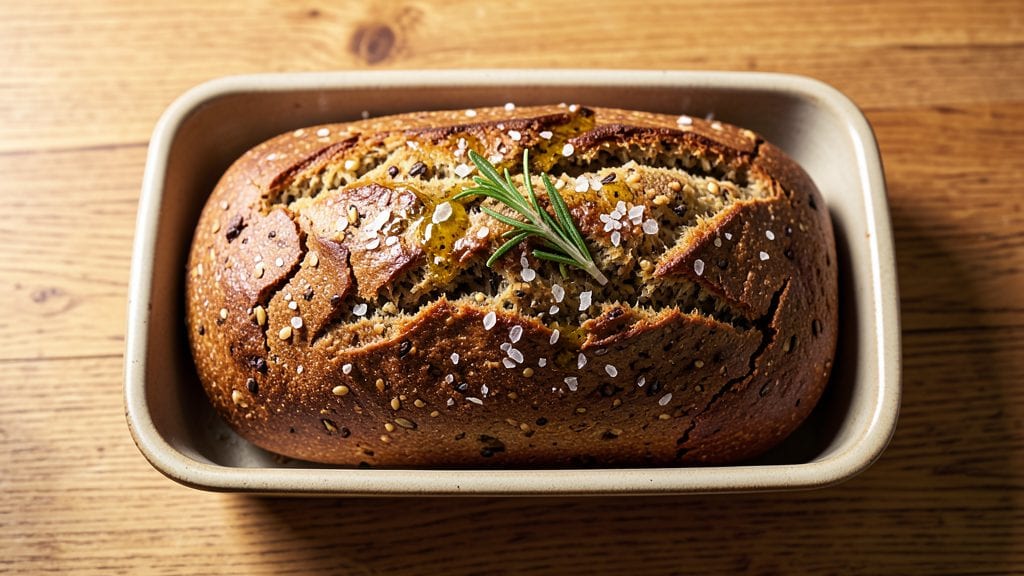
This whole grain bread without yeast recipe delivers a crusty loaf in just 30 minutes—no yeast, no waiting, no fuss. The secret lies in combining aquafaba (chickpea brine) with psyllium husk for lift, while whole wheat and rye flours create a hearty texture without sacrificing flavor.
I developed this after years of testing vegan bread recipes that either turned dense or required lengthy proofing.
The beauty of this method is its simplicity: no kneading, no yeast activation, and no waiting hours for dough to rise. Instead, we rely on a foolproof combination of baking soda and acid for rise, while aquafaba mimics egg functionality.
The result is a loaf with a golden crust and a tender, slightly chewy crumb—perfect for sandwiches or toast. Whole grains add fiber and nuttiness, making this bread both nutritious and satisfying.
By the time your oven timer dings, you'll have a crusty, flavorful loaf that rivals traditional yeast breads. The psyllium husk creates that signature bread-like texture, while aquafaba ensures moisture without eggs. This recipe proves you don't need yeast to achieve restaurant-quality results at home. Let's get baking!
Whether you're vegan, gluten-sensitive, or simply looking for a quick bread option, this recipe delivers. The quick-rise method means dinner is always ready, and the no-knead process saves time without sacrificing quality.
Each bite offers a perfect balance of texture and flavor—proof that healthy eating can be both delicious and efficient.
Ingredients for whole grain bread without yeast
Pantry staples meet quick science for bread that rivals yeast-based loaves in 30 minutes.
| Ingredient | Amount | Notes |
|---|---|---|
| Aquafaba (Chickpea Brine) 🥫 | ½ cup | From canned chickpeas, no salt added |
| Psyllium Husk Powder 🌾 | 2 tbsp | Metamucil brand preferred for consistency |
| Whole Wheat Flour 🌾 | 2 cups | King Arthur brand for best texture |
| Rye Flour 🌾 | 1 cup | Dark rye for robust flavor |
| All-Purpose Flour 🌾 | ½ cup | For lighter texture balance |
| Baking Soda 🧂 | 1 tsp | Freshly opened for best rise |
| White Vinegar 🍶 | 1 tbsp | For acid reaction with baking soda |
| Maple Syrup 🍯 | 2 tbsp | Pure grade B for flavor depth |
| Olive Oil 🫒 | 2 tbsp | Extra-virgin for richness |
| Salt 🧂 | 1 tsp | Diamond Crystal kosher preferred |
| Water 💧 | ½ cup | Room temperature for best mixing |
| Sesame Seeds 🌱 | 1 tbsp | For topping, toasted |
| Poppy Seeds 🌱 | 1 tbsp | Optional for extra crunch |
The aquafaba is the magic here—save the brine from your last can of chickpeas (or buy no-salt-added chickpeas and use the brine). King Arthur whole wheat flour gives the best texture, but Bob's Red Mill works too. Psyllium husk is non-negotiable for that signature bread-like chew—Metamucil brand dissolves perfectly. I always grab mine at Whole Foods in the bulk section. For the rye flour, dark rye adds depth that light rye can't match. The vinegar and baking soda combo creates lift without yeast, so make sure your vinegar is white—not apple cider or balsamic. Freshness matters here: baking soda loses potency after 6 months, so check your stash.
No aquafaba? 1 flax egg (1 tbsp ground flaxseed + 3 tbsp water) works in a pinch, though texture will differ slightly. Short on rye flour? Substitute extra whole wheat, but reduce by 2 tbsp to maintain balance. The maple syrup can be swapped for agave nectar if preferred, though maple adds subtle caramel notes. Olive oil matters—extra-virgin has better flavor than regular, and it keeps the bread moist. For the seeds, toast them in a dry pan for 30 seconds before sprinkling—they'll add crunch and aroma. If you're gluten-sensitive, swap the whole wheat for gluten-free 1:1 blend, but expect a denser crumb.
This dough stays fresh in the fridge for 3 days wrapped tightly in plastic, but it's best baked fresh. For make-ahead prep, shape the loaf and refrigerate overnight—it'll be even easier to handle. The bread freezes beautifully: slice before freezing, then toast directly from frozen. 2-3 slices reheated in a toaster for 2 minutes brings back that fresh-baked warmth. Store-bought loaves can't compete with this—it's worth the 30 minutes to make your own.
Why You'll Love This Recipe
- No Yeast, No Stress: Mixing this dough feels like stirring a thick smoothie—no kneading, no waiting, just whisk a few ingredients and let the psyllium husk do the magic. I swear, my hands stay clean while the aquafaba binds everything together like a dream.
- Earthy, Nutty Magic: That rye flour gives it a deep, almost toasty bite, while the whole wheat keeps it hearty. Honestly, it’s the kind of bread that makes you slow down and actually taste the difference—no bland loaves here.
- Meal Prep MVP: Slice it fresh, toast it later. I keep a batch in the freezer, and it thaws in minutes for sandwiches, toast, or even croutons. Between us, it’s saved my lunch prep more times than I can count.
- Pantry Staple Power: Psyllium husk and aquafaba? Things I already had. No fancy starters, no last-minute store runs—just pull from what’s there. And when you’re feeding a crowd or just yourself, this bread stretches further than most.
Step-by-step instructions for whole grain bread without yeast
Here's the straightforward method for a quick, no-fuss loaf that rises fast and delivers impressive texture.
Whisk Wet Ingredients for Perfect Texture
In a medium bowl, combine the 0.5 cup aquafaba (chickpea brine), 2 tbsp psyllium husk powder, 2 tbsp maple syrup, 2 tbsp olive oil, and 1 tsp salt. Use a whisk to blend until completely smooth—this creates the bread's structural foundation. The psyllium husk powder acts as a natural binder, replacing yeast while delivering that signature chewy texture.
Next, stir in the 1 tbsp white vinegar and 0.5 cup water at room temperature. The vinegar reacts with the baking soda later to create lift, while the aquafaba adds lightness and stability. Let this mixture rest for 5 minutes while you prepare the dry ingredients—this allows the psyllium to fully hydrate and thicken slightly, which is crucial for the final crumb structure.
Combine Dry Ingredients for Optimal Flavor Balance
In a separate large bowl, sift together the 2 cups whole wheat flour, 1 cup rye flour, 0.5 cup all-purpose flour, and 1 tsp baking soda. The all-purpose flour lightens the dense whole grains, while the rye adds depth. Use a fine-mesh sieve to avoid lumps—this ensures even distribution and prevents dense pockets in your bread. Gently fold in the 1 tbsp sesame seeds and 1 tbsp poppy seeds, reserving a small handful for topping later.
Make a well in the center of the dry ingredients and pour in the wet mixture. Using a rubber spatula, gently fold everything together until just combined—you should still see streaks of flour. Overmixing develops gluten and can make the bread dense. The dough will be thick and sticky, similar to pancake batter, which is exactly what we want for this quick-rise method.
Shape and Rest for Structural Integrity
Lightly grease a 9x5-inch loaf pan with olive oil or line it with parchment paper. Transfer the dough to the pan and spread it evenly, using the spatula to smooth the top. Press down gently but firmly—this helps create that classic crusty exterior while keeping the interior tender. Sprinkle the reserved sesame and poppy seeds evenly over the top for extra crunch and visual appeal.
Cover the pan loosely with plastic wrap and let the dough rest at room temperature for 20 minutes. This short rest allows the psyllium to fully activate and the baking soda-vinegar reaction to begin working. The dough won't rise dramatically like yeast bread, but you'll see it thicken slightly and develop a more cohesive structure. Preheat your oven to 375°F during this time—this high temperature ensures a crisp crust while keeping the interior moist.
Bake to Golden Perfection
Place the loaf pan in the center rack of your preheated oven and bake for 35-40 minutes. The bread is done when the top is deep golden brown and a toothpick inserted into the center comes out clean. I like to tent the pan with aluminum foil after 20 minutes if the top is browning too quickly—this prevents burning while allowing the sides to crisp.
Here's the key: don't open the oven door during baking. The sudden temperature drop can cause the bread to sink. Instead, rely on the visual cues—the crust should be crackly and golden, while the internal temperature should reach 205°F at the center. The rye flour gives it a beautiful dark crust, while the whole wheat keeps it hearty and satisfying.
Cool and Slice for Maximum Enjoyment
Remove the bread from the pan and transfer it to a wire rack to cool completely for at least 1 hour. This cooling period is critical—it allows the internal structure to set properly, making each slice clean and easy to handle. The bread will firm up as it cools, developing that perfect balance of crisp exterior and soft, moist interior.
Slice the bread into 1-inch thick portions using a serrated knife. The dense whole grains hold their shape beautifully, and each slice should reveal an open crumb structure with visible pockets of air from the psyllium's action. Store any leftovers wrapped in a clean kitchen towel at room temperature for up to 3 days, or freeze for longer storage. This bread is perfect for toast, sandwiches, or simply enjoyed with butter and jam—no yeast required!
Pro Tips For Making Whole Grain Bread Without Yeast
- Whisk Aquafaba First: Beat the chickpea brine until it forms stiff peaks—like meringue—before folding it into the dry ingredients. I learned this the hard way: skipping this step means your bread will be dense and gummy, not light and airy. (Yes, it takes 5-7 minutes of arm work, but trust me.)
- Measure Psyllium Precisely: Use a kitchen scale for the psyllium husk powder—1 teaspoon by volume is not 1 teaspoon by weight. Too little, and your bread won’t hold together; too much, and it’ll taste bitter. I now weigh it every time, and the texture stays consistent.
- Mix Dry Ingredients Last: Combine whole wheat, rye, and all-purpose flours after hydrating the psyllium in warm water. This keeps the psyllium from clumping into rocks in your dough. (Pro tip: Sift the flours first if you’re lazy about mixing.)
- Steam the Loaf: Place a metal bowl of boiling water in your oven before baking, then shut the door. The steam mimics a bread basket and gives your crust that bakery-style sheen without burning the top. I used to skip this—now my bread looks like it came from a store.
Wine and beer pairings for this recipe
Crisp White Wine
This whole grain loaf pairs beautifully with a dry Riesling from Germany or Alsace—its bright acidity cuts through the bread's hearty texture while complementing the nuttiness of the whole wheat and rye.
I love Dr. Loosen Blue Slate Riesling for its crisp finish and subtle mineral notes that refresh your palate after each bite. The slight sweetness in off-dry Rieslings also balances the bread's earthy flavors beautifully. 🍷
Hoppy Beer Balance
A Belgian Witbier like Hoegaarden or Stella Artois provides the perfect beer pairing—its citrusy coriander notes and light effervescence cleanse your palate between bites. The beer's subtle spice mirrors the sesame and poppy seeds on top, while its crispness prevents the bread from feeling too heavy.
For a bolder option, try a German Pilsner like Warsteiner—its herbal hop character contrasts nicely with the bread's richness.
Fruity Red Options
If you prefer red wine, go for a light-bodied Pinot Noir with bright fruit notes. Meiomi Pinot Noir from California delivers juicy cherry flavors that harmonize with the bread's caramelized crust.
Avoid heavy Cabernets or Syrahs—their tannins can overpower the delicate texture. The wine's acidity also enhances the bread's crusty exterior, making each bite more enjoyable.
Non-Alcoholic Pairings
For a refreshing non-alcoholic option, try sparkling apple cider like Martinelli's—its effervescence mimics wine while the apple notes complement the bread's subtle sweetness from maple syrup. Alternatively, ginger beer from Brew Dr. Brown's adds a spicy kick that cuts through the whole grains' earthiness.
Both options keep the meal light and refreshing without alcohol.
Coffee Contrast
If you're serving this bread in the morning, pair it with a medium-roast coffee like Peet's Major Dickason's Blend. The coffee's nutty, chocolatey notes mirror the rye flour's depth, while its acidity balances the bread's richness.
A small splash of oat milk in your coffee enhances the whole grain theme beautifully. ☕
Nutrition facts
Frequently asked questions
Why does this recipe use aquafaba instead of eggs?
Aquafaba (chickpea brine) acts as a perfect egg substitute here—it mimics egg whites' ability to trap air and create structure while keeping the bread vegan. The 0.5 cup provides both moisture and lift, replacing eggs without adding richness. Plus, it's a zero-waste ingredient if you save the brine from canned chickpeas!
Can I make this bread without psyllium husk?
Psyllium husk is key for that signature bread-like texture, but you can substitute 1 tbsp ground flaxseed + 3 tbsp water per 2 tbsp psyllium for binding. The bread will be denser and less chewy. For best results, stick with psyllium—it creates those airy pockets that make bread light without yeast.
How do I fix a dense or gummy texture?
Dense bread usually means overmixing or insufficient psyllium. For next time, fold the dough just until combined (streaks of flour should remain) and ensure you've used the full 2 tbsp psyllium husk. If your batch turned out gummy, try toasting slices for 3-5 minutes to crisp up the texture. The vinegar-to-baking-soda ratio is also critical—use 1 tbsp vinegar for every 1 tsp baking soda for proper rise.
What's the best way to store leftovers?
Wrap cooled slices in a clean kitchen towel and store at room temperature for up to 3 days to maintain freshness. For longer storage, freeze slices on a tray first (to prevent sticking), then transfer to a bag. Toast directly from frozen—no thawing needed! The towel wrapping prevents staling better than plastic. For extra freshness, reheat slices in a 350°F oven for 5 minutes before serving.
Can I add seeds or nuts to this recipe?
The recipe already includes sesame and poppy seeds for topping, but you can add 1/4 cup chopped walnuts or 2 tbsp sunflower seeds to the dough. Toast them first for 2 minutes to enhance flavor. Just reduce the all-purpose flour by 2 tbsp to maintain balance. Avoid adding too many nuts—whole grains are already dense, and excess can make the bread dry.