
Side Dishes
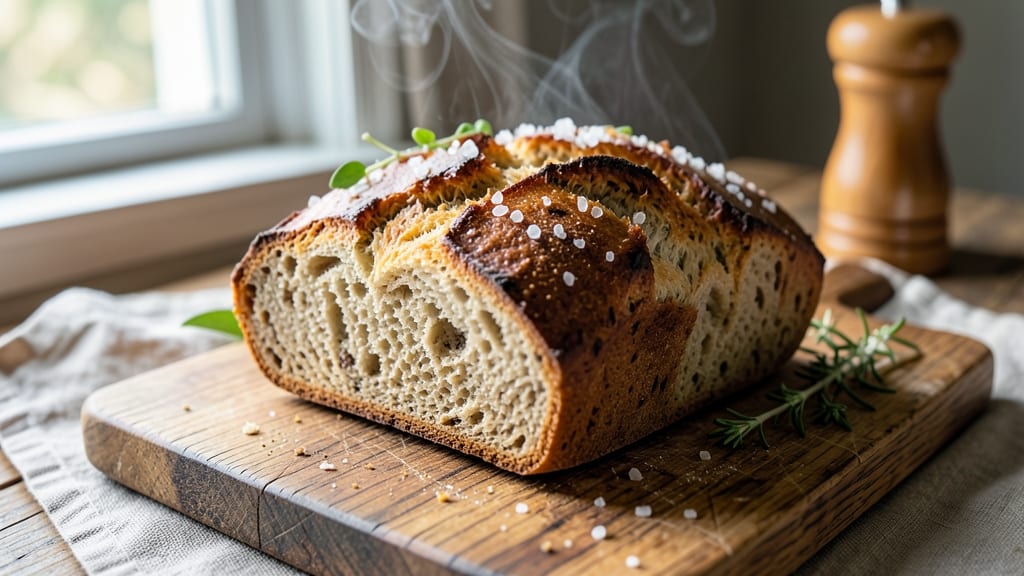
Alice Waters' artisan bread recipe transforms simple ingredients into a loaf that embodies the essence of sustainable, seasonal cooking. ✨ The result is a rustic loaf with an open, crackling crust and a tender crumb infused with warm spices—a testament to her philosophy of using whole grains and natural fermentation.
This recipe captures the soul of California's Edible Schoolyard, where fresh, wholesome ingredients take center stage.
The beauty of this bread lies in its simplicity and the patience required for natural fermentation. By letting the dough rise slowly, you develop deep flavor and a lighter texture without relying on commercial yeast.
The spices—like cardamom or orange zest—add subtle warmth that complements the bread's rustic character, making it perfect for pairing with soups, cheeses, or simply enjoying on its own.
What sets this recipe apart is its focus on minimal processing and maximum flavor. The dough comes together with just a handful of ingredients—whole grains, water, and a touch of salt—yet the result is a bread that feels both artisanal and approachable.
Whether you're baking for a special occasion or a cozy weeknight dinner, this loaf brings a sense of warmth and tradition to your table.
Ready in about 24 hours (including fermentation time), this recipe is designed for those who appreciate the art of slow cooking. The hands-on process—kneading, shaping, and scoring the crust—makes it a rewarding project for any home baker.
Each step is an opportunity to connect with the food you're creating, just as Alice Waters encourages us to do.
Ingredients for alice waters bread
Simple whole grains and warm spices create Alice Waters' iconic rustic loaf.
| Ingredient | Amount | Notes |
|---|---|---|
| Organic Whole Wheat Flour 🌾 | 4 cups | High-protein, unbleached preferred |
| Organic Bread Flour 🍞 | 2 cups | For lighter texture |
| Instant Yeast 🍞 | ¼ tsp | For reliable fermentation |
| Filtered Water 💧 | 2 ½ cups | Lukewarm, ~100°F |
| Sea Salt 🧂 | 1 ½ tsp | Fine grain preferred |
| Ground Cardamom 🌿 | 1 tsp | Freshly ground for aroma |
| Orange Zest 🍊 | 1 tbsp | From organic orange |
| Extra-Virgin Olive Oil 🫒 | 2 tbsp | For dough enrichment |
| Cornmeal 🌽 | ¼ cup | For dusting work surface |
| Semolina Flour 🌾 | ¼ cup | For dusting loaf pan |
| Egg Wash 🥚 | 1 whole | Beaten with water |
| Coarse Sea Salt 🧂 | 1 tbsp | For final crust scoring |
The flours make all the difference here. King Arthur Organic or Bob's Red Mill are my go-tos for whole wheat—both have high protein content that develops gluten beautifully. For bread flour, Cape Cod Mills is my secret weapon for that signature tender crumb. If you're buying in bulk, check the protein percentage: aim for 12-14% in whole wheat and 11-12% in bread flour. The cardamom should be freshly ground—Penzeys Spices carries excellent quality, or toast whole pods in a dry pan for 2 minutes before grinding. Orange zest adds brightness, so use organic fruit when possible to avoid wax residue.
No cardamom? 1/2 tsp cinnamon plus 1/4 tsp nutmeg mimics the warmth. Running short on bread flour? All-purpose flour works at a 1:1 ratio, though the texture will be slightly denser. For the yeast, Saf-Instant is my preferred brand—it's reliable and doesn't require proofing. The olive oil should be extra-virgin with noticeable peppery notes; California brands like Corto excel here. If you're making multiple loaves, double the recipe—the dough keeps well for 24 hours in the fridge before baking.
This dough needs patience—24 hours total fermentation time develops maximum flavor. Store bulk flour in airtight containers in a cool, dark place for up to 6 months. Whole grains lose vitality faster, so use within 3 months of milling. The baked loaf stays fresh for 3-4 days at room temperature wrapped in a clean kitchen towel, or 5 days in the fridge. For longer storage, slice and freeze portions—3 months maximum. The egg wash can be made ahead and stored in the fridge for 2 days.
Why You'll Love This Recipe
- No-Knead Magic: I mix the dough in 5 minutes—just flour, yeast, water, and salt—then let it rise overnight. No standing at the counter, no overworking my arms, just pure hands-off ease.
- Whole Wheat Without Bitter Notes: The blend of organic whole wheat and bread flour keeps it hearty but light, with a subtle sweetness that makes it way more approachable than dense, heavy whole-grain loaves.
- Weeknight Hero: Toss a loaf in the oven while you prep dinner—it’s done in time to tear into warm slices. My kids grab it straight from the pan; I eat it with butter and jam at my desk.
- Lasts All Week: A single batch feeds my family for days: toast, sandwiches, or crusts for soups. The crust stays crisp even after refrigeration, and I freeze slices for quick breakfasts. Budget-friendly? Absolutely.
Step-by-step instructions for Alice Waters' artisan bread
Master this spiced loaf with an open crust using precise technique and quality ingredients.
👨🍳 Step 1: Mix the Dough for Optimal Fermentation
In a large mixing bowl, combine the 4 cups Organic Whole Wheat Flour and 2 cups Organic Bread Flour. Add the 0.25 tsp Instant Yeast, 1.5 tsp Sea Salt, 1 tsp Ground Cardamom, and 1 tbsp Orange Zest. Mix these dry ingredients together using a wooden spoon until evenly distributed—you should see no more than a few flour streaks remaining.
Create a well in the center and pour in the 2.5 cups Filtered Water (lukewarm, around 100°F) and 2 tbsp Extra-Virgin Olive Oil. Gradually incorporate the liquids into the dry ingredients, mixing with your hands or a dough whisk until a shaggy dough forms. The dough should be sticky but manageable—if it's too dry, add 1 tablespoon water at a time until just combined.
🍳 Step 2: Knead and Develop Gluten for Structure
Transfer the dough to a lightly floured surface and knead for 8-10 minutes by hand, or use a stand mixer with a dough hook attachment for 5-6 minutes on medium speed. You're looking for a smooth, elastic dough that springs back slowly when poked—this indicates proper gluten development. The dough should feel slightly tacky but not sticky to the touch.
Here's the thing—this dough is intentionally sticky due to the high whole wheat content. Don't add extra flour during kneading unless absolutely necessary, as it will affect the final texture. If your hands get too sticky, wet them slightly with water to help handle the dough more easily. Once kneaded, shape the dough into a loose ball and place it back in the mixing bowl.
🥘 Step 3: Bulk Ferment for Flavor Development
Cover the bowl with a damp kitchen towel or plastic wrap and let the dough ferment at room temperature for 1-2 hours. You'll know it's ready when the dough has nearly doubled in size and feels light and airy when pressed gently. The cardamom and orange zest will infuse the dough with warm, citrusy notes during this time—this is where the magic happens.
I like to check the dough after 1 hour to ensure it's active. Press your finger into the dough—if it springs back slowly (within 1-2 seconds) and leaves a slight indentation, it's ready for the next step. If it's still sluggish, give it another 30 minutes. The goal is to develop flavor without overproofing, which would collapse the structure during baking.
🔥 Step 4: Shape and Proof for Open Crust
Lightly dust your work surface with 0.25 cup Cornmeal and turn out the fermented dough. Gently deflate it by pressing down with your fingertips, then shape it into a 12-inch round by pulling the edges toward the center. The dough should be smooth but still slightly sticky—this helps create that characteristic open crust. Place the shaped dough seam-side up in a lightly oiled bowl.
Cover the bowl again and let the dough proof for another 30-45 minutes until it rises about 50% and feels light when pressed. The second rise is crucial for developing that airy, open crumb structure. I find that using a loaf pan for this step (instead of a bowl) can help maintain shape, but a round shape is traditional for this recipe.
🔪 Step 5: Score and Bake for Perfect Crust
Preheat your oven to 425°F with a Dutch oven inside for 30 minutes. Remove the Dutch oven and transfer the proofed dough to it. Using a sharp razor or bread lame, score the top of the dough in a crosshatch pattern (about ¼-inch deep) and sprinkle with 1 tbsp Coarse Sea Salt. This scoring not only looks beautiful but also controls where the dough expands during baking.
Bake covered for 25 minutes, then remove the lid and bake uncovered for another 15-20 minutes until the crust is deep golden brown and sounds hollow when tapped on the bottom. The internal temperature should reach 205-210°F. For that signature open crust, I brush the baked loaf with 1 whole Egg Wash (beaten egg) immediately after removing it from the oven—this creates a beautiful sheen and enhances the crust's texture.
Pro Tips For Making Alice Waters Bread
- WEIGH YOUR FLOURS: Alice Waters’ recipe demands precision—don’t eyeball it. Whole wheat and bread flour have wildly different densities, and even a 10-gram swing throws off hydration. Use a digital scale and tap the bowl gently to settle the flour before measuring. I learned this the hard way when my first loaf turned into a dense brick.
- DISSOLVE YEAST FIRST: Skip the "just sprinkle it in" approach. Mix the instant yeast with the filtered water and a pinch of salt (about ¼ tsp) for 5 minutes before adding it to the dough—this kickstarts fermentation faster. The dough will feel more active from the get-go, and you’ll avoid that awkward "why isn’t this rising?" panic later.
- KNEAD JUST ENOUGH: This isn’t a baguette—overworking the dough turns it gummy. After the initial 5-minute mix, stop when the dough pulls away cleanly from the bowl and springs back slightly when poked. Over-kneading develops too much gluten, especially with whole wheat, and you’ll regret it when the crumb turns tough. Less is more here.
- REST THE DOUGH TWICE: The recipe calls for one bulk ferment, but I double it: let it rise at room temp for 1.5 hours, then refrigerate overnight. The cold slows fermentation, deepens flavor, and makes shaping easier. Pull it out 2 hours before baking to let it warm up—your oven will thank you for not fighting a cold dough.
Storing and reheating your alice waters bread
Room Temperature Storage
Let your freshly baked loaf cool completely on a wire rack before storing at room temperature. Wrap it tightly in a clean kitchen towel or beeswax wrap to maintain moisture—this mimics how Alice Waters stores bread in her kitchen.
Place it in a bamboo bread box or cotton-lined basket for up to 3-4 days. The towel absorbs excess moisture while allowing the crust to stay crisp. I notice the bread develops deeper flavor when stored this way. 🥖
Fridge Preservation
For longer storage, slice the loaf and store in an airtight container with parchment paper between slices to prevent drying. Keep it in the fridge for up to 5 days. The whole wheat flour helps maintain freshness longer than white bread.
I recommend using glass containers (like Pyrex) to avoid plastic odors. For quick toast, remove slices when cold—they'll warm up faster in the toaster. 🧊
Freezer Extension
Slice the loaf before freezing for best texture. Wrap individual slices in parchment paper, then place them in a freezer bag with all air removed. This method preserves freshness for up to 3 months.
To reheat, toast directly from frozen in a toaster or warm in a 350°F oven for 5-7 minutes with a damp paper towel. The cardamom and orange zest flavors remain vibrant even after freezing. ❄️
Reviving Stale Bread
If your loaf loses its crispness, revive it by wrapping in a damp towel and placing in a 350°F oven for 5-10 minutes. The steam will restore moisture without overcooking. For extra flavor, brush with melted butter and sprinkle with flaky sea salt before serving.
This trick works especially well for the whole wheat base—it brings back that artisanal texture Alice Waters loves. 🔥
Make-Ahead Dough
Prepare the dough up to 24 hours ahead and refrigerate it in an oiled bowl covered with plastic wrap. Let it come to room temperature before shaping and proofing. Cold fermentation enhances flavor development—this is how professional bakeries achieve depth.
I often make dough the night before for a stress-free morning bake. The cardamom aroma intensifies during overnight fermentation. ⏳
Serving Freshly Baked
For maximum enjoyment, serve the bread warm with grass-fed butter or olive oil drizzled on top. The open crust stays crisp for about 1 hour after baking—slice while still warm.
Pair with local honey or aged cheddar for a true Edible Schoolyard experience. The warm spices complement both sweet and savory toppings beautifully. 🍯
Nutrition facts
Frequently asked questions
Can I substitute regular flour for the whole wheat and bread flour?
You can use all-purpose flour, but the texture will be denser and less artisanal. For a 1:1 substitution, replace the whole wheat with 3 cups all-purpose flour and the bread flour with 1 cup all-purpose flour. The higher protein content in bread flour creates that signature tender crumb Alice Waters loves. If you want to keep the whole wheat flavor, try a 50/50 blend of whole wheat and all-purpose.
Why does my dough smell so strong during fermentation?
The intense aroma comes from the natural fermentation process and spices like cardamom and orange zest. This is normal and actually a good sign! The longer the fermentation (up to 24 hours), the more complex the flavors become. If the smell is overly sour or yeasty, your dough may be overproofed—reduce fermentation time next batch to 12-16 hours.
How do I know when the dough is fully proofed?
Press your finger gently into the dough—if it springs back slowly (within 1-2 seconds) and leaves a slight indentation, it's ready. For visual cues, the dough should have risen 50-75% of its original volume. Tap the side of the bowl—if it sounds hollow, it's proofed. The cardamom will also make the dough smell noticeably more aromatic when ready.
Can I bake this bread without a Dutch oven?
Yes, but you'll need to create steam another way. Place a baking tray on the lower oven rack and pour 1 cup boiling water into it when you put the dough in. Cover the dough with aluminum foil for the first 20 minutes to mimic the Dutch oven's steam effect. The crust won't be as crackly, but the bread will still be delicious with a slightly denser texture.
What's the best way to use up leftover bread?
Slice and toast for breakfast, or make croûtons by cubing and baking at 375°F for 8-10 minutes with olive oil and herbs. For something sweet, turn slices into french toast with cinnamon and vanilla. The whole wheat base makes great breadcrumbs for meatballs or meatloaf—just pulse dried slices in a food processor. The spices add wonderful depth to these transformations!