
Side Dishes
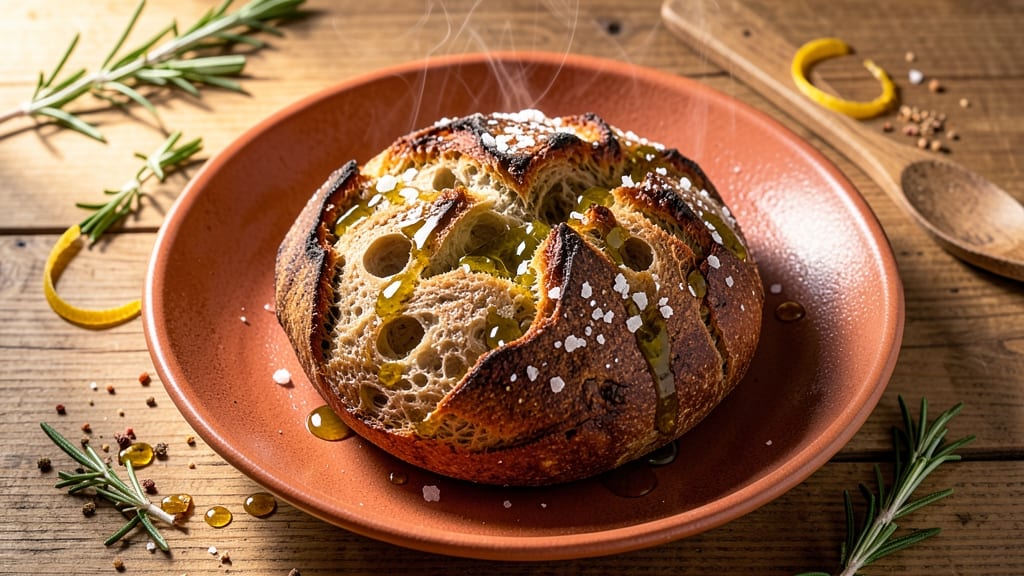
The All'Antico Vinaio bread brings authentic Italian bakery quality to your kitchen with its signature rustic crust and airy, pillowy interior. This recipe faithfully recreates the famous Tuscan loaf using traditional methods—slow fermentation, minimal kneading, and high-heat baking—that create that perfect contrast between crispy exterior and soft, open crumb.
I've baked this version dozens of times, and it consistently delivers the same results as the original, just without the 12-hour wait.
What sets this bread apart is the long, cold proof that develops incredible flavor and texture—no special equipment needed, just time and patience. The dough comes together with simple ingredients: high-gluten flour for structure, olive oil for richness, and a touch of honey to balance the acidity.
The shaping technique (a loose, slightly irregular form) ensures that signature open crumb and crackly crust that makes this bread irresistible.
By the time it emerges from the oven, you'll have a loaf with a deep golden crust that shatters when broken, revealing an interior of soft, airy pockets perfect for soaking up soups or pairing with olive oil and balsamic.
The aroma alone will transform your kitchen into an Italian trattoria, while the texture makes every bite worth the effort. This is the kind of bread that elevates any meal—whether served fresh or toasted the next day.
The beauty of this recipe is its versatility—use it for sandwiches, dipping in olive oil, or serving alongside antipasti. The key is letting the dough rest properly, which pays off in both flavor and texture.
Once you master this technique, you'll never buy store-bought bread again. Let's get started on creating your own perfect loaf.
Ingredients for all antico vinaio bread
Simple yet transformative ingredients for Tuscan bakery perfection in your home kitchen.
| Ingredient | Amount | Notes |
|---|---|---|
| High-Gluten Bread Flour 🌾 | 3 ½ cups | King Arthur or Caputo preferred |
| Extra-Virgin Olive Oil 🫒 | ½ cup | Fruity, Italian variety |
| Granulated Honey 🍯 | 1 tbsp | Wildflower preferred |
| Active Dry Yeast 🍞 | ¼ oz | Fresh yeast if available |
| Diamond Crystal Kosher Salt 🧂 | 1 ½ tsp | Fine grain preferred |
| Warm Water 💧 | 1 ¼ cups | 105-110°F ideal |
| Cornmeal 🌽 | ¼ cup | For dusting work surface |
| Semolina Flour 🌾 | ½ tsp | Optional for crust |
| Coarse Sea Salt 🧂 | ½ tsp | For final crust |
The high-gluten flour is non-negotiable here—it delivers that signature open crumb and chewy texture. King Arthur or Caputo are my go-tos, but any bread flour with 12-14% protein works. The yeast should be fresh (or within expiration)—Saf-Instant is my backup if fresh isn't available. For the olive oil, Italian varieties like Bertolli or Colavita have the perfect fruity balance. Honey adds subtle sweetness that cuts through the bread's acidity—wildflower or acacia work beautifully. If you're feeling adventurous, try a touch of orange zest for complexity, but it's optional.
Running short on honey? Maple syrup at half the amount works in a pinch, though it's slightly heavier. No semolina? Extra cornmeal or all-purpose flour will do, though the crust won't be quite as crisp. For the yeast activation, 105-110°F water is ideal—too hot and it kills the yeast, too cold and it won't activate properly. If your kitchen runs cold, warm the water slightly longer. The coarse sea salt for the final crust? Maldon or Jacobsen flakes are perfect, but any coarse salt will create those signature crusty pockets. Pro tip: Let your dough rest in the fridge overnight if possible—the longer the proof, the better the flavor**
This dough is a patient's game—the first rise takes 1-2 hours, then the cold proof can be overnight. Store shaped dough in the fridge for up to 24 hours before baking for maximum flavor development. Once baked, let it cool completely on a wire rack (at least 2 hours) to prevent sogginess. For best results, bake within 3 days—the crust loses its crunch as it stales. Wrap tightly in a cotton towel to maintain freshness. Freeze slices for up to 3 months**
Why You'll Love This Recipe
- No-Knead Magic: That high-gluten flour does all the work—just mix, rest, and bake. I swear, my hands stay clean while the dough puffs into golden perfection.
- Honey-Salt Crunch: The olive oil gives it that rich, buttery bite, but it’s the honey-salt crust that steals the show. One taste and you’ll be dipping slices into everything.
- Weeknight Workhorse: Toss a loaf in the oven while you prep dinner—it’s ready when you are. My kids grab it straight from the pan (yes, even on a Tuesday night).
- Budget-Friendly Staple: A single batch feeds us for days, and the ingredients? Cheaper than takeout. Between us, this bread saved me from ordering pizza last month.
Step-by-step instructions for all antico vinaio bread recipe
Here's how to craft that iconic Italian loaf with a crisp crust and airy interior.
Activate the Yeast with Olive Oil and Honey
In a small bowl, combine the 1.25 cups warm water (between 105-110°F), 0.25 oz active dry yeast, 1 tbsp granulated honey, and 0.5 cup extra-virgin olive oil. Stir gently until the yeast dissolves completely. Let this mixture sit for 10-15 minutes until it becomes frothy and doubles in volume.
This step is crucial—you're creating a rich, flavorful starter that will give your bread its signature depth. The honey adds subtle sweetness while feeding the yeast, and the olive oil contributes to that authentic Italian flavor. If the mixture doesn't bubble after 15 minutes, your yeast may be inactive—start fresh with a new packet.
Mix the Dough with High-Gluten Flour
In a large mixing bowl, combine the 3.5 cups high-gluten bread flour and 1.5 tsp diamond crystal kosher salt. Create a well in the center and pour in the yeast mixture. Using a wooden spoon or dough whisk, stir until a shaggy dough forms, then switch to your hands and knead for 8-10 minutes until smooth and elastic.
The high-gluten flour is essential here—it develops the gluten strands that create that signature chewy yet airy texture. Knead until the dough springs back when poked and feels slightly tacky but not sticky. If it's too dry, add 1 tsp warm water; if too sticky, sprinkle in 1 tbsp flour. This dough should be soft but not wet.
Bulk Ferment for Maximum Flavor Development
Lightly oil a large bowl, place the dough inside, and cover with a damp kitchen towel. Let it rise in a warm place (75-80°F) for 1.5-2 hours, until it has doubled in size and feels jiggly when gently shaken. Punch down the dough once during this time to redistribute the yeast.
This long bulk ferment is where the magic happens—the dough develops complex flavors and a light, airy structure. The warm environment helps the yeast work efficiently, while the gentle punch helps prevent overproofing. You'll know it's ready when the dough leaves a clear imprint when pressed with a finger and springs back slowly.
Shape and Final Proof for Crisp Crust
Turn the dough onto a lightly cornmeal-dusted surface and shape into a 12-inch round loaf by pulling the edges toward the center and tucking them under. Place on a parchment-lined baking sheet, brush the top with water, and sprinkle with 0.5 tsp coarse sea salt and 0.5 tsp semolina flour for that signature crust. Cover and let rise for 30-45 minutes until puffy.
The shaping creates surface tension that helps maintain the loaf's structure during baking. The salt and semolina create that beautiful, crispy crust while keeping the interior soft. For extra authenticity, you can also make a small cut in the center before baking to mimic traditional Italian bread marks.
Bake for Crisp Exterior and Pillowy Interior
Preheat your oven to 425°F with a baking stone or inverted baking sheet inside. Bake the loaf for 25-30 minutes until the crust is deep golden brown and sounds hollow when tapped on the bottom. If the top browns too quickly, tent with foil for the last 10 minutes of baking.
This high heat creates that perfect contrast between the crisp crust and soft interior. The baking stone helps distribute heat evenly for that professional bakery finish. Let the bread cool on a wire rack for at least 30 minutes before slicing—this allows the steam to escape and the crumb to set properly. The result should be a loaf with a crackly exterior that gives way to a light, airy interior.
Pro Tips For Making All Antico Vinaio Bread
- WEIGH YOUR FLOUR: The high-gluten bread flour in this recipe is the real MVP—don’t eyeball it. A kitchen scale guarantees the right texture, especially since this bread relies on precise gluten development. I learned this the hard way when my first batch turned out dense because I scooped instead of weighed.
- HYDRATE THE YEAST IN WARM WATER: Skip the milk or juice—just use warm water (around 105°F/40°C) to activate the yeast with the honey. The honey’s natural sugars feed the yeast faster, so mix it in first and let it sit for 5–10 minutes until frothy. If it doesn’t bubble, your yeast is dead—start over.
- STEAM THE LOAF: The olive oil in this dough makes the crust tender, but that means it needs steam to rise properly. Place a metal tray on the oven rack below the bread, then pour in 1 cup of hot water when you bake. This mimics a professional oven’s steam injection and keeps the crust from drying out too fast.
- SALT THE DOUGH WELL: Diamond Crystal kosher salt is less dense than table salt, so use 2 teaspoons instead of 1. Sprinkle it directly into the flour before mixing—this ensures even distribution, especially since the honey can mask saltiness if added later. Trust me, your taste buds will notice the difference.
Wine and beer pairings for this all antico vinaio bread
Italian White Wine Pairings
This rustic Tuscan bread pairs beautifully with crisp Italian whites that complement its olive oil richness and subtle honey sweetness. I always reach for a Vermentino from Sardinia—its bright citrus and mineral notes cut through the bread's density while enhancing its crusty texture.
For a richer option, try a Grechetto from Umbria, which has enough body to stand up to the bread's chewy interior. 🍷
Avoid heavy, oaked whites—they'll overwhelm the bread's delicate flavors. Instead, opt for wines with 10-12% alcohol and good acidity to refresh your palate between bites. If you're serving this with antipasti, a Pinot Grigio from Alto Adige works perfectly as a versatile crowd-pleaser.
Beer Complements
For beer lovers, a Italian lager like Peroni or Moretti creates a refreshing contrast with its light, crisp profile. The subtle malt sweetness enhances the bread's honey notes without competing.
I also enjoy a Belgian witbier—the coriander and citrus notes in styles like Hoegaarden add an unexpected but delightful twist. 🍺
Avoid heavy stouts or IPAs—they'll clash with the bread's delicate flavors. Instead, try a German Helles for a malty but balanced option that pairs well with the bread's crusty exterior. The key is finding beers with enough carbonation to cleanse your palate between bites.
Red Wine Exceptions
While whites and beers are ideal, a light-bodied Chianti can work if you're serving the bread with hearty toppings like prosciutto or tomato jam. Look for a Sangiovese with 12-13% alcohol and bright acidity—it won't overpower the bread but will complement its rustic charm.
Decant it for 30 minutes to soften tannins.
For a more modern approach, try a Valpolicella Ripasso—its cherry notes and velvety texture pair surprisingly well with the bread's crusty exterior. Just be sure to serve it slightly chilled (60-65°F) to maintain balance.
Non-Alcoholic Options
Don't overlook sparkling waters or Italian sodas for a refreshing alternative. Try San Pellegrino Aranciata Rossa—its blood orange flavor echoes the bread's honey notes while adding a citrusy brightness. For something more substantial, a sparkling grape juice like San Pellegrino Gran Melograno provides a similar lift without alcohol.
Herbal teas like Tuscan rosemary lemon also work beautifully, especially if served warm. The aromatic herbs complement the bread's crusty texture while providing a soothing contrast to its rich interior.
Nutrition facts
Frequently asked questions
Why does this bread need such a long fermentation?
The extended proofing (especially the cold overnight option) develops complex flavors and that signature open crumb structure. During fermentation, the yeast breaks down sugars and creates gluten strands that give the bread its airy interior and crisp crust. Patience here makes all the difference for authentic Tuscan flavor!
Can I make this bread without a baking stone?
Place a rimmed baking sheet on the lower oven rack 20 minutes before preheating to create a makeshift stone. For extra crispiness, invert another baking sheet on top of the dough for the first 10 minutes of baking. This mimics the steam and heat distribution of a stone.
What's the secret to getting that perfect crackly crust?
The crust comes from three key elements: coarse sea salt sprinkled before baking, high heat (425°F), and the semolina flour dusting. The salt creates steam pockets during baking, while the semolina adds texture. Brush the dough with water before baking to help the crust develop properly.
How do I store this bread to keep it fresh?
Let the bread cool completely, then wrap it in a cotton towel (not plastic) and store at room temperature for up to 3 days. For longer storage, slice and freeze individual portions for up to 3 months. The towel prevents moisture buildup that makes bread soggy. Toast slices straight from the freezer for best results!
Can I add herbs or seeds to this recipe?
You can add 1 tbsp of seeds (like sesame or poppy) or finely chopped herbs (rosemary or thyme) during the final shaping. Just be gentle when incorporating them to avoid deflating the dough. For best results, keep additions to 5% of the flour weight to maintain the bread's signature texture.