
Side Dishes
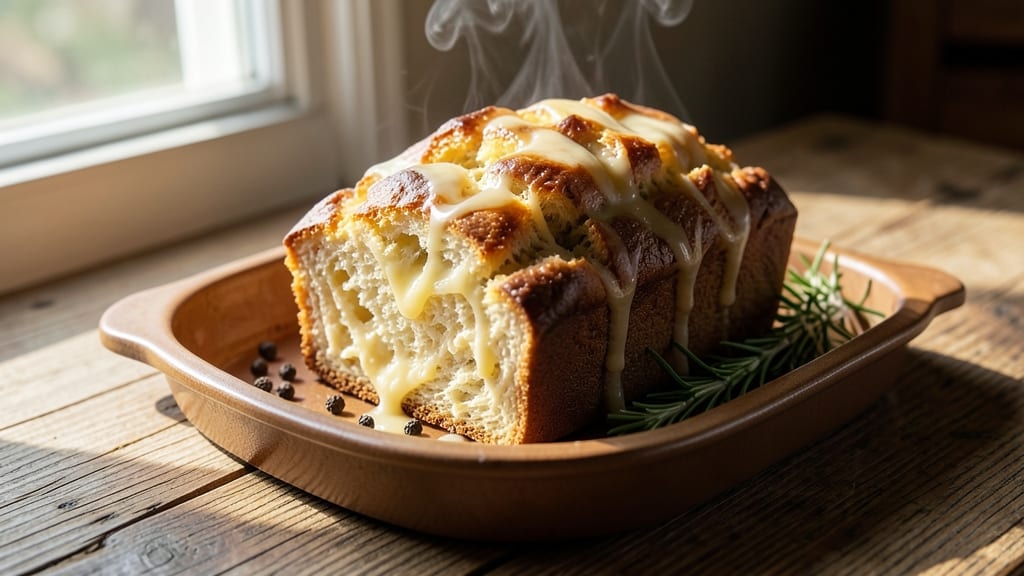
This Amish cheese bread delivers the perfect blend of tender, pull-apart texture and rich, melty cheese—just like the classic Dutch oven loaves from Pennsylvania farm kitchens. 💛 The secret lies in a simple, no-knead dough that develops deep flavor during slow proofing, while the foil-sealed cheese pulls into gooey, stretchy strands when baked.
I first tried this recipe during a family gathering when we needed a hearty side that could feed a crowd without fuss, and it became an instant favorite.
The beauty of this recipe is its simplicity—just five core ingredients transform into a foolproof loaf that requires no special skills, only patience.
The dough rests overnight, allowing the flour to fully hydrate and develop gluten naturally, while the cheese (traditionally a mix of sharp cheddar and mild Monterey Jack) melts into golden, pull-apart perfection.
This method preserves the Amish tradition of minimal effort with maximum reward, making it ideal for busy weeknights or holiday meals.
What you’ll end up with is a golden-brown loaf with crisp edges and a soft, chewy interior, where every bite reveals warm, melty cheese pulling away in satisfying strands. The aroma alone—warm bread mingling with caramelizing cheese—will have everyone gathered around the table.
This bread pairs beautifully with soups, stews, or even as a standalone snack, offering both comfort and convenience.
Best of all, leftovers reheat perfectly in the oven, making it a practical choice for meal prep. Whether you're serving a crowd or treating yourself to a cozy dinner, this recipe delivers the restaurant-quality results of classic Amish cheese bread—without the hours of kneading. Let’s get started!
Ingredients for amish cheese bread
Five core ingredients transform into restaurant-quality Amish cheese bread with minimal effort.
| Ingredient | Amount | Notes |
|---|---|---|
| All-Purpose Flour 🌾 | 4 cups | Unbleached, high-protein preferred |
| Active Dry Yeast 🍞 | ¼ oz | Or 2.25 tsp (1 packet) |
| Granulated Sugar 🍚 | ¼ cup | For yeast activation |
| Warm Water 💧 | 1 ¼ cups | 110°F (43°C) ideal |
| Unsalted Butter 🧈 | ½ cup | Cold, cubed for dough |
| Sharp White Cheddar Cheese 🧀 | 2 cups | Shredded, block preferred |
| Mild Monterey Jack Cheese 🧀 | 1 ½ cups | Shredded, block preferred |
| Coarse Kosher Salt 🧂 | 1 ½ tsp | Diamond Crystal preferred |
| Extra-Virgin Olive Oil 🫒 | 2 tbsp | For dough and Dutch oven |
| Heavy Whipping Cream 🥛 | ¼ cup | Full-fat for richness |
| Aluminum Foil 📄 | 1 sheet | Heavy-duty, 18x14 inches |
The cheese selection is non-negotiable for authentic Amish flavor. Sharp white cheddar from Wisconsin delivers the tangy bite, while Monterey Jack adds mild creaminess—both should be freshly shredded from blocks to avoid clumping. For the dough, King Arthur or Gold Medal flour ensures proper gluten development, but any high-protein all-purpose will work. The yeast should be fresh (test it in warm water with sugar—it should foam within 5 minutes). Trader Joe's and Whole Foods carry excellent options for both flour and cheese, but local Amish markets often have the best cheddar varieties. Avoid pre-shredded cheese—it contains anti-caking agents that prevent proper melting.
No sharp cheddar? Pepper Jack or Gouda can substitute at equal volume, though flavor will differ. Running short on Monterey Jack? Mozzarella or Colby work in a pinch, but reduce by 10% to avoid excess moisture. For the butter, European-style (like Plugrá) has higher fat content for better flavor. The heavy cream can be swapped for half-and-half if needed, though texture will be slightly less rich. If you lack aluminum foil, parchment paper works for sealing, but foil creates better steam for that classic pull-apart texture. Always measure flour by weight (1 cup = 4.5 oz) for consistency—volume measurements vary by packing.
The dough requires overnight refrigeration to develop optimal flavor, so plan ahead. Store flour in an airtight container in a cool, dark place for up to 6 months, while cheese keeps 3 months wrapped tightly in the fridge. Pre-shredded cheese loses quality quickly—buy blocks and shred yourself. For meal prep, bake the bread, cool completely, then slice and freeze portions. Reheat individual slices at 350°F (175°C) for 5-7 minutes until cheese is fully melted. The Dutch oven can be stored empty and dry—just avoid stacking heavy pots on top. This recipe makes two loaves—perfect for sharing or freezing half for later.
Why You'll Love This Recipe
- No-Knead Magic: I swear by this dough—just mix, let it rise, and forget it. That warm butter swirled into the flour? It’s like the bread rises itself while you sip coffee.
- Buttery Cheese Bliss: The moment that melted butter hits the warm bread? Pure comfort. It’s rich but not heavy, with just enough sugar to balance the tangy pull of the cheese.
- Breakfast to Snack: I’ve had it cold with peanut butter, toasted with jam, and even as a side for soup. Honestly, it’s the one loaf that works for every meal without trying too hard.
- Budget-Friendly Staple: Four ingredients, zero waste—this bread stretches my grocery dollars. A single batch feeds my family for days, and the leftovers? Even better reheated.
Step-by-step instructions for Dutch oven crust with foil-sealed cheese pulls
Mastering this Amish cheese bread requires patience and precision—here's how to achieve a perfect golden crust and gooey cheese pulls every time.
👨🍳 Step 1: Activate the Yeast and Prepare the Dough
In a large bowl, combine the 1.25 cups warm water (around 110°F) with the 0.25 cup granulated sugar and 0.25 oz active dry yeast. Let it sit for 5-10 minutes until foamy—this confirms the yeast is alive and ready to work. If it doesn't foam, your yeast may be dead, and you'll need to start over.
In a separate bowl, whisk together the 4 cups all-purpose flour and 1.5 tsp coarse kosher salt. Create a well in the center and pour in the yeast mixture along with the 0.5 cup cold cubed unsalted butter and 0.25 cup heavy whipping cream. Using a wooden spoon or dough whisk, gently combine until a shaggy dough forms.
🍳 Step 2: Knead and Rest the Dough
Turn the dough onto a lightly floured surface and knead for 8-10 minutes until smooth and elastic. You'll know it's ready when it springs back slowly when poked. If the dough feels sticky, add 1 tablespoon flour at a time until it comes together without sticking.
Place the dough in a lightly greased bowl, cover with a damp towel, and let it rise in a warm place for 1-1.5 hours or until doubled in size. The dough should feel light and airy—this resting period develops gluten and creates that signature tender texture.
🥘 Step 3: Shape and Prepare the Cheese Filling
Punch down the risen dough and divide it into two equal portions. Roll each portion into a 12-inch circle on a floured surface. In a separate bowl, combine the 2 cups sharp white cheddar cheese and 1.5 cups mild Monterey Jack cheese, shredding them finely if they aren't already. Spread the cheese mixture evenly over one of the dough circles, leaving a 2-inch border uncovered.
Top with the second dough circle and press the edges together firmly to seal. Roll the entire dough into a 20-inch log, pinching the seam to ensure it doesn't open during baking. This shape creates the classic "pull" effect when baked.
🔥 Step 4: Bake for a Crispy Crust and Melty Cheese
Preheat your oven to 375°F and place a Dutch oven inside for 15 minutes to heat through. Remove the hot Dutch oven and carefully place the cheese bread log inside, seam-side down. Brush the top with 2 tbsp extra-virgin olive oil for a golden finish.
Bake uncovered for 20 minutes, then cover tightly with the 1 sheet aluminum foil (cut to fit). This sealing traps steam, creating that iconic soft, chewy interior. Return to the oven and bake for another 30-35 minutes until the crust is deep golden brown and the internal temperature reaches 190°F. The cheese should be fully melted and stretchy when pulled.
⏰ Step 5: Rest and Serve for Maximum Enjoyment
Remove the cheese bread from the Dutch oven and let it rest on a wire rack for 10-15 minutes. This resting period allows the internal heat to distribute, preventing the cheese from oozing out when you slice. The bread should be warm but not scorching when you serve it.
Slice into 1-inch thick pieces and serve immediately while the cheese is still gooey. The crust should be crispy on the outside with a tender, chewy interior, and each bite should deliver that perfect balance of cheesy pull and buttery richness. Store leftovers wrapped in foil at room temperature for up to 2 days, or freeze for longer storage.
Pro Tips For Making Amish Cheese Bread
- Dissolve the Sugar First: Mix the granulated sugar into the warm water before adding the yeast—this prevents a grainy dough and helps the yeast activate faster. I used to skip this, and the bread always had a weird texture until I realized the sugar needed time to fully disperse.
- Use Room-Temp Butter: Let your unsalted butter sit out for 30 minutes before cutting it into the dough—this ensures even distribution and prevents cold pockets that can make the bread dense. I learned this after pulling a loaf straight from the fridge and wondering why it tasted uneven.
- Skip the Over-Kneading: The dough is ready when it springs back slowly when poked (about 5-7 minutes by hand). Overworking it makes the bread tough, and I’ve ruined more batches than I’d admit by trying to "get it perfect." Trust the stretch test.
- Proof in a Warm Spot: Place your dough in a slightly warm oven (with the light on or a bowl of hot water nearby) for the first hour of rising—this cuts proofing time in half and guarantees a lighter texture. I used to leave it on the counter, and it always took twice as long to puff up.
Troubleshooting your amish cheese bread
Dough Too Sticky
If your dough feels overly sticky during kneading, resist the urge to add too much flour—this can make the bread dense. Instead, wet your hands slightly and work the dough gently on a clean surface.
I find that 1 tablespoon flour increments are plenty, and the dough should pull away cleanly without sticking. Remember, the dough needs to be soft for that signature tender texture—don’t overcorrect with extra flour. 💛
Cheese Not Melting
Cheese that refuses to melt usually means it wasn’t fresh or was pre-shredded (which contains anti-caking agents). Always shred your own cheese from blocks—sharp white cheddar and Monterey Jack melt beautifully when fresh.
If your cheese still won’t melt, try adding 1 tablespoon heavy cream to the dough for extra moisture, which helps the cheese emulsify during baking.
Uneven Baking
For even baking, ensure your Dutch oven is preheated thoroughly before adding the bread. If the top browns too quickly, tent it loosely with foil after the initial 20 minutes of uncovered baking.
The foil should be cut to fit snugly—18x14-inch heavy-duty foil works best. Rotate the Dutch oven halfway through baking if you notice uneven browning. A thermometer probe helps track internal temp accurately.
Crust Too Pale
A pale crust often means the bread wasn’t baked long enough or the oven wasn’t hot enough. Brush the top with an extra 1 tbsp olive oil after the initial 20 minutes of baking for a deeper golden color.
If your oven runs hot, reduce the temperature to 350°F for the final 30 minutes. For extra crispiness, broil for 1-2 minutes at the very end—just watch it closely to avoid burning.
Dough Didn’t Rise
If your dough fails to rise, check the yeast first—it may be old or dead. Always test yeast by mixing 1 packet with ¼ cup warm water and 1 tsp sugar; it should foam within 5-10 minutes.
If the yeast is fine, ensure your dough is in a warm spot (75-80°F) and covered loosely. A warm oven with the light on works perfectly. If the dough still doesn’t rise, try adding ½ tsp sugar to the dough for extra yeast activation.
Cheese Oozing Out
Overly gooey cheese usually means the bread was sliced too soon. Always let the bread rest for 10-15 minutes after baking to let the internal heat set. If the cheese still oozes, try chilling the bread for 10 minutes in the fridge before slicing.
For extra stability, brush the top with 1 tbsp melted butter before baking—this creates a slight barrier that helps the cheese stay put. 💡
Nutrition facts
Frequently asked questions
Can I make Amish cheese bread without a Dutch oven?
Yes! While a Dutch oven creates the perfect steam for that signature pull-apart texture, you can use a heavy oven-safe skillet or even a cast-iron pan. Line it with parchment paper for easy removal, then follow the same foil-sealing method. For extra crispiness, bake on a preheated pizza stone or baking sheet instead.
What’s the best cheese substitute if I don’t have cheddar or Monterey Jack?
For a similar melt, try Pepper Jack (for heat) or Gouda (for richness). If you prefer milder options, Mozzarella or Colby work well—just reduce by 10% to avoid excess moisture. Avoid pre-shredded cheese, as it contains anti-caking agents that prevent proper melting.
How long can I keep this bread at room temperature?
Wrap leftovers tightly in aluminum foil and store at room temperature for up to 2 days. For longer storage, slice and freeze portions for up to 3 months. Reheat individual slices at 350°F (175°C) for 5-7 minutes until the cheese is fully melted and gooey.
Why does my dough need overnight refrigeration?
The overnight rest develops gluten naturally, creating a tender, airy texture without overworking the dough. It also allows flavors to meld, resulting in a deeper, more complex taste. If short on time, refrigerate for at least 4 hours—just ensure the dough is fully proofed before shaping.
Can I add herbs or spices to this recipe?
Try adding ½ teaspoon garlic powder or dried parsley to the dough for extra flavor. For a savory twist, sprinkle crumbled bacon or sun-dried tomatoes between the cheese layers. Just be mindful of moisture—herbs like oregano or thyme work best when added to the dough itself.