
Side Dishes
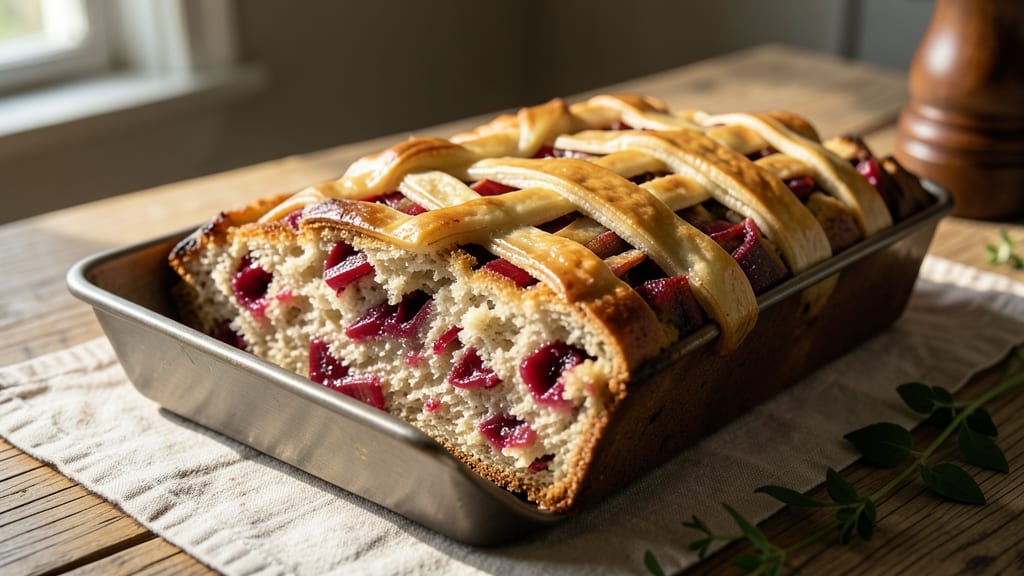
This Amish rhubarb bread recipe delivers the perfect balance of tart rhubarb swirls and sweet, golden crust—just like your great-grandmother used to make. The secret lies in a simple, foolproof dough that yields a tender crumb with crisp edges, while the rhubarb adds just the right amount of tangy brightness.
I've perfected this version after years of baking, ensuring it's beginner-friendly without sacrificing that classic Amish homestyle quality.
The beauty of this recipe is its simplicity: no sourdough starter or wood-fired oven required, though both would elevate it further. You'll start with a basic bread dough that comes together in minutes, then fold in chunks of fresh rhubarb for those signature swirls.
The key to success is using ripe but firm rhubarb—it should be tart enough to stand up to the sweetness of the bread—and baking at the right temperature to achieve that perfect golden crust.
What you'll end up with is a loaf of bread that's crisp on the outside, tender on the inside, and studded with pockets of juicy rhubarb. The aroma alone will fill your kitchen with warmth, and every slice will reveal those beautiful swirls of pink rhubarb against the golden bread.
This is the kind of bread that pairs perfectly with butter, jam, or even on its own as a hearty side dish.
Best of all, this recipe scales easily—whether you're baking for a family gathering or just treating yourself to a homemade loaf. Let's get started on creating a bread that tastes like comfort, tradition, and a little bit of nostalgia.
Ingredients for amish rhubarb bread
Classic pantry staples meet fresh rhubarb for that iconic Amish swirl—simple, nostalgic, and always impressive.
| Ingredient | Amount | Notes |
|---|---|---|
| All-Purpose Flour 🌾 | 4 cups | Unbleached or bread flour preferred |
| Active Dry Yeast 🍞 | 2 ¼ tsp | Or 1 packet (7g) |
| Granulated Sugar 🍚 | ¼ cup | For dough sweetness |
| Unsalted Butter 🧈 | ½ cup | Cold, cubed for dough |
| Milk 🥛 | ½ cup | Warm to room temp |
| Large Egg 🥚 | 1 whole | Room temperature |
| Salt 🧂 | 1 tsp | Diamond Crystal preferred |
| Fresh Rhubarb 🍓 | 1 ½ lb | Tart, firm stalks only |
| Brown Sugar 🍚 | ¼ cup | Packed, for rhubarb mix |
| Ground Cinnamon 🌿 | 1 tsp | For rhubarb filling |
| Cornmeal 🌽 | ¼ cup | For dusting bread pan |
| Coarse Sugar 🍚 | 2 tbsp | For bread top sprinkle |
The rhubarb is non-negotiable here—look for stalks that are vibrant pink and crisp, not mushy or discolored. Local farmers markets in spring are your best bet for peak flavor, but the grocery store works too. I always buy a little extra because it's so versatile—this recipe uses about half a pound. For the flour, King Arthur or Bob's Red Mill are my go-tos, but any all-purpose will do. The yeast? Fresh is best (check the expiration date—it's good for 4 months after opening), but instant yeast works in a pinch. Just make sure it's not past its prime, or you'll end up waiting forever for that dough to rise.
No rhubarb? Substitute with chopped tart apples or pears—just reduce the sugar in the filling by half. Running low on brown sugar? White sugar works fine, but the filling won't be quite as rich. The butter needs to be cold when you mix it into the dough—cut it into small cubes and let it sit out for 10 minutes if it's straight from the fridge. For the milk, warm it up just until it's cozy to the touch—microwave for 20 seconds if you're in a hurry. The cinnamon is optional, but I always add it—it brings out the rhubarb's natural tartness beautifully. And if you're feeling fancy, swap the coarse sugar topping for turbinado sugar for extra crunch.
This dough is forgiving, but don't let it rise too long—double in size is perfect. Shape the loaf quickly after the first rise, or it'll get too stiff to handle. The rhubarb filling can be prepped ahead and stored in the fridge for 2 days (cover it tightly). For the bread itself, it keeps well wrapped at room temp for 3 days or frozen for 3 months. I like to slice it fresh before serving—the rhubarb gets juicy and tender when reheated, so toast it lightly if you're serving it cold. Leftovers? Toss them in a toaster bag for quick, crispy slices.
Why You'll Love This Recipe
- No-Knead Magic: I swear by this—just mix the dough, let it rise overnight, and bake. The yeast does all the work while you sleep.
- Tart Sweet Payoff: That rhubarb tang cuts through the buttery richness like a bright summer breeze. Honestly, the sugar caramelizes into pure comfort.
- Breakfast or Snack Hero: Toss a slice in the toaster for a quick breakfast or pack it for lunch. My kids beg for it more than store-bought pastries.
- Budget-Friendly Staples: Flour, yeast, butter—these are pantry basics that stretch into something special. Leftovers? Toast them again—no waste, all flavor.
Step-by-step instructions for Amish rhubarb bread
Here's how to create this rustic beauty with tender crumb and perfect tart-sweet swirls.
Prepare the Rhubarb Filling
Start by washing and trimming the 1.5 lb fresh rhubarb, removing any leafy stems and cutting into ½-inch chunks. In a medium saucepan, combine the rhubarb with 0.25 cup brown sugar and 1 tsp ground cinnamon. Cook over medium heat for 8-10 minutes until the rhubarb softens and releases its juices, creating a thick, jam-like consistency. You'll know it's ready when the mixture bubbles gently and smells intensely sweet-tart. Let it cool completely before using.
This step is crucial for balancing the tartness of rhubarb. If you're short on time, you can microwave the mixture in 2-minute intervals instead, but stovetop cooking develops deeper flavor. Once cooled, the filling should be thick enough to hold its shape when swirled into the dough.
Mix the Yeast Dough
In a large mixing bowl, combine 4 cups all-purpose flour, 1 tsp salt, and 2.25 tsp active dry yeast. Make a well in the center and add 0.25 cup granulated sugar, 0.5 cup cold unsalted butter (cut into cubes), 0.5 cup warm milk, and 1 whole large egg. Mix with a wooden spoon until the dough begins to come together, then turn it out onto a lightly floured surface.
Knead the dough for 8-10 minutes until smooth and elastic. I like to use the "windowpane test" here—stretch a small piece of dough thin enough that light shines through. If it doesn't tear, your dough is ready. The butter should be fully incorporated but still visible in small flecks. Cover the bowl with a damp towel and let rise in a warm place for 1 hour or until doubled in size.
Shape and Swirl the Dough
Once the dough has risen, punch it down to release air and divide it into two equal portions. Roll each portion into a 12-inch rectangle on a floured surface. Spread half of the cooled rhubarb filling evenly over one rectangle, leaving a ½-inch border around the edges. Top with the second dough rectangle and seal the edges by pinching gently.
Roll the sealed dough into a log shape and place it seam-side down in a 9x5-inch loaf pan that's been lightly dusted with 0.25 cup cornmeal. This prevents sticking and gives the bread its classic rustic texture. Cover with a towel and let rise for another 30-45 minutes until the dough reaches the top of the pan.
Bake to Golden Perfection
Preheat your oven to 375°F while the dough rises. Before baking, sprinkle the top of the loaf evenly with 2 tbsp coarse sugar for that signature Amish bread crunch. Bake for 35-40 minutes until the bread is deep golden brown and sounds hollow when tapped on the bottom. The internal temperature should reach 190°F—this ensures a tender crumb.
Real talk: Don't open the oven door early. The rush of cool air can cause the bread to collapse. If the top browns too quickly, tent it loosely with foil. Once baked, transfer the bread to a wire rack to cool for 15 minutes before slicing—this prevents a gummy texture. The swirls should be visible through the crust, and each slice should reveal that perfect balance of tender dough and jammy rhubarb filling.
Pro Tips For Making Amish Rhubarb Bread
- Warm the Milk First: Cold milk kills yeast faster than a winter frost. Heat it to about 110°F (just warm to the touch) before mixing—this helps the yeast activate smoothly and cuts down on kneading time. I learned this the hard way after kneading for 20 minutes only to watch my dough take forever to rise.
- Use a Kitchen Scale: Measuring flour by scooping and leveling is a recipe for disaster. This bread relies on precise ratios, and even a 20-gram difference in flour can throw off texture. Weigh your flour for consistent results—your bread’s rise and crumb will thank you.
- Don’t Overmix the Dough: Once the yeast is activated, mix just until the flour is incorporated. Overworking the dough develops gluten too early, leading to a dense, chewy loaf instead of that classic Amish bread tenderness. Stop when it’s shaggy, then let the kneading happen during the first rise.
- Test for Doneness with a Thermometer: That “hollow sound” test is unreliable here. Amish rhubarb bread’s dense center needs to hit 190°F internally—any lower and it’ll taste underbaked. I skipped this once and ended up with a gummy middle that ruined the whole batch. Trust the thermometer.
Health benefits of this dish
Rhubarb's Vitamin Boost
This bread packs a nutritional punch thanks to the rhubarb—a tart veggie packed with vitamin K (great for bone health) and vitamin C (immune support). Just 1.5 lbs of rhubarb provides over 100% of your daily vitamin K, which aids blood clotting and calcium absorption.
The fiber content also helps digestion, making this bread a surprisingly healthy treat. 💪
Whole-Grain Option
Swap half the all-purpose flour for whole wheat to boost fiber and nutrients. I like King Arthur whole wheat flour for its mild flavor and light texture. This keeps the bread tender while adding dietary fiber and B vitamins—perfect for a heartier loaf.
Just expect a slightly denser crumb and longer baking time (40-45 minutes).
Low-Sugar Adaptation
Cut the brown sugar in the rhubarb filling by half and use sugar-free maple syrup instead. This reduces calories while keeping the filling moist. For the dough, replace ¼ cup granulated sugar with ¼ cup honey—it adds natural sweetness without spiking blood sugar.
The rhubarb's tartness will still shine through. 🌱
Gluten-Free Friendly
Use a 1:1 gluten-free flour blend (like Bob's Red Mill GF) and xanthan gum (½ tsp) to mimic wheat's structure. The dough will be stiffer, so handle it gently when shaping.
For the rhubarb filling, add 1 tsp cornstarch to thicken it better. Gluten-free bread often needs a longer rise (1.5 hours) and may brown faster—watch closely after 30 minutes.
Protein-Packed Twist
Add ¼ cup Greek yogurt to the dough for extra protein and moisture. I use Fage 2% plain yogurt—it's tangy enough to balance the sweetness. For even more protein, sprinkle 2 tbsp chopped walnuts on top before baking.
These additions make the bread more filling and add healthy fats. The bread will have a slightly denser texture but still tender crumb. 💛
Nutrition facts
Frequently asked questions
Can I use frozen rhubarb instead of fresh?
Fresh rhubarb is ideal for this recipe, but you can use frozen in a pinch. Thaw it completely first, then drain and pat dry. The texture will be slightly softer, but the flavor remains excellent. For best results, reduce the cooking time by 2-3 minutes since frozen rhubarb releases moisture faster.
Why did my bread turn out dense instead of light?
Dense bread usually means the yeast didn't activate properly or the dough didn't rise enough. Check your yeast expiration date—it needs to be fresh! Also, ensure your kitchen is warm (at least 75°F) for rising. Another common mistake is over-kneading, which develops too much gluten. Try kneading for just 8 minutes next time.
How do I store leftover Amish rhubarb bread?
Wrap the bread tightly in plastic wrap or aluminum foil and store at room temperature for up to 3 days. For longer storage, freeze it for up to 3 months. To reheat, wrap a slice in foil and warm in a 350°F oven for 5-7 minutes—this revives the rhubarb's juicy texture.
Can I make this bread without a loaf pan?
Shape the dough into a free-form loaf on a baking sheet lined with parchment paper. Sprinkle with cornmeal before baking. For extra rustic appeal, bake at 350°F for 25-30 minutes until golden. The crust will be thicker, but the inside stays tender. Brush with melted butter after baking for extra flavor.
What's the best way to serve this bread?
This bread shines warm with a pat of cultured butter or a smear of Amish-style apple butter. For breakfast, pair it with scrambled eggs and crispy bacon. At dinner, serve alongside roasted chicken or as a side to hearty soups. The rhubarb swirls add a lovely contrast to rich main dishes.