
Side Dishes
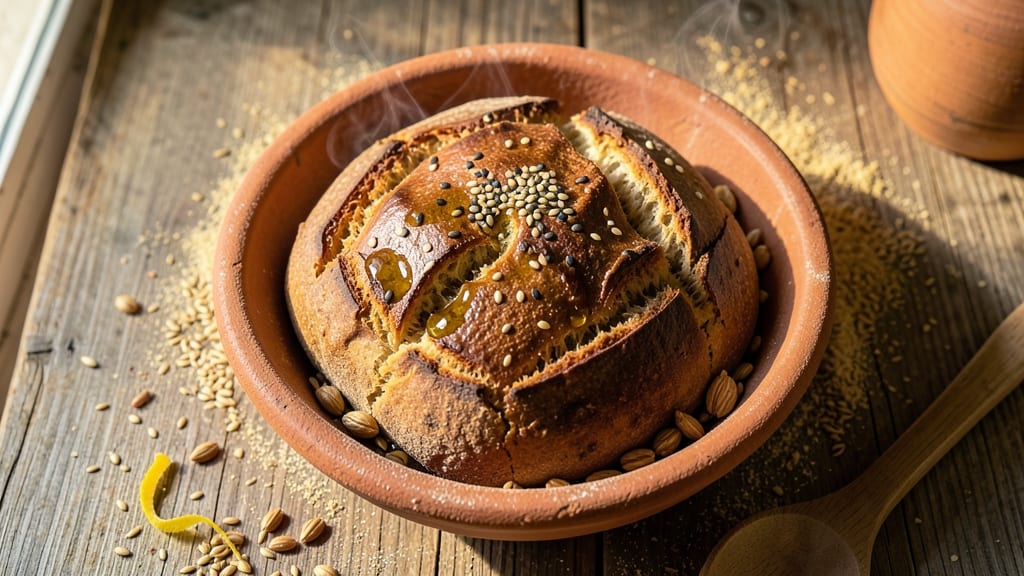
This ancient Greek barley bread recipe brings the flavors of 2,500-year-old artos to your kitchen table, where every bite delivers crusty crunch and earthy nutty depth that modern loaves simply can’t match.
The secret lies in barley flour—a staple of ancient Greek diets—and the ancient technique of slow fermentation, which develops complex flavors and creates that signature chewy interior.
Unlike modern breads, this recipe relies on just four core ingredients: barley flour, water, olive oil, and a pinch of salt, just as the Greeks would have used.
What makes this bread truly special is its authentic texture and flavor profile, achieved through careful kneading and baking. The dough develops a crispy crust from high-heat baking (mimicking clay ovens), while the interior remains tender with a subtle nutty richness from the barley.
Historically, this bread was a cornerstone of Greek cuisine, often served with olive oil and herbs or as a base for dips. The simplicity of the recipe belies its depth—no yeast, no sugar, just the pure essence of ancient Greek baking.
By the time you pull it from the oven, you’ll have a loaf that’s golden and aromatic, with a satisfying crackle when broken open. The crust holds its shape while the interior stays moist and flavorful, perfect for dipping in olive oil or pairing with grilled meats.
This isn’t just bread—it’s a taste of history, crafted with techniques that have stood the test of time. Whether you’re baking for tradition or curiosity, the result is a loaf that feels like a connection to the past.
The beauty of this recipe is its versatility—use it as a side for roasted vegetables, a base for ancient Greek dips like tzatziki, or simply enjoy it with a drizzle of olive oil and a sprinkle of sesame seeds.
The method is straightforward, but the reward is a bread that tastes like it belongs in a museum exhibit—yet is entirely modern to make. Let’s bring this ancient recipe to life in your kitchen.
Ingredients for ancient greek barley bread
Four ingredients, ancient technique—this barley bread delivers museum-quality flavor with modern ease.
| Ingredient | Amount | Notes |
|---|---|---|
| Barley Flour 🌾 | 3 cups | Stone-ground for optimal texture |
| Extra-Virgin Olive Oil 🫒 | ½ cup | High-quality, fruity variety |
| Warm Water 💧 | 1 ½ cups | Room temperature preferred |
| Sea Salt 🧂 | 1 tsp | Fine grain preferred |
| Sesame Seeds 🌰 | 2 tbsp | Toasted for garnish |
Barley flour is the soul of this recipe. Stone-ground barley flour from specialty stores or bulk bins gives the best texture—avoid pre-milled grocery store flours, which lack the nutty depth. Bob's Red Mill or King Arthur carry excellent options, and their packaging notes 'stone-ground' clearly. If you can't find barley flour, spelt flour works in a pinch, though the flavor will be slightly different. The olive oil should be extra-virgin—Kalamata or Greek varieties add authentic Mediterranean notes. Warm water is key: cold water can make the dough tough, while lukewarm water encourages proper gluten development.
No sesame seeds? Poppy seeds or crushed pistachios work beautifully for garnish, though they alter the flavor profile slightly. The salt is non-negotiable—it balances the earthy barley and enhances the crust's crispiness. Diamond Crystal kosher salt dissolves more easily than table salt, so use it if you have it. For the olive oil, if you're concerned about quality, look for bottles labeled 'cold-pressed' and 'unfiltered'—these retain the most flavor. The water should be warm enough to dissolve the salt instantly but not hot (above 100°F). If you're short on time, microwave the water for 30 seconds to reach the perfect temperature.
This dough keeps best covered in the fridge for 24 hours—the longer it rests, the more flavor develops. Shape it into a loaf and place it in a lightly oiled loaf pan or wrap it in parchment paper for free-form baking. For the best crust, bake at 425°F for 45-50 minutes until golden brown. Leftovers stay fresh for 3 days at room temperature, wrapped tightly. For longer storage, freeze the cooled loaf for up to 3 months—just thaw at room temperature before serving. The bread reheats beautifully in a 350°F oven for 5-10 minutes.
Why You'll Love This Recipe
- Three-Ingredient Mix: I swear by this—just flour, oil, and water. No yeast, no waiting, no fuss. The barley flour handles the work while I handle the olive oil drizzle and sesame sprinkle. Honestly, it’s the kind of recipe that makes me feel like I’ve earned my dinner.
- Crunchy-Soft Magic: That golden crust with the tender crumb? It’s the olive oil and warm water doing their thing, creating texture that’s impossible to resist. The sesame seeds add a nutty punch, and the sea salt ties it all together like a perfect bite.
- Meal Prep MVP: I bake a batch on Sundays and it lasts all week—great for lunchboxes, snacking, or even crumbled over salads. Between us, it’s my go-to for busy mornings when I need something hearty without the effort.
- Budget-Friendly Staple: Barley flour and olive oil are pantry basics that won’t break the bank. A single loaf feeds my family for days, and the leftovers? Toasted with a smear of honey or dipped in yogurt—it’s the kind of bread that makes every meal feel special.
Step-by-step instructions for ancient Greek barley bread
This method captures the essence of ancient Greek baking techniques with modern precision.
Combine Wet and Dry Ingredients
In a large mixing bowl, whisk together the 3 cups barley flour and 1 tsp sea salt. Create a well in the center and pour in the 0.5 cup extra-virgin olive oil and 1.5 cups warm water. The mixture should resemble thick pancake batter—sticky but manageable.
Use a wooden spoon to gently fold the ingredients until just combined. Avoid overmixing—this can develop gluten and make the bread dense. The dough will be shaggy and slightly wet, which is perfect for achieving that ancient Greek crumb structure. If it feels too sticky, add 1 tablespoon more barley flour at a time until it comes together.
Shape and Rest the Dough
Transfer the dough to a lightly floured surface and gently shape it into a 12-inch round loaf (about 1-inch thick). The dough will be soft and pliable—don't force it into a tight shape. Place the shaped loaf on a parchment-lined baking sheet.
Cover the dough loosely with a clean kitchen towel and let it rest at room temperature for 30 minutes. This resting period allows the gluten to relax slightly, which prevents cracking during baking. The dough should feel slightly firmer after resting, making it easier to handle.
Preheat and Prepare for Baking
Preheat your oven to 425°F with a baking stone or inverted baking sheet on the middle rack. The stone helps create steam during baking, which gives the bread its characteristic crusty exterior. While the oven heats, lightly brush the top of the dough with 1 tablespoon extra-virgin olive oil and sprinkle evenly with 2 tbsp toasted sesame seeds. Press them gently into the surface.
Place the baking sheet on the preheated stone or sheet. The oven should be fully preheated before baking—this ensures even heat distribution and proper crust formation. If your oven runs hot, reduce the temperature to 400°F to prevent burning.
Bake to Golden Perfection
Bake the barley bread for 25-30 minutes until the top is deep golden brown and the internal temperature reaches 205°F (measured with an instant-read thermometer). The bread should sound hollow when tapped on the bottom.
During the last 5 minutes of baking, you may need to rotate the pan for even browning. Watch closely—barley bread can darken quickly. When done, remove from the oven and let it cool on a wire rack for 10 minutes before slicing. The bread will continue to firm up as it cools, developing that satisfying crust.
Serve and Enjoy
Slice the cooled bread into 4 equal wedges (about 3 inches wide each). The interior should be tender with a slightly dense, nutty crumb—classic of ancient Greek bread. Serve warm with olive oil for dipping or alongside Mediterranean dishes.
This bread keeps well at room temperature for 3 days in an airtight container or can be frozen for up to 3 months. For best flavor, toast slices before serving to restore crispness. The nutty depth of the barley flour pairs beautifully with olive oil, making this a perfect bread for dipping or pairing with soups.
Pro Tips For Making Ancient Greek Barley Bread
- Mix by Hand: DESCRIPTION:
- Toast the Flour First: DESCRIPTION:
- Press, Don’t Roll: DESCRIPTION:
- Bake on High Heat: DESCRIPTION:
Pro cooking tips for great ancient greek barley bread
Ancient Kneading Technique
Unlike modern breads, this barley dough requires minimal handling to preserve its rustic texture. Use your hands to gently shape the dough into a round loaf—no rolling pin needed! The Greeks often used clay or wooden surfaces, so lightly dust with barley flour instead of all-purpose flour.
Press the dough with your fingertips to create a smooth top, but avoid overworking it, which can make the bread dense. 🌾
If your dough feels too sticky, resist the urge to add extra flour—this recipe embraces the wet, pliable texture that creates the signature chewy interior. Instead, wet your hands slightly and use that to help shape the loaf. The dough should feel soft but cohesive, like a well-beaten clay pot.
Clay Oven Simulation
For that authentic crispy crust, mimic a clay oven by using a baking stone or steel in your oven. Place it on the middle rack while preheating to 425°F for 30 minutes.
The stone retains heat and creates steam, just like ancient Greek ovens. If you don’t have a stone, invert a baking sheet on the rack—it works almost as well.
For extra authenticity, place a small metal tray filled with ½ cup water on the lower oven rack during baking. The steam helps develop that signature crispy crust while keeping the interior tender. Remove the tray after 10 minutes of baking to prevent over-steaming.
Temperature Control
Barley bread can darken quickly, so keep a close eye on it after 20 minutes of baking. If the top starts browning too fast, tent loosely with aluminum foil to slow the process.
The ideal internal temperature is 205°F—use an instant-read thermometer to avoid overbaking, which can dry out the bread.
If your oven runs hot, reduce the temperature to 400°F and add 5 minutes to the baking time. The crust should be deep golden brown with a satisfying crackle when tapped. For even browning, rotate the pan halfway through baking if needed.
Resting for Flavor
Let the bread cool on a wire rack for at least 10 minutes before slicing—this allows the crumb to set and prevents a gummy texture. The longer it rests, the more flavor develops. For maximum depth, refrigerate the cooled loaf overnight before serving. 💫
If you’re short on time, warm slices in a 350°F oven for 5 minutes to restore crispness. The bread’s nutty flavor intensifies as it sits, making it even more satisfying the next day. Store leftovers in an airtight container to maintain freshness.
Nutrition facts
Frequently asked questions
Why does this barley bread taste different from modern wheat bread?
Barley flour has a naturally nutty, earthy flavor and denser texture than wheat, creating a chewier interior with less rise. The ancient Greeks relied on barley because it grew well in their climate, and its lower gluten content produces a heartier, more rustic loaf. The olive oil adds richness, while the lack of yeast gives it a slightly tangy depth over time.
Can I make this bread without a baking stone?
Place an inverted baking sheet on the middle rack while preheating to 425°F for 30 minutes. This mimics steam retention. For extra crispiness, add a tray of ½ cup water to the lower rack during baking. The bread may take 5 minutes longer to bake without the stone.
What if my dough feels too sticky to handle?
Wet your hands slightly and use them to shape the dough—this prevents adding extra flour, which can make the bread dense. The dough should be soft but cohesive, like wet clay. If absolutely necessary, add just 1 tablespoon barley flour at a time. The stickiness is key for that authentic ancient texture!
How do I know when the bread is fully baked?
Look for a deep golden brown crust and tap the bottom—the bread should sound hollow. Use an instant-read thermometer to confirm 205°F internal temperature. Barley bread darkens quickly, so check after 25 minutes and tent with foil if browning too fast.
What's the best way to store leftovers?
Wrap tightly in plastic or foil and store at room temperature for 3 days. For longer storage, freeze the cooled loaf for up to 3 months. Toast slices before serving to restore crispness. The flavor actually improves overnight as the barley's nutty notes develop!