
Side Dishes
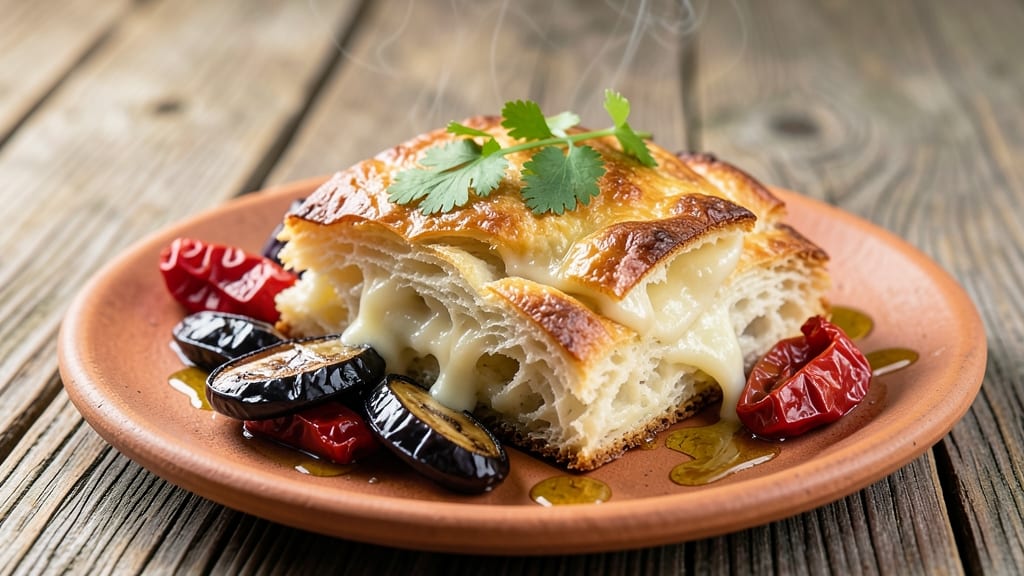
This Armenian matnakash bread recipe brings the heart of Armenian cuisine to your kitchen with its signature flaky layers and rich, herby filling. ✨ A traditional flatbread, matnakash is more than just bread—it's a vessel for tangy cheese, fresh herbs, and layers of flavor that make every bite unforgettable.
The secret lies in the dough's delicate balance and the careful layering of filling before baking, creating a crispy yet tender texture that's impossible to resist.
The beauty of matnakash lies in its simplicity—just a few ingredients transform into something extraordinary. The dough, made with flour, water, and a touch of oil, wraps around a filling of melted cheese (traditionally sulguni or mozzarella), fresh herbs like parsley and dill, and a pinch of salt.
This combination creates a harmonious blend of savory, tangy, and fresh flavors that define Armenian comfort food.
What makes this recipe truly special is the flaky, crispy exterior that gives way to a soft, pillowy interior—each bite reveals layers of melted cheese and herbs.
Perfect for serving as a side dish or even as a main course with a simple salad, matnakash is a testament to how a few simple ingredients can create something truly remarkable. The aroma alone will transport you to the streets of Yerevan.
Whether you're celebrating Armenian culture or simply craving a delicious, hands-on baking project, this recipe delivers. The process is straightforward, but the result is anything but ordinary—each piece of matnakash is a masterpiece of texture and flavor.
Let's get started on creating this iconic dish that's as beautiful as it is delicious.
Ingredients for armenian bread matnakash
Flaky Armenian matnakash relies on these twelve ingredients for its signature texture and flavor harmony.
| Ingredient | Amount | Notes |
|---|---|---|
| All-Purpose Flour 🌾 | 4 cups | High-protein preferred for elasticity |
| Unsalted Butter 🧈 | ¾ cup | Cold, cubed for flakiness |
| Water 💧 | 1 ½ cups | Room temperature preferred |
| Salt 🧂 | 1 ½ tsp | Diamond Crystal kosher preferred |
| Vegetable Oil 🫒 | 1 tbsp | For dough elasticity |
| Sulguni Cheese 🧀 | 1 ½ cups | Traditional Armenian, crumbled |
| Fresh Dill 🌿 | ½ cup | Stems removed, finely chopped |
| Fresh Parsley 🌿 | ¼ cup | Stems removed, finely chopped |
| Garlic Cloves 🧄 | 3 cloves | Minced for aromatic depth |
| Extra-Virgin Olive Oil 🫒 | 2 tbsp | For brushing dough layers |
| Sesame Seeds 🌾 | 2 tbsp | Toasted for garnish |
| Black Pepper 🌶️ | ½ tsp | Freshly cracked for heat |
The flour and butter form the foundation of matnakash's iconic flakiness. King Arthur or Caputo flours yield superior elasticity, while European-style butter (like Plugrá) contains more fat for delicate layers. For sulguni cheese—the traditional Armenian variety—seek it at specialty markets or substitute with mozzarella or feta if unavailable. Fresh herbs are non-negotiable; Armenian or Middle Eastern markets often carry superior dill and parsley. The garlic should be freshly minced just before mixing to preserve its aromatic oils, which elevate the filling's complexity.
No sulguni? Mozzarella or a blend of feta and goat cheese replicates the tangy profile. Dried herbs work in a pinch but lose the vibrant freshness—use half the amount of dried dill or parsley. For a richer dough, replace 2 tbsp flour with all-purpose flour mixed with 1 tsp cornstarch, which enhances tenderness. The olive oil for brushing layers can be swapped for melted butter, though it may slightly darken the crust. For sesame seeds, toasted poppy seeds offer a similar crunch without the same distinctive flavor.
Store flour and butter in airtight containers away from heat sources; butter should remain cold until ready to use. Fresh herbs keep for 5-7 days wrapped in damp paper towels in the fridge. Assembled matnakash can be refrigerated for 24 hours before baking, though room temperature dough yields optimal flakiness. Once baked, store at room temperature for 3 days or freeze for 3 months—reheat in a 350°F oven for 5-10 minutes to restore crispness.
Why You'll Love This Recipe
- No-Knead Magic: I swear, this dough comes together with just flour, butter, and water—no fancy mixers or standing around waiting. The butter gets worked into the flour until it crumbles like sand, then you just add water and fold. That’s it. Even on days when I’d rather be scrolling than baking, this wins.
- Buttery Pillow Soft: The secret’s in the butter—lots of it, cold and cut into the flour until you’ve got little pea-sized bits. When baked, that butter melts into fluffy layers, giving you a bread so tender you’ll want to eat it straight from the pan. (Yes, I’ve been guilty of this.)
- Weeknight Workhorse: This bread is my go-to for sandwiches, breakfast toast, or even as a side for soups. The dough keeps well in the fridge for days, and baked slices reheat in seconds. Honestly, I’ve fed a crowd with just this and a charcuterie board—no stress, all flavor.
- Pantry-Friendly Staples: You’re not hunting for specialty ingredients here—just flour, butter, water, and salt. That means it’s cheap to make, easy to store, and always ready when you need it. Between us, I’ve made this on a budget and with whatever butter was on sale. It’s that reliable.
Step-by-step instructions for Armenian matnakash bread
Master the art of creating delicate, buttery layers with this traditional Armenian technique.
👨🍳 Step 1: Prepare the Dough for Maximum Flakiness
In a large mixing bowl, combine the 4 cups all-purpose flour and 1.5 tsp salt, whisking to remove lumps. Cut in the 0.75 cup cold unsalted butter using a pastry cutter or your fingers until the mixture resembles coarse crumbs with pea-sized butter pieces—this ensures those signature flaky layers. Add the 1 tbsp vegetable oil and mix until just combined.
Gradually add the 1.5 cups water while mixing with a wooden spoon or dough whisk. The dough will come together when it forms a shaggy mass that pulls away from the sides of the bowl. Avoid overmixing—just until it holds together when pressed. Turn out onto a lightly floured surface and knead gently for 3-4 minutes until smooth. Wrap tightly in plastic wrap and refrigerate for at least 1 hour (or up to 24 hours) to relax the gluten and improve layering.
👨🍳 Step 2: Create the Cheese-Herb Filling
In a medium bowl, combine the 1.5 cups crumbled sulguni cheese, 0.5 cup chopped fresh dill, 0.25 cup chopped fresh parsley, 3 minced garlic cloves, 0.5 tsp black pepper, and 2 tbsp extra-virgin olive oil. Mix thoroughly until the cheese is evenly distributed and the herbs are well incorporated. The filling should be moist but not wet—if it's too dry, add 1-2 teaspoons water to bind it.
This filling is the heart of matnakash, delivering that signature tangy, herby flavor between every delicate layer. I like to taste it at this stage—adjust the seasoning if needed, as the cheese can vary in saltiness. Cover and set aside while you prepare the dough for rolling.
🥘 Step 3: Roll and Layer the Dough
On a lightly floured surface, roll the chilled dough into a 12x16-inch rectangle about ⅛-inch thick. Using a pastry brush, lightly coat the entire surface with water—this creates the "glue" that makes those signature layers. Sprinkle ⅓ of the cheese-herb filling evenly over the dampened dough, leaving a ½-inch border around the edges.
Starting from the long side, tightly roll the dough into a log, sealing the edge well. Cut the log into 6 equal pieces (about 2 inches thick each). Repeat the process with the remaining dough and filling, creating 6 total filled dough logs. This precise layering is what creates the iconic flaky texture—don't skip the water brushing between layers.
🔥 Step 4: Proof and Shape for Perfect Rise
Arrange the dough logs on a parchment-lined baking sheet, leaving 1 inch between each. Cover loosely with a clean kitchen towel and let proof at room temperature for 1-1.5 hours, until the logs have noticeably expanded and the dough feels light when pressed gently. The logs should rise by about 30-50%—this is crucial for that airy, pillowy texture.
Preheat your oven to 375°F while the dough proofs. Just before baking, brush the tops of each log with 1 tbsp extra-virgin olive oil and sprinkle with ⅓ of the 2 tbsp sesame seeds (reserve the rest for garnish after baking). The oil adds color and flavor, while the sesame seeds give that authentic Armenian crunch.
🔥 Step 5: Bake to Golden Perfection
Bake the matnakash on the middle rack for 25-30 minutes until deep golden brown and the internal temperature reaches 190°F. Rotate the baking sheet halfway through for even browning. You'll know they're done when the bread sounds hollow when tapped on the bottom and the sesame seeds are crisp and toasted.
Remove from the oven and immediately brush the tops with additional olive oil if desired. Sprinkle with the remaining sesame seeds while still warm for maximum crunch. Let cool on a wire rack for 10 minutes before serving—this resting period allows the layers to set properly. Serve warm with soups, salads, or simply enjoy as-is with a pat of butter.
Pro Tips For Making Armenian Bread Matnakash
- Use Room-Temp Butter: Cold butter pockets in the dough will never melt properly, leaving you with dry, uneven layers. Let that butter sit out for 30-45 minutes until it’s soft enough to press into the dough but still holds its shape—this guarantees those signature flaky, buttery layers.
- Knead Just Until Smooth: Overworking the dough will make matnakash tough instead of tender. Stop as soon as the flour clumps disappear and the dough springs back when poked—about 5-6 minutes by hand. Yes, it’ll look shaggy, but that’s how it should be.
- Don’t Overfill the Pan: I learned this the hard way—stuffing the matnakash too full makes it spill over the edges and steam unevenly, leading to a dense, gummy center. Fill it to about 70% capacity, then let it rise until it’s just overflowing the pan’s rim.
- Brush with Oil Twice: One coat of oil won’t cut it. Brush the risen matnakash with vegetable oil before baking, then again right after it comes out of the oven—this keeps the crust crisp and the layers tender. (And skip the butter here; it’ll burn.)
Wine and beer pairings for this dish
White Wine Pairings
Armenian matnakash's tangy cheese and fresh herbs shine with crisp white wines from the Caucasus region. Try a dry Armenian white wine like Areni or Voskehat—their bright acidity and citrus notes cut through the richness while complementing the dill and parsley.
These wines also share Armenia's terroir, creating a harmonious match that feels authentically local. 🍷
Light Red Wine Options
For those who prefer red, opt for a light-bodied Armenian red such as Vardenis or a Garnacha from Spain. Their subtle fruitiness and low tannins won't overpower the bread's delicate layers. A Pinot Noir from Oregon also works beautifully, offering earthy undertones that enhance the cheese's tang. 🍇
Beer Pairings
A crisp Armenian lager like Yerevan Beer is my go-to choice—its clean, refreshing profile balances the bread's richness without competing. For craft beer lovers, a Belgian witbier with its citrusy notes and slight effervescence provides an interesting contrast.
Avoid heavy stouts or IPAs, which can overpower the bread's delicate flavors. 🍺
Non-Alcoholic Choices
For a refreshing non-alcoholic option, serve with sparkling pomegranate juice or a cucumber-mint infused water. The tartness of pomegranate juice enhances the cheese's tang, while the cucumber water provides a crisp, cooling contrast. These beverages also complement the bread's herby filling beautifully. 🍹
Traditional Armenian Beverages
For an authentic experience, pair your matnakash with Armenian coffee or tarkhuna (a traditional herbal tea). The bold, slightly bitter notes of Armenian coffee cut through the bread's richness, while tarkhuna's earthy flavors harmonize with the herbs.
Both are staples in Armenian cuisine and elevate the dish to new heights. ☕
Seasonal Adaptations
In summer, a chilled rosé from Armenia's Ararat Valley adds a refreshing touch to the warm, flaky bread. During winter, a spiced mulled wine with cinnamon and cloves complements the bread's savory notes while adding warmth to your meal. These seasonal pairings ensure your matnakash shines year-round. ❄️
Nutrition facts
Frequently asked questions
What makes Armenian matnakash different from other flatbreads?
Matnakash stands out for its flaky, layered texture created by brushing dough with water before folding, plus its signature cheese-herb filling of sulguni cheese, dill, and parsley. Unlike simple flatbreads, it's baked in individual logs that develop a crispy exterior with a soft, pillowy interior—each bite reveals layers of melted cheese and herbs.
Can I make matnakash without sulguni cheese?
Use mozzarella for a milder taste or a mix of feta and goat cheese for extra tang. Traditional Armenian markets often carry sulguni, but these substitutes work well. Just ensure your cheese melts smoothly—avoid pre-shredded varieties, as they contain anti-caking agents that prevent proper melting.
Why is my matnakash not flaky?
Flakiness depends on three key factors: cold butter in the dough, water brushing between layers, and proper proofing. If your bread lacks layers, check that your butter was cold when mixed (not softened) and that you brushed each layer with water before folding. Also, ensure the dough rested at least 1 hour before rolling.
How should I store leftover matnakash?
Keep baked matnakash at room temperature in an airtight container for 3 days—it reheats beautifully! For longer storage, freeze individual pieces wrapped in plastic for up to 3 months. To revive, warm in a 350°F oven for 5-10 minutes until crispy again. The texture holds up surprisingly well!
What are traditional ways to serve matnakash?
In Armenia, matnakash is often served as a side dish with soups like lavash or dolma, or as a main course with yogurt and fresh vegetables. The flaky layers also make it perfect for open-faced sandwiches with hummus or grilled meats. For authenticity, pair it with Armenian coffee or tarkhuna tea.