
Breakfast & Brunch
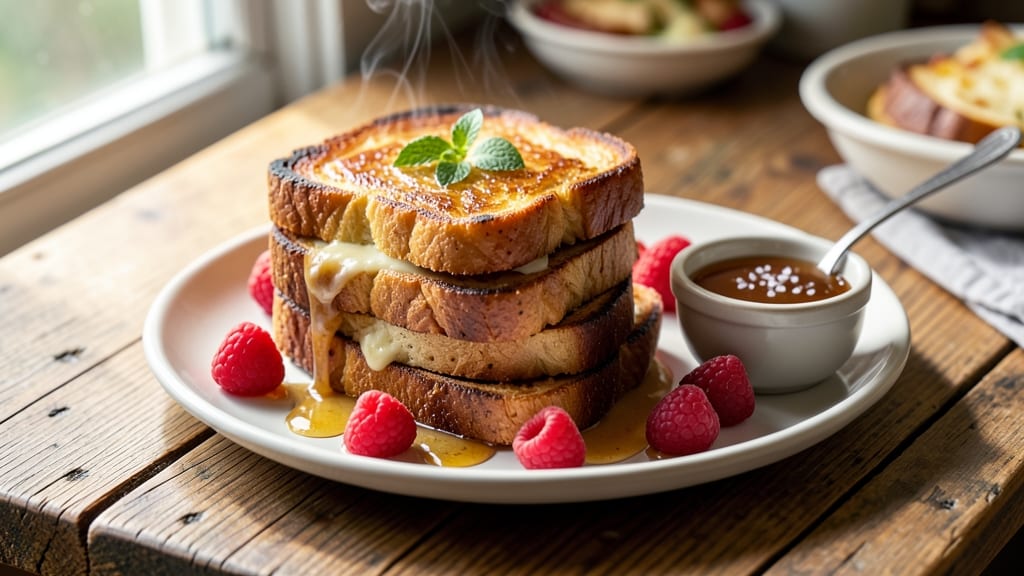
This artisan bread French toast recipe transforms stale brioche into golden, caramelized perfection with every bite. The secret lies in soaking thick slices in a vanilla-infused custard—rich with cinnamon and nutmeg—before achieving that signature crispy crust.
I developed this method after years of experimenting, and it never fails to impress, even with basic ingredients.
The key to restaurant-quality results is patience: letting the bread soak just long enough to absorb the custard without falling apart. A hot cast-iron skillet ensures even browning, while a light dusting of powdered sugar and a drizzle of maple syrup elevate it to dessert status.
This recipe delivers a balance of textures—crispy edges, tender centers, and a fragrant vanilla-cinnamon aroma that fills your kitchen.
Perfect for weekend brunches or a decadent breakfast treat, this French toast requires only 15 minutes of active prep and 5 simple ingredients beyond your choice of artisan bread. The custard's vanilla and spices infuse the bread with warmth, while the caramelized crust creates that irresistible crunch.
Whether you serve it plain or topped with fresh berries, it's a dish that feels special without requiring advanced skills.
For best results, use a day-old brioche or sourdough loaf—its denser texture holds up beautifully to the soaking process. The recipe scales easily for a crowd, and leftovers reheat perfectly in the oven. Here's how to make it—your taste buds will thank you.
Ingredients for artisan bread french toast
The secret to restaurant-style French toast lies in these 11 ingredients—simple yet transformative.
| Ingredient | Amount | Notes |
|---|---|---|
| Day-Old Brioche Loaf 🍞 | 1 whole | Stale or slightly dried preferred |
| Large Eggs 🥚 | 4 whole | Room temperature for even soaking |
| Pure Vanilla Extract 🍯 | 1 tbsp | High-quality for authentic flavor |
| Granulated Sugar 🍚 | ½ cup | White granulated preferred |
| Ground Cinnamon 🌿 | 1 tsp | Freshly ground for best aroma |
| Ground Nutmeg 🌿 | ¼ tsp | Freshly grated preferred |
| Unsalted Butter 🧈 | 2 tbsp | Cold for skillet coating |
| Powdered Sugar 🍚 | ¼ cup | For dusting finished toast |
| Pure Maple Syrup 🍁 | ¼ cup | Grade B for richer flavor |
| Salt 🧂 | ¼ tsp | Kosher or sea salt |
| Fresh Berries 🍓 | 1 cup | Optional for topping (strawberries, blueberries) |
The brioche makes all the difference—day-old loaves from a bakery or your own crusty sourdough work best. Look for brioche with a golden crust and soft interior; Whole Foods or local artisan bakeries often carry excellent options. If using sourdough, ensure it's fully cooled to prevent custard from absorbing too quickly. The eggs should be large and fresh—room temperature eggs soak more evenly. For the vanilla, Nielsen-Massey or McCormick brands deliver consistent quality, but any pure extract will work.
No vanilla extract? Vanilla bean paste (like Madagascar Bourbon) works beautifully—just use half the amount. Running short on nutmeg? Allspice at half the quantity gives a similar warmth. The butter matters here—Plugrá or Land O'Lakes unsalted melt cleanly without adding saltiness. For the maple syrup, Grade B has a richer, more complex flavor than Grade A. If you're making this ahead, pre-mix the dry ingredients (sugar, cinnamon, nutmeg, salt) in a jar—they'll keep for months. The berries can be swapped for sliced bananas or a drizzle of caramel sauce if you prefer.
The custard mixture keeps for 2 days in the fridge—just whisk before using. Leftover French toast reheats beautifully in a 350°F oven for 10 minutes, wrapped in foil to retain moisture. For a crowd, double the custard and slice the bread thinner—it cooks faster. Store extra bread slices in a ziplock bag at room temperature for up to 3 days before toasting. The powdered sugar and maple syrup toppings should be added immediately after cooking for that signature crunch and shine.
Why You'll Love This Recipe
- No Waste, All Flavor: I swear by using day-old brioche—it’s the secret to that perfect balance of crispy edges and pillowy inside. No sad, stale bread here; just a chance to turn last night’s dinner into today’s showstopper.
- Vanilla-Cinnamon Magic: That vanilla and cinnamon combo? It’s like a warm hug in every bite. The brioche soaks up the custard, and the spices make it taste like you slaved over it for hours—even though it’s basically just whisking eggs.
- Breakfast or Dessert: Honestly, I make this for brunch, late-night cravings, or even a fancy weekend treat. Drizzle it with maple syrup for a morning win or dust it with powdered sugar for an after-dinner indulgence—no rules, just joy.
- Budget-Friendly Luxury: Brioche might sound fancy, but a single loaf stretches into multiple servings. Eggs, sugar, and vanilla are cheap staples, so you’re getting restaurant-quality results without the price tag. My wallet thanks me every time.
Step-by-step instructions for caramelized cinnamon crunch French toast
Transform that day-old brioche into decadent, caramelized slices with this foolproof method.
Prepare the Vanilla-Infused Brioche Mixture
In a shallow dish, whisk together the 4 whole Large Eggs, 0.5 cup Granulated Sugar, 1 tbsp Pure Vanilla Extract, 1 tsp Ground Cinnamon, 0.25 tsp Ground Nutmeg, and 0.25 tsp Salt until completely combined. The mixture should be smooth with no visible streaks of sugar. I like to use a fork for this step—it's simple and effective. Let the mixture sit at room temperature for 5 minutes while you prepare the brioche. This resting time allows the flavors to meld slightly, creating a more cohesive taste profile.
The brioche should be slightly stale but not rock-hard. If it's too fresh, it will absorb too much liquid and become gummy. Cut the loaf into ½-inch thick slices—this thickness ensures even cooking and a perfect caramelized crust. You should end up with about 8 slices from a standard loaf. Arrange the slices in a single layer on a plate and lightly brush both sides with the egg mixture. This initial coating helps the bread absorb the custard evenly without becoming soggy.
Soak the Brioche and Create the Custard
Return all the egg mixture to the dish and place the brioche slices back in, cut-side down. Let them soak for 10-15 minutes—this is crucial for achieving that signature custardy center. You'll know they're ready when the slices have absorbed the liquid but still hold their shape. If they fall apart too easily, they've soaked too long. The brioche should feel firm to the touch but still pliable.
While the brioche soaks, melt the 2 tbsp Unsalted Butter in a large skillet over medium heat. The butter should foam gently but not brown. This is your cooking fat, and it will create the perfect crispy crust. Once the butter is fully melted and bubbling, reduce the heat to medium-low—this prevents burning while allowing for even cooking. The skillet should be hot enough to sizzle the brioche when you add it, but not so hot that it burns before the custard sets.
Cook the French Toast to Golden Perfection
Working in batches to avoid crowding, carefully place the soaked brioche slices in the skillet. Cook for 2-3 minutes per side until the edges are deep golden brown and the underside has developed a crispy crust. Real talk: don't rush this step. The brioche needs time to develop that caramelized flavor and texture. You'll see the edges start to crisp—that's your signal to flip. Use a thin spatula to gently turn the slices, being careful not to tear the crust.
As each slice finishes cooking, transfer it to a wire rack set over a baking sheet. This keeps the slices crispy instead of turning soggy from sitting on a plate. The rack also allows air to circulate, ensuring even cooling. Continue cooking the remaining slices, adding a little more butter to the skillet if needed to maintain the right temperature. The skillet should always have a thin layer of butter coating the bottom—this prevents sticking and adds flavor.
Assemble and Serve with Warm Toppings
Once all the slices are cooked, dust the top of each piece generously with 0.25 cup Powdered Sugar using a fine-mesh sieve. This creates a cloud of sweetness that settles perfectly on the warm toast. While still hot, drizzle each slice with 0.25 cup Pure Maple Syrup—the warmth of the toast will make the syrup pool beautifully. I like to work quickly here so the syrup doesn't cool before it can be absorbed.
Top each serving with 1 cup Fresh Berries arranged artfully around the edges. The contrast between the warm, caramelized brioche and the cool, juicy berries is what makes this dish truly special. Serve immediately while the toast is still crispy and the custard is warm. Each bite should deliver a perfect balance of creamy custard, crispy crust, and spiced sweetness. The berries add a bright, tangy note that cuts through the richness.
Pro Tips For Making Artisan Bread French Toast
- CHOP THE BRIOCHE SMALL: Brioche is dense—cut it into 1-inch cubes instead of thick slices. They’ll soak evenly in the custard, so every bite stays moist and doesn’t turn into a soggy brick. (Yes, I’ve made that mistake.)
- WHISK EGGS COLD: Room-temperature eggs? Skip it. Whisk them straight from the fridge—they’ll emulsify better with the sugar and vanilla, giving you a smoother custard. I learned this the hard way when my first batch separated like a sad omelet.
- USE A THICK CUSTARD: Your brioche needs a rich, syrupy bath. Mix 2 tablespoons sugar per egg—no skimping—then add ½ teaspoon cinnamon and ¼ teaspoon vanilla. The extra sweetness caramelizes beautifully, and the cinnamon sticks to the crumb instead of floating away.
- COOK LOW AND SLOW: Crank the heat to medium-low and walk away for 2–3 minutes per side. High heat burns the outside before the center cooks, leaving you with a crispy shell and a cold, custardy center. (I know, I know—you’re eager, but trust the process.)
Make-ahead tips for leftovers
Prep Ahead
Mix the custard ingredients (eggs, sugar, vanilla, spices, salt) in a shallow dish and store in an airtight container in the fridge for up to 2 days.
This saves time on busy mornings—just whisk before using. I keep mine in a glass Pyrex dish because it's easy to clean and reheats well. 💡
Bread Prep
Slice your day-old brioche into ½-inch thick slices and store them in a ziplock bag with a paper towel to absorb excess moisture. This prevents sogginess and keeps them fresh for 3 days at room temperature. For sourdough, slice thinner (¼ inch) since it's denser. 🍞
Soaking Shortcut
Soak the bread slices in the custard mixture overnight in the fridge for an even deeper flavor infusion. The cold slows absorption, so they'll be ready to cook in the morning without falling apart.
Just let them sit at room temperature for 5 minutes before frying. This method works best for brioche—sourdough may absorb too much. ⏰
Cooking in Batches
Cook all your French toast slices the night before and store them in a single layer on a wire rack in the fridge. Reheat in a 350°F oven for 10 minutes—wrap in foil to keep them crispy.
I like to reheat 2 slices at a time to maintain temperature control. This is perfect for weekend brunches or meal prep. 🔥
Topping Prep
Prep your toppings the night before: wash and dry fresh berries, measure out powdered sugar and maple syrup in small bowls, and store them in the fridge. This way, you can assemble the French toast in under 2 minutes—just dust, drizzle, and serve.
I keep my toppings on a small tray next to the stove for easy access. ✨
Freezer Storage
For longer storage, assemble the French toast (cooked and topped) and wrap each slice individually in parchment paper. Store in a freezer bag for up to 1 month.
To reheat, microwave for 30 seconds or bake at 350°F for 10 minutes—the crust stays crispy, and the custard stays creamy. This is my go-to for last-minute breakfasts or quick snacks. ❄️
Nutrition facts
Frequently asked questions
Can I use fresh bread instead of day-old?
Fresh bread absorbs too much custard and becomes gummy. For best results, use bread that's at least 12 hours old—brioche or sourdough work perfectly. If you must use fresh bread, slice it thinner (¼ inch) and soak for only 5-7 minutes instead of 10-15 minutes.
How do I prevent the French toast from sticking?
Keep your skillet properly heated with a thin layer of melted butter at all times. Use a cast-iron skillet for even heat distribution, and never overcrowd the pan—cook in batches if needed. A light coating of butter between each batch ensures no sticking.
What’s the best way to make this vegan?
Replace eggs with ¼ cup flaxseed meal + ¾ cup plant-based milk, and use vegan butter. Add 1 tsp baking powder to the custard for better binding. The texture will be slightly different but still delicious—expect a denser, less custardy center.
Can I make this ahead for a brunch party?
Cook all slices the night before and store them in a single layer on a wire rack in the fridge. Reheat in a 350°F oven for 10 minutes (wrapped in foil) to restore crispiness. Keep toppings separate until serving.
Why did my French toast turn out dry?
Over-soaking or overcooking are the most common causes. Soak for exactly 10-15 minutes (no longer), and cook on medium-low heat until golden but still slightly soft in the center. If using very dense bread, reduce soaking time by 2-3 minutes.