
Side Dishes
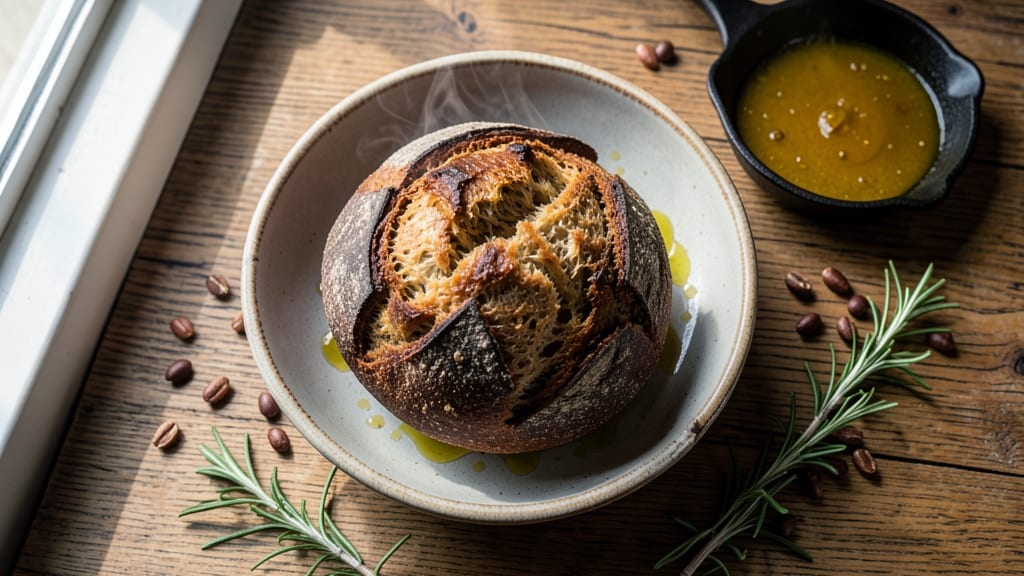
This Austrian rye bread recipe delivers the deep, malty flavor and dense texture that makes traditional European rye so satisfying.
The secret lies in a robust sourdough starter that develops complex tanginess over days, combined with a precise blend of dark rye flour and whole grains for that signature hearty bite.
I've refined this recipe to balance authenticity with modern baking techniques—no special equipment required, just patience and attention to detail.
The dough develops its signature character through a slow fermentation process, where flavors deepen and the gluten structure forms properly. Unlike lighter breads, rye requires careful handling—overworking the dough leads to toughness, while under-proofing results in a dense, compact loaf without proper rise.
This version includes a traditional seed topping that adds both visual appeal and subtle crunch, while the crust develops a satisfying crackle during baking.
What you'll end up with is a loaf that's dense yet tender, with a rich, caramelized crust and a crumb so open it practically melts in your mouth.
The malty depth comes from using a portion of the starter in the dough itself, creating layers of flavor that develop even more as the bread cools. Perfect for sandwiches, toast, or simply enjoyed with butter and jam, this bread is the centerpiece of any meal.
For best results, plan ahead—the starter needs 5-7 days to mature, and the dough benefits from an overnight cold proof. The payoff? A loaf that tastes like a trip to Vienna's finest bakeries, with that unmistakable rye aroma filling your kitchen. Let's get started on creating your own artisan-style loaf.
Ingredients for austrian rye bread
Six ingredients for the starter, twelve for the loaf—simple but powerful for that authentic Austrian rye flavor.
| Ingredient | Amount | Notes |
|---|---|---|
| Active Sourdough Starter 🍞 | 1 cup | Fed and bubbly (100% hydration) |
| Dark Rye Flour 🌾 | 3 cups | Pumpernickel or whole grain preferred |
| All-Purpose Flour 🌾 | 1 cup | For structure and lift |
| Whole Wheat Flour 🌾 | 1 cup | Adds nutty depth |
| Honey 🍯 | ½ cup | Feeds yeast and adds sweetness |
| Active Dry Yeast 🍄 | ¼ oz | Or 2 packets (2.25g each) |
| Warm Water 💧 | 1 ½ cups | 105-110°F for yeast activation |
| Salt 🧂 | 1 ½ tsp | Kosher or sea salt preferred |
| Malt Powder 🌾 | 1 tbsp | Enhances browning and flavor |
| Sesame Seeds 🌰 | ¼ cup | For traditional topping |
| Poppy Seeds 🌱 | 0.1 cup | Adds subtle crunch |
| Cornmeal 🌽 | ¼ cup | For dusting and crust |
| Olive Oil 🫒 | 2 tbsp | For dough enrichment |
The sourdough starter is non-negotiable here. King Arthur or Bob's Red Mill make excellent rye flours, but local European markets often carry the real deal—look for dark, molasses-rich varieties. For the yeast, Saf-Instant or Red Star are reliable, but if you're using a wild starter, make sure it's actively bubbling. The honey should be raw and unfiltered for maximum flavor—Manuka or clover work perfectly. If you're short on time, a pre-made rye starter from a trusted source (like a sourdough bakery) will save you days of waiting.
No dark rye flour? Substitute with whole wheat and a splash of molasses—it won't be identical, but it'll get you close. Running low on sesame seeds? Sunflower seeds or flaxseeds work in a pinch, though the flavor won't be the same. The malt powder can be tricky to find, but malt syrup or even a bit of caramelized sugar will add some depth. For the yeast, if you're in a rush, instant yeast works at half the amount, but the fermentation won't be as complex. And if you're avoiding honey, maple syrup or agave are good swaps—just reduce other liquids slightly to keep the dough from getting too sticky.
This dough is a patient one. Once mixed, let it rest at room temperature for 1 hour before the first fold, then repeat every 30 minutes for 2 hours. For the seed topping, mix the seeds with a little water to form a paste—this helps them stick. The loaf keeps best in a bread box or paper bag at room temperature for 3-4 days, but it freezes beautifully for up to 3 months. Wrap tightly in plastic and thaw overnight at room temperature before slicing—it's worth the wait for that perfect crumb.
Why You'll Love This Recipe
- Sourdough Shortcut: I swear by my active starter—it’s the secret to cutting bulk prep time in half. Mix, shape, proof, and bake while you sip coffee. No kneading, no fuss, just that deep, tangy crust you’d pay $12 for at a bakery.
- Honey-Rye Magic: That dark rye flour gives it a molasses-rich bite, while the honey—just a splash—softens the edge without turning it sweet. Honestly, the first slice still makes me pause mid-bite. That’s the kind of bread that lingers.
- Weeknight Workhorse: Toss it in a lunchbox for school or work—it holds up for days without getting soggy. Or slice it thick for open-faced sandwiches. My kids grab it before I even finish making it. (Yes, even on a Tuesday night.)
- Budget-Friendly Staple: Rye flour’s cheap, and a little starter goes a long way. I make a loaf every two weeks, and it replaces store-bought bread, toast, and even croutons. Between us? My grocery bill thanks me every time.
Step-by-step instructions for Austrian rye bread
Let's create a rich, malty loaf with deep flavor and perfect texture.
Combine Wet Ingredients and Yeast
In a large mixing bowl, combine the 1 cup active sourdough starter, 0.5 cup honey, 2 tbsp olive oil, and 1.5 cups warm water (105-110°F). Stir until the honey is fully dissolved and the mixture is smooth. The warm water should feel pleasant to touch—not hot enough to kill the yeast.
In a separate small bowl, sprinkle the 0.25 oz active dry yeast over 1 tbsp of the warm water from the main mixture. Let it sit for 5-10 minutes until it becomes frothy. This confirms your yeast is active and ready to work. If it doesn't bubble, your yeast may be dead, and you'll need to start over.
Mix Dry Ingredients and Combine
In the same large bowl, add the 3 cups dark rye flour, 1 cup all-purpose flour, 1 cup whole wheat flour, 1.5 tsp salt, and 1 tbsp malt powder. Mix these dry ingredients together using a wooden spoon or dough whisk until evenly combined. The malt powder will add that signature deep, caramel-like flavor that makes Austrian rye so special.
Gradually pour the yeast mixture into the dry ingredients while mixing. The dough will be sticky but manageable. Use a dough scraper to help incorporate everything thoroughly. You're aiming for a shaggy, wet dough that clings to the bowl—this is normal for rye bread. Let it rest for 10 minutes while you prepare your workspace.
Knead and Develop Gluten
Lightly flour a clean work surface with about 1 tbsp of the dark rye flour to prevent sticking. Turn out the dough and knead it for 8-10 minutes by hand, or use a stand mixer with a dough hook on medium speed for 5-6 minutes. You're not looking for a smooth, elastic dough like with wheat bread—rye dough should remain slightly dense and sticky.
During kneading, the gluten will start to develop, but the dough will still feel heavy and dense. This is perfect for rye bread. When you press your finger into the dough, it should spring back slowly rather than quickly. If the dough feels too sticky, add just enough flour to make it workable—about 1-2 tbsp total. Over-flouring can dull the flavor.
First Rise and Shape
Lightly oil a large mixing bowl and place the dough inside. Cover the bowl with a damp kitchen towel or plastic wrap and let it rise at room temperature for 1-2 hours, or until it has nearly doubled in size. Rye dough rises more slowly than wheat dough, so be patient. You'll know it's ready when the dough feels slightly puffy and has expanded by about 50%.
Once risen, turn the dough out onto a lightly floured surface. Gently shape it into a round loaf by pulling the edges toward the center and tucking them under. The dough will be sticky, so use wet hands to prevent sticking. Place the shaped loaf seam-side down in a greased 9x5-inch loaf pan, or shape it into a free-form round if baking in a Dutch oven.
Second Rise and Bake
Cover the shaped dough with a damp towel and let it rise for another 30-45 minutes until it has puffed slightly and feels light when pressed. Preheat your oven to 375°F while the dough rises. For a crispy crust, place a small oven-safe dish filled with water on the bottom rack to create steam.
Bake the loaf for 45-50 minutes until the top is deep golden brown and the internal temperature reaches 190-200°F. Tap the loaf gently—it should sound hollow when done. If the top browns too quickly, tent it loosely with aluminum foil. For extra crust development, brush the top with a little water before baking if needed.
Cool and Top
Remove the loaf from the oven and transfer it to a wire rack to cool completely for at least 1 hour. Rye bread continues to set as it cools, so rushing this step can make it gummy. While it cools, mix 0.25 cup sesame seeds and 0.1 cup poppy seeds in a small bowl.
Once the loaf is cool enough to handle, brush the top with a little olive oil and sprinkle the sesame and poppy seed mixture evenly over the surface. Press the seeds gently into the crust so they stick. Let the seeds dry completely before slicing. This traditional topping adds both texture and visual appeal to your Austrian rye.
Pro Tips For Making Austrian Rye Bread
- STIR THE STARTER LONG: Dark rye flour can be heavy—after adding your sourdough starter, mix it in with a wooden spoon for 5 minutes straight. This breaks up clumps before the wetter all-purpose and whole wheat flours go in, or you’ll end up fighting dough that sticks like glue.
- WEIGH THE RYE FLOUR: Scooping dark rye flour by volume leads to dense, uneven bread. Use a kitchen scale—it’s lighter than it looks, and you’ll need about 10% more by weight than you’d guess. Trust the numbers, not the cup.
- DON’T OVER-PROOF THE DOUGH: Austrian rye’s high rye content ferments faster than all-purpose dough. Check for readiness when the dough springs back slowly (not instantly) when poked—usually 4–6 hours at room temp. Overproofing turns your loaf into a brick.
- HONEY IN THE LAST FIVE MINUTES: Add honey to the dough only when mixing in the final flour. It caramelizes during baking, giving that deep, toasty flavor—but if you mix it in early, it’ll feed the yeast too aggressively and throw off your rise. Lazy? Just drizzle it on top before baking.
Make-ahead tips for this recipe
Starter Prep Ahead
Your sourdough starter deserves time—plan to feed it 5-7 days before baking. Store it in a glass jar at room temperature, feeding it equal parts rye flour and water every 24 hours.
Look for bubbly, domed activity before using it in your dough. I keep mine on my counter near the stove where it's warm but not hot. 🧬
Dough Cold Proof
For deeper flavor, let your shaped dough rest in the fridge overnight (8-12 hours) before baking. This slow fermentation develops complex maltiness. Place the dough in a lightly oiled container, cover with plastic wrap, and refrigerate.
When ready to bake, let it sit at room temperature for 1-2 hours to wake up before the final rise. This step transforms good bread into extraordinary bread.
Seed Mix Prep
Mix your sesame and poppy seeds with 1 tsp water to form a paste—this ensures they stick to the crust. Store the dry seeds in an airtight container in your pantry for up to 3 months.
For a nutty variation, toast the seeds in a dry pan for 2-3 minutes before mixing. The aroma alone makes your kitchen smell like an Austrian bakery. 🌰
Freezing for Later
Wrap your fully cooled loaf tightly in plastic wrap, then place it in a freezer bag with all the air squeezed out. Label with the date—it keeps for 3 months without losing quality.
To serve, thaw at room temperature for 2-3 hours, then warm in a 350°F oven for 10-15 minutes to restore freshness. The texture stays dense and moist, just like fresh-baked.
Crust Refresh
Revive stale crusts by brushing the loaf with melted butter and baking at 350°F for 5-7 minutes. For extra crunch, sprinkle with coarse sea salt before baking.
Store refreshed bread in a paper bag to maintain moisture. This trick works wonders for sandwiches or toast—like it just came out of the oven. ✨
Portion Control
Slice your loaf into 1-inch thick pieces for even toasting. Store individual slices in a single layer on a plate, covered with a clean kitchen towel. Reheat slices in a toaster or skillet for crispy results.
This prevents soggy bread and makes meal prep effortless. Perfect for busy mornings when you need that rye flavor in seconds. 🍞
Nutrition facts
Frequently asked questions
Why does Austrian rye bread need a sourdough starter?
The sourdough starter adds depth of flavor and helps create that signature malty, tangy taste. Unlike commercial yeast, wild fermentation develops complex flavors over days, giving the bread its authentic character. Plus, it enhances digestion by breaking down phytic acid in the grains.
Can I use all-purpose flour instead of dark rye flour?
You can substitute, but expect a lighter, less flavorful loaf. For best results, use 2 cups whole wheat flour + 1 tsp molasses to mimic rye's density and depth. The crust will be paler, but the texture will remain dense. For authentic flavor, invest in quality dark rye flour.
How do I know when the dough is properly proofed?
Press your finger gently into the dough—it should spring back slowly (not quickly like wheat dough) and leave a slight indentation. For rye, look for 50% volume increase after 1-2 hours at room temperature. Overproofing leads to a collapsed loaf, while underproofing makes it dense and gummy.
What's the best way to store leftover rye bread?
Wrap the cooled loaf tightly in plastic wrap and store at room temperature for 3-4 days in a bread box. For longer storage, freeze wrapped slices for up to 3 months. To revive, thaw overnight and warm in a 350°F oven for 10 minutes with a sprinkle of water for freshness.
Can I make this recipe without a Dutch oven?
Yes! Use a greased 9x5-inch loaf pan for a structured shape or bake on a parchment-lined sheet for a free-form round. For extra crust development, place a metal tray of boiling water on the oven rack during baking. The bread will be slightly less crispy but still delicious.