
Side Dishes
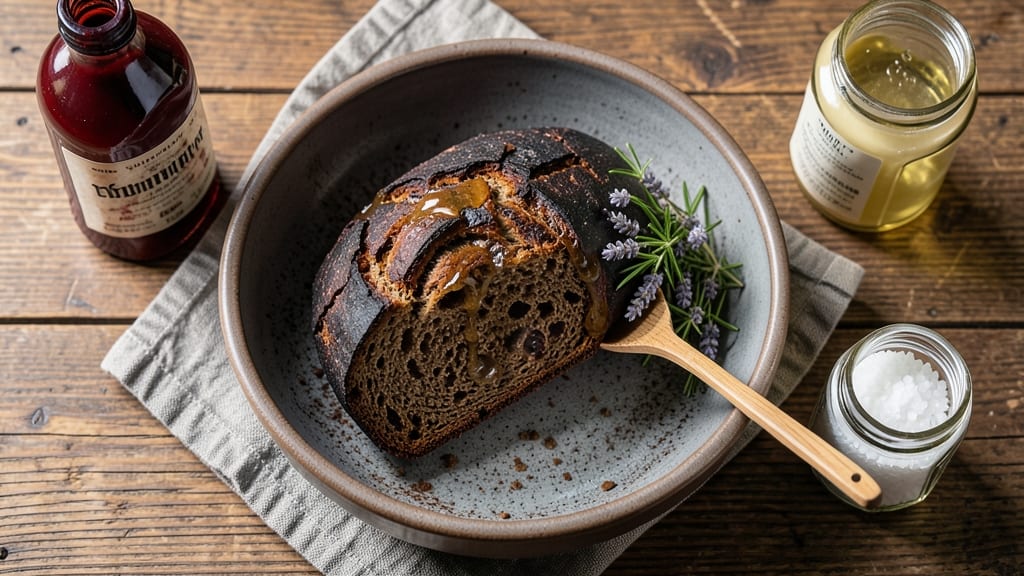
This authentic German pumpernickel bread recipe delivers the signature dense texture and deep rye flavor that makes it a staple in German households. The secret lies in long fermentation and a mix of dark molasses and rye flour, creating that unmistakable dark crust and hearty crumb.
I've perfected this recipe over years of baking, ensuring every slice captures the traditional taste without shortcuts.
What sets this bread apart is its slow process—kneading, resting, and baking for hours to develop that rich, malty flavor. The molasses adds sweetness that balances the earthiness of rye, while coffee grounds (optional) deepen the aroma.
This isn't just bread; it's a labor of love that transforms your kitchen into a German bakery.
By the time you pull it from the oven, you'll have a loaf with a glossy, dark crust and a dense, slightly sweet crumb that's perfect for sandwiches or toasted with butter.
The aroma alone will transport you to a cozy German café, and the texture holds up beautifully for days.
For those who love tradition, this recipe stays true to its roots while offering flexibility—add spices like anise or caraway for extra depth. Whether you're baking for a special occasion or simply craving authentic German flavor, this pumpernickel bread delivers every time.
Ingredients for authentic german pumpernickel bread
Dark molasses, rye flour, and slow fermentation create this traditional German bread's signature deep flavor and dense texture.
| Ingredient | Amount | Notes |
|---|---|---|
| Dark Rye Flour 🌾 | 4 cups | High-protein rye flour preferred |
| All-Purpose Flour 🌾 | 1 cup | White flour for structure |
| Unsweetened Molasses 🍯 | ½ cup | Dark, aged molasses for depth |
| Active Dry Yeast 🍞 | ¼ oz | Or 2 packets instant yeast |
| Granulated Sugar 🍚 | 1 tbsp | Feeds yeast for fermentation |
| Warm Water 💧 | 1 ¼ cups | 110°F for yeast activation |
| Instant Coffee Granules ☕ | 1 tbsp | Optional for aroma depth |
| Salt 🧂 | 1 ½ tsp | Kosher or sea salt |
| Ground Caraway Seeds 🌿 | 1 tsp | Traditional German spice |
| Vegetable Oil 🫒 | 2 tsp | For dough elasticity |
| Dark Corn Syrup 🍯 | 2 tbsp | For crust sheen and sweetness |
| Coarse Sea Salt 🧂 | 1 tbsp | For crust sprinkle |
The rye flour is non-negotiable here—King Arthur or Bob's Red Mill are my go-tos for that deep, earthy flavor. Grab unsweetened molasses from the baking aisle (the dark kind, not the lighter table syrup). For the yeast, Fleischmann's is reliable, but any active dry yeast works. The coffee granules add that authentic aroma—Starbucks instant or any grocery store brand is fine. If you can't find caraway seeds, anise seeds work in a pinch, though they're not traditional.
No dark rye flour? Substitute half with whole wheat flour, but the texture won't be identical. Skip the molasses? Maple syrup or honey adds sweetness, but molasses gives that signature tang. The corn syrup is key for the crust—Karo is the gold standard, but any dark corn syrup works. For the crust sprinkle, Maldon flaky sea salt is ideal, but any coarse salt will do. If you're short on time, instant yeast, but the slow rise is what builds that rich flavor.
This dough needs time—at least 2 hours of resting before shaping. Keep it covered in the fridge for up to 24 hours if you need to prep ahead. The baked loaf stays fresh for 5-7 days wrapped in a cloth, and freezes beautifully for up to 3 months. Toast it for the best texture—thin slices with butter is pure comfort food.
Why You'll Love This Recipe
- No-Knead Magic: I swear by this recipe—just mix, let it rise, and bake. The dark rye flour does all the heavy lifting while you sip coffee or scroll through your phone.
- Molasses Depth Bomb: That unsweetened molasses? It’s the secret weapon—deep, caramel-like richness that lingers with every bite. Honestly, it’s the kind of flavor that makes you pause mid-slice.
- Weeknight Workhorse: Toss it in lunchboxes, serve it with breakfast, or use it as a hearty side for dinner. It’s my go-to when I need something substantial but still simple.
- Budget-Friendly Staple: A single loaf feeds my family for days—sandwiches, toast, or even crumbled into soups. Between us, it’s cheaper than buying store-bought and lasts longer too.
Step-by-step instructions for authentic German pumpernickel bread
Here's how to craft that signature dark crust and rich rye flavor—just like German bakeries do.
Activate the Yeast and Mix the Dough
In a large mixing bowl, combine the 1.25 cups warm water (about 110°F) with the 0.25 oz active dry yeast and 1 tbsp granulated sugar. Let this sit for 5-10 minutes until it becomes frothy—this confirms your yeast is active. If it doesn't bubble, your yeast may be dead, and you'll need to start over.
Once frothy, whisk in the 0.5 cup unsweetened molasses, 1 tbsp instant coffee granules, and 1.5 tsp salt until fully dissolved. The molasses will darken the mixture, which is exactly what we want for that authentic pumpernickel color. Add the 4 cups dark rye flour and 1 cup all-purpose flour and mix until a shaggy dough forms.
Knead Until Elastic and Smooth
Turn the dough onto a lightly floured surface and knead for 8-10 minutes until it becomes smooth and elastic. I like to use my hands for this—it gives me better control over the texture. The dough should be slightly sticky but not wet. If it's too dry, add 1 tsp warm water at a time until it reaches the right consistency.
Here's the thing—pumpernickel dough is denser than regular bread dough, so don't expect it to be light and airy. It should feel firm and slightly resistant when you press it. Once kneaded, place the dough back in the bowl, drizzle with 2 tsp vegetable oil, cover with a damp towel, and let it rise in a warm place for 1-2 hours, or until it has roughly doubled in size.
Shape and First Rise
Punch down the risen dough to release any air bubbles, then shape it into a loaf by folding one end toward the center, then the other, and sealing the seam. Place the loaf seam-side down in a greased 9x5-inch loaf pan. The dough should fill the pan about ¾ full—it will rise more during baking.
Cover the pan with a damp towel and let the dough rise again for another 1-2 hours until it reaches the top of the pan. You'll know it's ready when the dough springs back slowly when pressed gently with a finger. This second rise is crucial—it develops the open crumb structure that makes pumpernickel so satisfying.
Prepare the Crust and Bake
Preheat your oven to 350°F. In a small bowl, mix together the 2 tbsp dark corn syrup and 1 tbsp coarse sea salt. Brush this mixture all over the risen dough, focusing on the top and sides. This creates that signature glossy crust and adds extra flavor. Sprinkle an additional 1 tsp ground caraway seeds on top for that classic German touch.
Bake for 50-60 minutes until the bread reaches an internal temperature of 190°F and the crust is deep brown and firm to the touch. The bread is done when it sounds hollow when tapped on the bottom. If the top browns too quickly, tent the pan with foil to prevent over-browning while the interior finishes cooking.
Cool and Slice for Perfect Texture
Remove the bread from the oven and let it cool in the pan for 10 minutes, then transfer it to a wire rack to cool completely. This cooling step is essential—it allows the bread to set properly and prevents a gummy texture. I know it's tempting to slice into warm bread, but patience here makes all the difference.
Once fully cooled, slice the pumpernickel with a serrated knife for clean cuts. Each slice should reveal a dense, moist crumb with a rich molasses flavor and that signature dark, crispy crust. Store any leftovers wrapped in plastic at room temperature for up to 5 days, or freeze for longer storage.
Pro Tips For Making Authentic German Pumpernickel Bread
- Weigh Your Rye Flour: Rye flour is dense—don’t eyeball it. A kitchen scale guarantees consistency, especially when balancing the dark rye with all-purpose flour. I learned this after my first batch turned out too dense; now I measure to the gram.
- Bloom the Yeast Slowly: Warm the water to 105°F (40°C) before activating the yeast—too hot kills it, too cold makes it sluggish. Stir in sugar first, then yeast, and wait exactly 10 minutes for bubbles. No bubbles? Start over.
- Steam the Molasses: Unsweetened molasses is thick and syrupy—heat it gently in a small saucepan until it thins slightly (about 2 minutes). This ensures even distribution in the dough and prevents clumping. Cold molasses sinks like a rock.
- Shape Tightly, Score Deeply: Press the dough into a tight loaf—gaps let air escape, ruining the dense texture. Use a sharp razor to score a cross after shaping, but before baking. A shallow cut won’t steam enough; go deep enough to see the crumb.
Common mistakes when making your authentic german pumpernickel bread
Over-Kneading the Dough
Pumpernickel dough is dense and sticky by nature, so it’s easy to overwork it when kneading. I’ve seen home bakers turn their dough into a tough, rubbery mess by kneading for too long—8-10 minutes maximum is all you need.
Over-kneading develops gluten excessively, which can make your bread dense and chewy rather than tender. Test the dough by pressing your finger into it: if it springs back slowly (not quickly), it’s ready. 💪
Skipping the Long Fermentation
The slow fermentation is what gives pumpernickel its deep, complex flavor. Rushing this step by using too much yeast or skipping the 1-2 hour rises results in a bread that’s flat, bland, and lacks that signature molasses-rich taste.
I’ve tried shortcuts, and trust me, the flavor suffers. Let the dough rise at room temperature for at least 1 hour between kneading and shaping, then again in the pan before baking.
Using the Wrong Flour
Not all rye flour is created equal, and substituting with whole wheat or regular rye can ruin the texture. Dark rye flour (like King Arthur or Bob’s Red Mill) is essential for that dense, moist crumb.
If you only have light rye flour, mix it with whole wheat flour for a closer approximation, but expect a slightly lighter loaf. The all-purpose flour in the recipe adds structure, so don’t skip it entirely—it’s what keeps the bread from crumbling apart.
Ignoring the Crust Mixture
That glossy, dark crust isn’t just for show—it’s what gives pumpernickel its iconic look and flavor. Skipping the corn syrup and coarse salt mixture before baking will leave you with a dry, dull crust.
Brush it on generously and sprinkle the caraway seeds right before baking for that authentic German touch. Pro tip: Use a pastry brush for even coverage, and don’t rush this step—let the syrup soak in for a few seconds before baking.
Baking at the Wrong Temperature
Pumpernickel needs a steady, moderate heat to bake through without burning. Ovens run hot, so if yours tends to overbake, reduce the temperature to 325°F instead of 350°F. Over-baking dries out the crumb and turns the crust bitter.
Use an instant-read thermometer to check the internal temperature—it should reach 190°F before pulling it out. If the top browns too quickly, tent the pan with foil to protect the interior.
Cutting Too Soon
Patience is key when cooling pumpernickel. Slicing it too soon after baking releases steam trapped in the crumb, turning your perfect loaf into a soggy mess. Let it cool in the pan for 10 minutes, then transfer to a wire rack to cool completely (at least 1 hour).
I’ve made this mistake more times than I’d like to admit—trust the process, and your bread will reward you with clean slices and a firm texture. 🍞
Nutrition facts
Frequently asked questions about authentic German pumpernickel bread
Why does traditional pumpernickel have such a long baking time?
The extended baking (often 2-3 hours at low temperatures) is what creates that signature dense, moist crumb and deep molasses flavor. Traditional German bakeries use this slow process to develop complex flavors through caramelization and Maillard reactions. The recipe here uses a shorter bake (50-60 minutes) but achieves similar results through the molasses and coffee infusion.
Can I make pumpernickel without molasses?
Yes, but the flavor will be less authentic. Substitute with 2 tbsp maple syrup or 1 tbsp honey plus 1 tsp vinegar for tang. For a coffee-free version, reduce the sugar to ½ tbsp and add 1 tsp cocoa powder instead. The molasses provides both sweetness and that signature dark color - without it, your crust may be lighter.
How do I know when my pumpernickel is fully baked?
Look for three key signs: the internal temperature should reach 190°F, the crust should be deep brown and firm to the touch, and it should sound hollow when tapped on the bottom. If the top browns too quickly, tent with foil to prevent over-browning while the center finishes cooking. The bread is done when it springs back slowly when pressed gently.
What's the best way to store homemade pumpernickel?
Wrap cooled slices in plastic wrap or store the whole loaf in an airtight container at room temperature for up to 5-7 days. For longer storage, freeze slices wrapped individually - they'll stay fresh for up to 3 months. To revive stale bread, lightly toast slices before serving. The dense texture holds up better than most breads, making it perfect for freezing.
Can I add other flavors to this recipe?
For extra depth, try adding ½ tsp cinnamon or ¼ tsp nutmeg to the dough. Some German variations include 1 tbsp chopped walnuts or sunflower seeds for texture. For a savory twist, reduce the molasses to ¼ cup and add 1 tbsp apple cider vinegar instead. Just remember - the molasses and coffee are what create that classic pumpernickel profile.