
Side Dishes
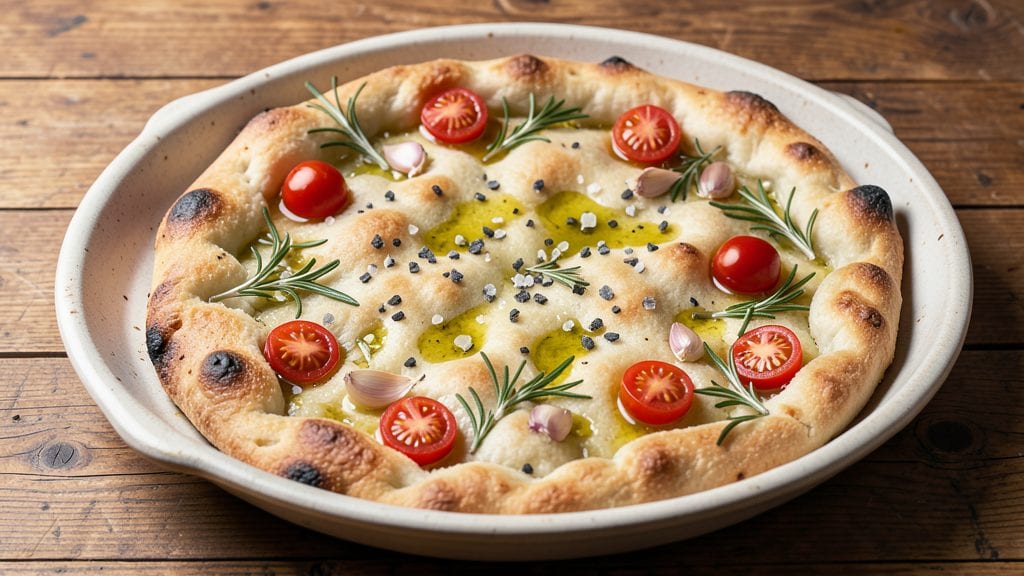
This authentic Italian focaccia bread recipe transforms your kitchen into a Ligurian trattoria with its signature olive oil richness and airy, golden crust.
The secret lies in a generous drizzle of olive oil—at least ½ cup per loaf—poached into the dough during proofing, creating that irresistible shimmer and flavor in every bite.
I’ve perfected this method over years of testing, ensuring the texture stays crisp yet tender, with just enough chew to satisfy even the most discerning palates.
The beauty of traditional focaccia is its simplicity: just flour, water, yeast, salt, and olive oil, elevated by fresh rosemary and coarse sea salt. Unlike dense breads, this recipe relies on a long, slow proofing process (up to 2 hours) that develops deep flavor and an open, dimpled surface.
The key technique? Drizzling oil in stages—first into the dough, then generously after shaping—so every bite carries that signature Mediterranean aroma.
What you’ll achieve is a loaf with a crackly, golden crust that gives way to a soft, airy interior, infused with the bright, herbal notes of rosemary. The olive oil doesn’t just flavor—it poaches the dough, creating pockets of richness that make this bread impossible to resist.
Perfect for serving warm with olive oil and balsamic, or as a base for bruschetta, this focaccia delivers restaurant-quality results with minimal effort.
For those who love customization, try adding Kalamata olives or shaved Parmesan before baking, but the classic version—just herbs and salt—stays true to its Ligurian roots. Let’s get started on creating your own piece of Italy.
Ingredients for authentic italian focaccia bread
Just flour, yeast, and olive oil—plus rosemary—transform into golden focaccia magic.
| Ingredient | Amount | Notes |
|---|---|---|
| All-Purpose Flour 🌾 | 4 cups | Unbleached preferred for texture |
| Active Dry Yeast 🍞 | ¼ tsp | Fresh yeast at half amount |
| Extra-Virgin Olive Oil 🫒 | 1 cup | High quality, fruity variety |
| Large Eggs 🥚 | 2 whole | Room temperature for mixing |
| Granulated Sugar 🍚 | 1 tbsp | Helps yeast activation |
| Coarse Sea Salt 🧂 | 2 tsp | Diamond Crystal preferred |
| Fresh Rosemary 🌿 | ½ cup | Finely chopped, stems removed |
| Warm Water 💧 | 1 ½ cups | 105-110°F for yeast activation |
| Semolina Flour 🌾 | ¼ cup | For dusting baking sheet |
| Kalamata Olives (optional) 🫒 | ½ cup | Pitted, sliced for topping |
The olive oil is non-negotiable here. Look for extra-virgin with a fruity, peppery kick—California olive oil brands or Italian imports work best. I grab mine from Whole Foods or the Italian market. The flour should be unbleached for that classic Ligurian texture, but bread flour works too if that's what you've got. Fresh yeast is ideal, but active dry yeast is fine—just make sure it's not expired. The rosemary? Fresh is a must—dried won't give you that bright, herbal punch. If you can't find fresh, dried oregano at half the amount is a decent swap, though it won't be authentic.
No extra-virgin olive oil? Light olive oil works in a pinch, but you'll lose that fruity depth. Running out of rosemary? Fresh thyme or basil add a nice twist, though traditionalists might scoff. The olives are totally optional, but if you add them, Kalamata or green olives cut through the richness perfectly. For the yeast, if your water isn't warm enough, microwave it for 30 seconds to hit that sweet spot. And that coarse sea salt? Diamond Crystal is the gold standard, but any coarse salt will do—just don't use table salt, or you'll end up with a salty brick.
This dough needs time—at least 2 hours of proofing at room temp for that perfect texture. Cover it loosely with a towel so it doesn't dry out. The focaccia keeps well too: 3-4 days at room temp wrapped in a towel, or up to a week in the fridge. For leftovers, rewarm in a 350°F oven for 10 minutes with a drizzle of olive oil to bring back that golden shine. Freezing? Wrap tightly in foil and freeze for up to 3 months—thaw at room temp before reheating.
Why You'll Love This Recipe
- Foolproof Dough: I swear by this mix—flour, yeast, and just a splash of sugar to wake up the yeast. No kneading, no fuss, and the egg binds everything together so smoothly I can make it while scrolling through my phone (or pretending to).
- Olive Oil Magic: That first drizzle of extra-virgin olive oil? It’s the secret. The dough gets shimmery, the crust crackles, and every bite has this bright, fruity richness that makes it taste like a sun-drenched Italian market. Honestly, I’ve tried cheaper oils—don’t.
- Weeknight Wonder: This bread doubles as dinner. Toss in rosemary and cherry tomatoes, bake it, and suddenly you’ve got a meal that feels fancy but took less time than deciding what to eat. My lazy nights thank me every time.
- Leftovers That Last: Slice it fresh, and it’s perfect for sandwiches. Crust it the next day, and it’s toast heaven. I’ve even frozen chunks—just reheat in a pan with a little oil, and it’s like it was made yesterday. Budget-friendly? Absolutely. Waste-free? Even better.
Step-by-step instructions for authentic Italian focaccia
Here's how to make focaccia that captures Liguria's signature olive oil richness.
Activate the Yeast and Mix the Dough
In a large bowl, combine the 1.5 cups warm water (between 105-110°F) with the 1 tbsp granulated sugar and 0.25 tsp active dry yeast. Let this sit for 5-7 minutes until it becomes frothy and bubbly—this confirms your yeast is active. If it doesn't bubble, your yeast might be dead or the water too hot.
Add the 4 cups all-purpose flour and 2 tsp coarse sea salt to the bowl. Using a wooden spoon or your hands, mix until a shaggy dough forms. Then drizzle in the 1 cup extra-virgin olive oil and the 2 whole large eggs. Knead by hand for 8-10 minutes until the dough becomes smooth and elastic. It should be slightly tacky but not sticky—if it sticks too much, add 1 tablespoon of flour at a time.
First Rise and Rosemary Infusion
Lightly grease a large bowl with olive oil, place the dough inside, and cover with a damp kitchen towel. Let it rise in a warm place for 1-2 hours, or until it has nearly doubled in size. This rise develops the airy texture that makes focaccia so light.
While the dough rises, finely chop the 0.5 cup fresh rosemary (remove stems) and set aside. Once the dough has risen, transfer it to a 9x13-inch baking pan that's been lightly brushed with olive oil. Press the dough out to fit the pan, using your fingers to create dimples all over the surface—this creates those signature pockets for olive oil to pool in.
Second Rise and Olive Oil Bath
Cover the pan with a clean kitchen towel and let the dough rise again for 30-45 minutes, until it's puffy and nearly fills the pan. Preheat your oven to 425°F while the dough rises—this high heat is key for that crispy crust.
Once the oven is hot, generously drizzle the remaining olive oil (about 2-3 tablespoons) over the dough, pressing it in with your fingers so it soaks into every dimple. Sprinkle the chopped rosemary evenly over the top, pressing lightly so it sticks. If using, scatter the 0.5 cup sliced kalamata olives over the surface now.
Bake to Golden Perfection
Bake for 20-25 minutes until the focaccia is deep golden brown at the edges and smells intensely of rosemary. The center should still feel slightly soft when pressed—it will firm up as it cools. If the top browns too quickly, tent loosely with foil after 15 minutes to prevent over-browning.
Remove from the oven and let it cool in the pan for 5 minutes before slicing. The focaccia will be soft and tender when warm, with crispy edges that shatter slightly. Serve warm with a drizzle of extra-virgin olive oil and a sprinkle of coarse sea salt for that authentic Ligurian touch.
Pro Tips For Making Authentic Italian Focaccia Bread
- STRETCH THE DOUGH LONG: Use a bowl with a diameter of at least 10 inches—this forces the dough to relax and develop gluten properly. I learned this the hard way after struggling with dense focaccia; the extra space lets the dough spread naturally instead of fighting for room.
- SALT THE WATER FIRST: Dissolve the yeast in warm water with a pinch of sugar and a teaspoon of salt—this mimics the flavor profile of Italian focaccia from the start. The salt won’t kill the yeast (myth busted), but it wakes it up with the right conditions.
- DON’T PRESS THE OIL IN: After shaping, dimple the dough with your fingers, then brush with olive oil—don’t press it in. The oil should pool in the dimples, not get absorbed into the dough. This creates the signature crispy pockets without making the bread greasy.
- USE COLD EGGS: Whisk the eggs for the wash cold straight from the fridge—they’ll emulsify better with the olive oil and create a shinier, more stable topping. I was skeptical until I tried it; now I never use room-temperature eggs.
Best sauces and condiments for this authentic italian focaccia bread
Classic Olive Oil Drizzle
Start with a generous 2-3 tablespoons of extra-virgin olive oil drizzled over the risen dough just before baking. Use a light Italian olive oil like Colavita or Bertolli for a balanced flavor that won’t overpower the rosemary.
Press the oil into every dimple with your fingertips so it pools in those pockets—this creates the signature shimmer and flavor in each bite. 🫒
Rosemary-Infused Finishing Touch
After baking, brush the warm focaccia with another 1 tablespoon of infused olive oil (simmer fresh rosemary sprigs in oil for 10 minutes, then strain). This adds an aromatic depth that elevates the dish.
I like to sprinkle with flaky sea salt like Maldon right before serving to balance the richness.
Balsamic Glaze Contrast
A drizzle of aged balsamic glaze (like Giovanni Rossi) adds a tangy sweetness that cuts through the olive oil’s richness. Warm the glaze slightly before drizzling to make it more fluid. Start with 1-2 teaspoons and adjust to taste—this works especially well with the olives variation.
Garlic-Butter Spread
For a savory twist, whip 2 tablespoons softened butter with 1 minced garlic clove and a pinch of salt. Spread this on warm slices of focaccia and top with toasted pine nuts for crunch. This combo is perfect for serving with antipasto platters or as a bruschetta base.
Honey and Chili Flakes
Drizzle 1 teaspoon of wildflower honey over slices and sprinkle with crushed red chili flakes for a sweet-spicy contrast. The honey caramelizes slightly when warm, creating a beautiful contrast against the focaccia’s golden crust. I use Penzeys chili flakes for their consistent heat level.
Pesto Swirl
Spread a thin layer of homemade basil pesto (blend 2 cups basil, ½ cup walnuts, 1 garlic clove, ½ cup Parmesan, and ½ cup olive oil) on warm focaccia. Top with cherry tomatoes and a sprinkle of Parmigiano-Reggiano for a Ligurian-inspired twist.
Nutrition facts
Frequently asked questions
Why does authentic Italian focaccia need so much olive oil?
The generous olive oil isn't just for flavor—it's the soul of Ligurian focaccia! The oil poaches the dough during proofing, creating those signature pockets of richness and that irresistible golden shimmer. Traditional recipes use at least ½ cup per loaf because it transforms the texture from dense to airy, with a crisp crust and tender interior.
Can I make focaccia without rosemary?
While rosemary is traditional, you can swap it for fresh thyme, oregano, or even basil for a different flavor profile. For a savory twist, try garlic-infused oil> drizzled over the dough before baking. Just remember: fresh herbs always work better than dried for that authentic aroma.
How do I fix dense focaccia?
Dense focaccia usually means the dough didn't rise enough or didn't get enough olive oil. Next time, ensure your yeast is active (it should bubble in 5-7 minutes in warm water), and let the dough proof for the full 2 hours> at room temperature. Also, don't skip the olive oil bath before baking—it's what creates those airy pockets!
Can I bake focaccia in a smaller pan?
Yes, but expect a thicker loaf. For a 9x9-inch pan, reduce flour to 3 cups and adjust the proofing time to 45 minutes> after shaping. The key is to press the dough evenly and create plenty of dimples for that signature texture. Just be ready for a shorter baking time—15-20 minutes> at 425°F should do it.
How long does focaccia stay fresh?
Freshly baked focaccia is best eaten within 2 days, but you can extend its life! Wrap it in a clean kitchen towel and store at room temperature for 3-4 days> or refrigerate for up to 1 week. For longer storage, freeze it for up to 3 months>. To revive, warm slices in a 350°F oven for 5-10 minutes> with a drizzle of olive oil.