
Side Dishes
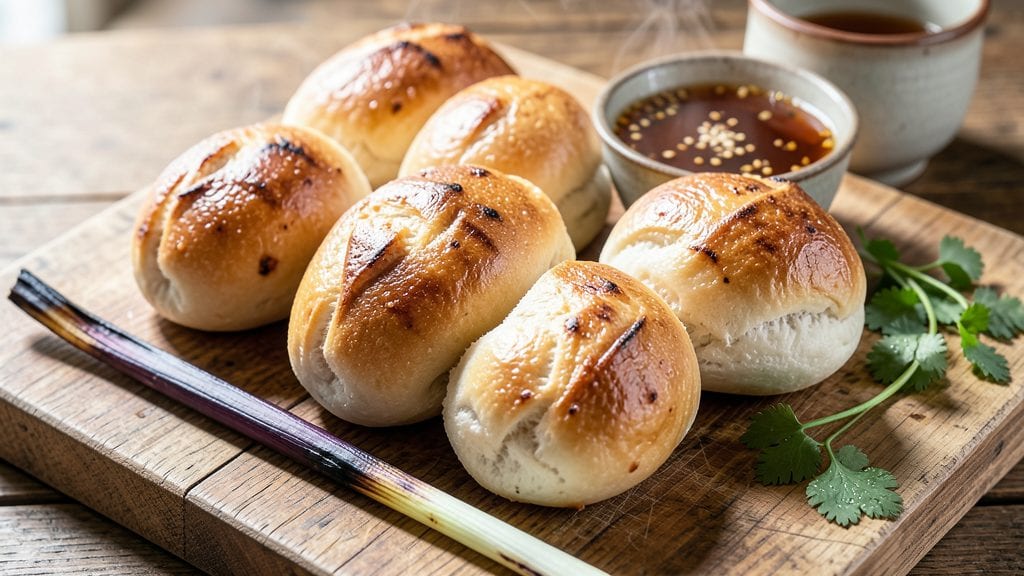
This bao bread recipe transforms simple flour, yeast, and water into steamed pillowy clouds that burst with flavor—the perfect balance of chewy exterior and melt-in-your-mouth interior. 💛 I first encountered bao at a bustling Portland dim sum spot, where the warm, fragrant buns were served with crispy pork filling, and I knew I had to recreate them at home.
The secret lies in precise dough handling and gentle steaming, techniques that elevate this dish from ordinary to extraordinary.
The dough requires patience—30 minutes of resting time ensures the gluten develops just enough for that signature chewy texture without becoming tough. Traditional methods call for pan-frying the shaped bao before steaming, creating a subtle char that deepens the flavor, while modern adaptations use baking or air-frying for convenience.
The pork filling, seasoned with five-spice and soy, adds a savory contrast that makes every bite irresistible.
By the time you’re done, you’ll have a batch of golden-brown bao with tender interiors, steamed to perfection and ready to be filled with crispy pork, sweet red bean paste, or even savory mushrooms.
The aroma alone will have everyone gathering around the table, and the first bite delivers that magical combination of textures and flavors that makes bao a global favorite.
Whether you’re serving these as a side, snack, or even breakfast, this recipe delivers restaurant-quality results with minimal fuss. The dough can be prepped ahead, and the filling comes together in under 15 minutes—ideal for meal prep or spontaneous gatherings. Let’s get started on creating your own steamed pillowy clouds.
Ingredients for bao bread
Flour, yeast, and pork transform into restaurant-quality bao with just 14 simple ingredients.
| Ingredient | Amount | Notes |
|---|---|---|
| All-Purpose Flour 🌾 | 4 cups | High protein for chewy texture |
| Active Dry Yeast 🍞 | ¼ oz | Or 2.5g for precise measure |
| Granulated Sugar 🍚 | ½ tbsp | Feeds yeast for activation |
| Unsalted Butter 🧈 | ½ cup | Cold, cubed for dough |
| Whole Milk 🥛 | ½ cup | Warmed to room temperature |
| Large Egg 🥚 | 1 whole | Room temperature preferred |
| Kosher Salt 🧂 | ½ tsp | Adjust to taste |
| Ground Pork 🥩 | 1 ½ lb | 73% lean for crispiness |
| Light Soy Sauce 🍶 | 2 tbsp | For umami depth |
| Shaoxing Wine 🍷 | 1 tbsp | Or dry sherry substitute |
| Five-Spice Powder 🌶️ | 1 tsp | Traditional Chinese blend |
| Sesame Oil 🫒 | ½ tbsp | Toasted for aroma |
| Neutral Oil 🫒 | 2 tbsp | For pan-frying bao |
| Red Bean Paste 🍫 | 1 ½ cups | Store-bought or homemade |
The flour is non-negotiable—King Arthur or Gold Medal with 11-12% protein gives that perfect chewy bite. I grab mine from Whole Foods or the bulk bins at Trader Joe's for freshness. The yeast? Fresh active dry yeast from the refrigerated section (not the powdered kind)—it activates faster. For the pork filling, 73% lean ground pork from the butcher counter stays juicier than pre-packaged. Pro tip: if you can't find Shaoxing wine, dry sherry or mirin work in a pinch, but the authentic flavor is worth hunting down at an Asian market.
No five-spice powder? Mix 1/4 tsp each cinnamon, cloves, fennel, star anise, and black pepper—it's the same thing. The sesame oil is crucial for that nutty aroma, but if you're avoiding it, toasted peanut oil gives a similar vibe. For the dough, whole milk and cold butter create that tender crumb. Skip the milk? Water plus 1 tsp sugar works, but the texture won't be as rich. The red bean paste can be store-bought (like Fu Chun brand) or homemade—just make sure it's smooth, not chunky. And if you're feeling fancy, char siu pork makes an amazing filling alternative.
Dough keeps for 2 days wrapped in plastic in the fridge—let it sit at room temp 30 minutes before shaping. The pork filling? 3 days max in the fridge, or freeze for 3 months. I like to prep the dough the night before and cook the filling the next morning—saves time on busy days. Leftovers? Steam again with a splash of water—bao reheats beautifully. And if you've got extra dough, freeze shaped bao on a tray before bagging for easy grab-and-steam later.
Why You'll Love This Recipe
- No-Knead Magic: I swear by this dough—just mix, rest, and roll. The yeast does all the heavy lifting while I sip coffee, and that buttery milk dough? It’s impossible to resist.
- Buttery Pillowy Joy: That whole milk and butter combo transforms plain flour into something cloud-like. The sugar feeds the yeast just right, so every bite has that melt-in-your-mouth tenderness—no dry crumbs in sight.
- Weeknight Workhorse: Steam these in the morning, reheat in the microwave, or pack them for lunch. They’re perfect with sweet fillings (think cinnamon sugar) or savory (soy glaze + sesame seeds)—no one will guess they’re just flour and yeast.
- Budget-Friendly Luxury: Five ingredients, zero specialty items. The butter makes it feel fancy, but the cost stays low—plus, leftovers freeze like a dream. My wallet and taste buds win.
Step-by-step instructions for bao bread with pork filling
Here's how to make perfectly pillowy bao with a savory pork filling that melts in your mouth.
👨🍳 Step 1: Activate the Yeast and Make the Dough
In a small bowl, dissolve the 0.25 oz active dry yeast in 0.5 cup warm whole milk (about 105-110°F) with 0.5 tbsp granulated sugar. Let it sit for 5-10 minutes until frothy—this means your yeast is alive and ready to work. If it doesn't bubble, start over with fresh yeast.
In a stand mixer fitted with the dough hook, combine the 4 cups all-purpose flour and 0.5 tsp kosher salt. Add the yeast mixture, 1 whole large egg, and 0.5 cup cold unsalted butter (cut into cubes). Mix on low speed until the butter incorporates, then increase to medium and knead for 8-10 minutes until the dough is smooth and elastic.
Here's the thing—your dough should be slightly tacky but not sticky. If it's too dry, add 1 tsp milk at a time. If it's too sticky, add 1 tbsp flour. Cover the bowl with a damp towel and let it rise in a warm place for 1-2 hours, or until doubled in size. Poke it gently—if it springs back slowly, it's ready.
🍳 Step 2: Prepare the Pork Filling
In a large skillet, heat 2 tbsp neutral oil over medium-high heat. Add the 1.5 lb ground pork and cook, breaking it apart with a wooden spoon, until it loses its raw color (5-6 minutes). Drain excess fat, leaving about 1 tbsp in the pan.
Add 2 tbsp light soy sauce, 1 tbsp shaoxing wine, and 1 tsp five-spice powder to the pork. Stir well and cook for another 2 minutes until the mixture is fragrant and slightly crispy around the edges. Remove from heat and stir in 0.5 tbsp toasted sesame oil. Let it cool completely before filling the bao.
While the pork cooks, divide the 1.5 cups red bean paste into 12 equal portions (about 2 tbsp each). Roll each portion into a 1-inch ball and flatten slightly. These will be your sweet filling centers.
🥘 Step 3: Assemble and Steam the Bao
Punch down the risen dough and divide it into 12 equal pieces (about 3 oz each). Roll each piece into a 6-inch rope and fold it in half to form a 3-inch log. Seal the ends by pinching the dough together firmly.
Take one dough log and gently press your thumb into the center to create a 1-inch deep pocket. Place 1 pork filling ball and 1 red bean paste ball inside, then carefully close the pocket by pinching the dough together. Roll the bao gently between your palms to smooth its surface—this helps create that classic round shape.
Arrange the bao on a parchment-lined steamer basket, leaving 1 inch between each. Cover with a damp towel and let them rest for 15 minutes while you prepare the steamer. Fill a pot with 2 inches of water, bring to a boil, then place the steamer on top. Cover and steam for 12-15 minutes until the bao are plump, golden-brown, and hollow-sounding when tapped.
🔥 Step 4: Pan-Fry for Extra Crispiness (Optional)
Heat 2 tbsp neutral oil in a clean skillet over medium heat. Once shimmering, carefully add the steamed bao and fry for 1-2 minutes per side until they develop a deep golden-brown crust. This step adds that irresistible crunch while keeping the interior soft.
Transfer the fried bao to a wire rack and let them cool for 5 minutes before serving. The contrast of the crispy exterior and pillowy interior is what makes these bao so special. Serve warm with a sprinkle of toasted sesame seeds for extra aroma.
Real talk: Don't skip the resting time after shaping. The dough needs to relax before steaming, or your bao will collapse. And if the filling leaks during steaming, just pat the bao back into shape—they'll still be delicious!
Pro Tips For Making Bao Bread
- STRETCH AND FOLD: Use a bench scraper or your hands to stretch the dough into a thin rectangle—about 12x16 inches—before folding it into thirds. This creates those signature bao layers without overworking the gluten, and the folds stay crisp even after steaming.
- MEASURE YEAST BY VOLUME: Scoop your yeast with a spoon, not the measuring cup—yeast clumps like a grumpy cat and a tablespoon’s worth can vary wildly. Level it off with a butter knife for consistency, especially in humid kitchens where it absorbs moisture.
- STEAM WITH A LID, NOT A TRAP: Skip the water-filled steamer basket and just place your bao on a rack over boiling water in a pot. Cover with a tight lid—no need for a fancy setup. The direct steam rises evenly, and you won’t end up with soggy bottoms from trapped condensation.
- BUTTER TEMPERATURE MATTERS: Soften your butter to room temp (press a thumbprint—it should hold shape but dent easily). Cold butter creates dense bao; melted butter makes them greasy. Warm it just enough to blend smoothly into the dough—like a firm, yielding hug.
Perfect pairings for these flavors
Sweet-Savory Balance
Pair your bao with char siu pork and red bean paste for the classic combo—salty-sweet pork contrasts beautifully with the creamy sweetness of the beans. I often serve them together so guests can choose their preferred flavor.
For a modern twist, try miso-glazed salmon alongside the pork bao, adding a rich umami depth. 🌟
Spicy Chili Oil Dip
Elevate your bao experience with a quick chili oil dip made from 2 tbsp toasted sesame oil, 1 tbsp chili crisp, and a pinch of sugar. Warm the oil gently, then drizzle over the bao or serve on the side for dipping.
This adds a fiery kick that cuts through the richness of the pork filling. I keep a bottle of Lao Gan Ma chili crisp in my pantry for this purpose.
Herbal Tea Pairings
Jasmine or Pu-erh tea complements bao perfectly—the floral notes of jasmine tea cleanse your palate between bites, while the earthy depth of Pu-erh enhances the pork's savory flavors. For a caffeine-free option, hibiscus tea with a splash of honey adds a tart, refreshing contrast.
I like to brew tea in a small porcelain teapot to keep the flavors vibrant.
Crunchy Toppings
Add texture with toasted sesame seeds or crushed peanuts—sprinkle them over the steamed bao right before serving. For extra crunch, try fried shallots or crispy fried onions. These toppings not only add visual appeal but also create a delightful contrast with the soft bao interior.
I buy toasted sesame seeds from the bulk section at New Seasons Market for the best flavor.
Breakfast Adaptations
Transform bao into breakfast buns by filling them with scrambled eggs, crispy bacon, or spicy sausage. The steamed bao provides a warm, comforting vessel for hearty morning fillings.
I’ve even tried avocado and chili flakes for a brunch-friendly version. Serve with a side of hot sauce or sriracha for extra zing. 💪
Nutrition facts
Frequently asked questions
Can I make bao bread without a steamer?
If you don't have a bamboo steamer, use a large pot with a tight-fitting lid and place a heatproof plate or rack inside. Add 1-2 inches of water, bring to a boil, then cover and steam for 12-15 minutes. For even cooking, ensure the bao aren't touching each other. A microwave-safe bowl with a damp paper towel over the bao also works in a pinch—just steam for 3-4 minutes at high heat.
Why did my bao turn out dense instead of fluffy?
Dense bao usually happen from over-kneading or under-proofing. Knead just until the dough is smooth (8-10 minutes max), and let it rise until it doubles in size (about 1-2 hours). Also, ensure your yeast is active (it should bubble within 5-10 minutes in warm milk). If your kitchen is cold, place the dough bowl near a warm oven (turned off) to speed up rising.
What’s the best way to store leftover bao?
Keep bao fresh for 2 days by storing them in an airtight container at room temperature. For longer storage, freeze shaped (unsteamed) bao on a tray, then transfer to a bag for up to 3 months. To reheat, steam for 3-5 minutes or pan-fry in oil until crispy. Avoid the fridge—it makes bao dry out faster.
Can I make bao dough ahead of time?
Yes! Prepare the dough up to 2 days in advance—wrap it tightly in plastic and refrigerate. Let it sit at room temperature for 30 minutes before shaping to relax the gluten. For the filling, cook it fresh or refrigerate for 3 days (or freeze for 3 months). This is a great time-saver for busy days!
What fillings work best besides pork and red bean?
Try char siu pork, spicy chili oil, mushroom and scallion, or sweet lotus paste for variety. For breakfast, stuff with scrambled eggs or crispy bacon. Keep fillings moist—dry fillings can make bao soggy. Pro tip: Pre-cool fillings before adding to prevent steam leaks during steaming.