
Desserts
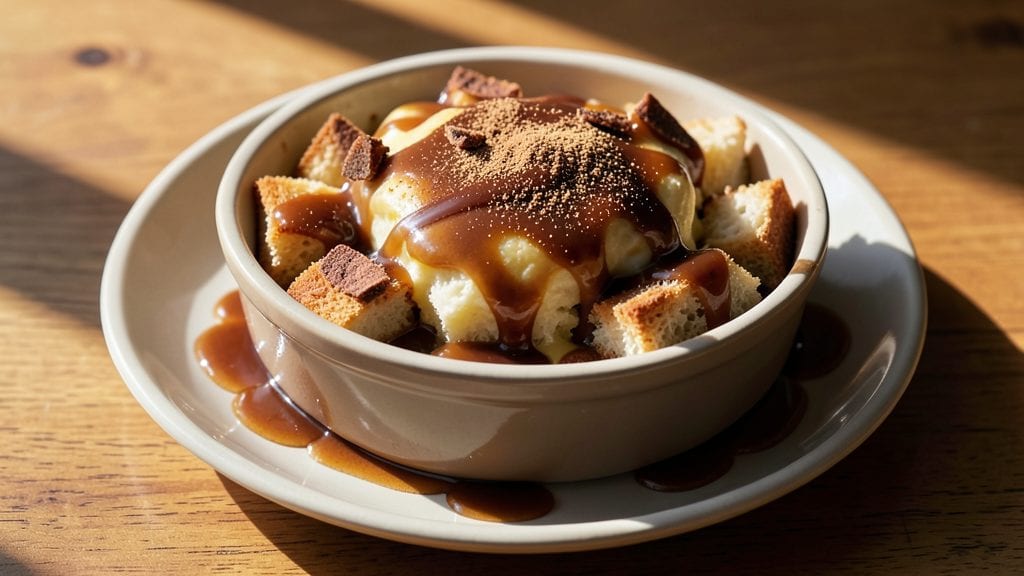
This butterscotch bread pudding recipe delivers the perfect balance of warm caramel swirls and a cinnamon-kissed crust that feels like a hug in dessert form. 💛 I first perfected it during a chilly Portland winter when my daughter Lily begged for something sweet after school—now it’s a weekly tradition in our kitchen.
The secret lies in layering butterscotch syrup into the custard before baking, creating pockets of gooey sweetness that contrast beautifully with the crispy edges.
The recipe builds on classic bread pudding techniques but elevates them with butterscotch chips folded into the custard and a swirl of caramelized sugar on top.
You’ll need just 10 ingredients—no fancy equipment—and the whole process takes under 30 minutes of active prep, with most of the magic happening while it bakes. The result? A dessert that’s rich, creamy, and impossible to resist, with every bite offering that perfect blend of buttery, caramelized sweetness.
What makes this version stand out is the cinnamon-sugar crust, which forms a delicate lattice on top while keeping the center tender.
The bread pudding pulls together beautifully, with the butterscotch flavor shining through in every forkful—think of it as a cross between a classic bread pudding and a gooey butterscotch pudding.
It’s the kind of dessert that feels indulgent yet still satisfies a craving for something warm and comforting, especially when served with a scoop of vanilla ice cream.
This recipe scales perfectly for gatherings, making it ideal for holiday dinners or family get-togethers. The leftovers reheat beautifully, though I’ve never had any last that long. Let’s dive into the steps to create this crowd-pleasing dessert that’s sure to become a new favorite.
Ingredients for butterscotch bread pudding
Ten simple ingredients transform into a dessert that tastes like a warm hug.
| Ingredient | Amount | Notes |
|---|---|---|
| Stale French Bread Loaf 🍞 | 1 lb | Day-old, crust removed |
| Large Eggs 🥚 | 4 whole | Room temperature for blending |
| Butterscotch Syrup 🍯 | ½ cup | High-quality, like Log Cabin |
| Heavy Cream 🥛 | 1 cup | Full-fat for richness |
| Granulated Sugar 🍚 | ½ cup | For caramelized crust |
| Ground Cinnamon 🌿 | 1 tbsp | Freshly toasted for warmth |
| Butterscotch Chips 🍬 | ½ cup | Miniature size preferred |
| Unsalted Butter 🧈 | ½ cup | Cold, cubed for swirl |
| Vanilla Extract 🌸 | 1 tsp | Pure Madagascar preferred |
| Diamond Crystal Kosher Salt 🧂 | ¼ tsp | For balancing sweetness |
The bread is non-negotiable—day-old French bread gives that perfect crumbly texture, but stale loaves work too. I always grab the crusty kind from Whole Foods or Trader Joe's because it holds up better during baking. For the butterscotch syrup, Log Cabin is my go-to—it's sweeter than most and cuts through the custard beautifully. If you can't find it, Smucker's works in a pinch, but add an extra tablespoon of sugar to compensate. The butterscotch chips? Miniatures melt faster and distribute through the pudding more evenly, creating those little pockets of gooey goodness you crave.
No butterscotch syrup? Caramel sauce plus vanilla extract gets you close, though it won't have that signature butterscotch depth. Swapping heavy cream for half-and-half lightens the texture but loses richness—trust me on the full-fat version. For the cinnamon, Ceylon cinnamon has a sweeter profile, but regular ground works fine. The vanilla extract matters here—imitation or clear vanilla tastes off. If you're feeling fancy, toast your cinnamon in a dry pan for 30 seconds first—it deepens the flavor without overpowering. And if you're short on butterscotch chips, chopped butterscotch candy bars work, but they won't melt as cleanly.
This dessert reheats beautifully—just 10 seconds in the microwave with a damp paper towel over it. Keeps for 4 days in the fridge, though it's best within 2. For make-ahead magic, assemble it the night before and bake in the morning. The crust gets extra crispy that way. Portion into individual ramekins for easy serving, or bake in one big pan for a crowd. Leftovers? Freeze for up to 3 months—just thaw overnight in the fridge before reheating.
Why You'll Love This Recipe
- I’ll be real: the first batch disappears fast, but the second? Even better. The flavors meld overnight, and reheating it is just dumping it back in the oven for 10 minutes—zero fuss, all comfort.
- No Waste, All Flavor: I swear by this trick—toss in that crusty French loaf you’d normally toss. The syrup soaks in like a dream, turning dry bread into something rich and tender without extra effort.
- One-Bowl Magic: Honestly, it’s the kind of recipe where you mix, pour, and bake. No fancy layers, no tricky folding—just eggs, cream, and that butterscotch syrup working its caramel magic in the oven.
- Crowd-Pleaser Any Day: Between us, this is the dessert that gets seconds at my holiday table and my lazy Sunday brunches. The creamy, buttery, syrupy goodness hits different when you serve it warm with vanilla ice cream.
Step-by-step instructions for butterscotch bread pudding
Transform your stale bread into decadent dessert with this foolproof technique.
👨🍳 Step 1: Cube and Prep the Bread
Cut the 1 lb stale French bread loaf into 1-inch cubes—you should end up with about 8 cups of bread. I like to use a serrated knife for this because it gives me cleaner cuts. Arrange the cubes in a 9x13-inch baking dish in a single layer, making sure they fit snugly without overlapping. This creates an even surface for soaking.
Here's the thing—don't skip the crust removal. The crust can make the bread pudding gummy instead of tender. If you're using day-old bread, it'll soak up the custard beautifully, but if your bread is particularly fresh, let it sit out for 30 minutes first to dry it out slightly.
🍳 Step 2: Whisk the Custard Mixture
In a large bowl, whisk together the 4 whole large eggs, 1 cup heavy cream, 0.5 cup butterscotch syrup, 0.5 cup granulated sugar, 1 tsp vanilla extract, and 0.25 tsp diamond crystal kosher salt until completely smooth. I use a whisk for this step because it incorporates air gently—you don't want to overbeat the eggs, or they'll scramble.
Next, fold in the 1 tbsp ground cinnamon and 0.5 cup butterscotch chips using a rubber spatula. Be careful not to overmix—just until the cinnamon is evenly distributed. The mixture should look like a thick, pale custard with little butterscotch specks throughout.
🥘 Step 3: Assemble and Soak the Bread
Pour the custard mixture evenly over the bread cubes in the baking dish. Use a spatula to gently press down on the bread so it absorbs the custard completely. You'll want to give it 10 minutes to soak—this is crucial for that perfect texture. While it soaks, preheat your oven to 350°F.
Here's where it gets fun—melt the 0.5 cup unsalted butter in a small saucepan over low heat until it's completely liquid but not browned. Then, drizzle this melted butter evenly over the soaked bread. The butter will create a rich, golden crust when baked.
🔥 Step 4: Bake to Golden Perfection
Bake the bread pudding for 45-50 minutes until the top is golden brown and the center is just set. You'll know it's done when a toothpick inserted in the center comes out clean with just a few moist crumbs clinging to it. Don't overbake—you want that custard to stay creamy inside.
For the final touch, broil the pudding for 1-2 minutes at the very end. Watch it closely—you want the top to caramelize beautifully but not burn. The broiler adds that irresistible toasted crust that makes this dessert truly special.
⏰ Step 5: Rest and Serve Warm
Let the bread pudding rest for 10 minutes after baking. This gives it time to set slightly and makes it easier to serve. I know it's tempting to dig in right away, but waiting ensures clean slices and the perfect texture.
Serve warm with a scoop of vanilla ice cream or a dollop of whipped cream. The contrast of the warm, caramelized pudding with something cool makes every bite even better. Store any leftovers in the refrigerator for up to 3 days, but I promise you won't have any leftovers!
Pro Tips For Making Butterscotch Bread Pudding
- Soak the Bread Properly: Drown those bread cubes in the custard mix for at least 15 minutes—no, 20 is better. I used to rush this, and the bread would stay dense and dry. Let it absorb fully, even if you’re tempted to skip ahead.
- Whisk Eggs Like Mad: Beat those eggs until they’re pale yellow and ribbony, not just blended. I learned this the hard way—lumpy eggs make for a grainy pudding. Use a fork or whisk, and don’t stop until it’s smooth.
- Skip the Crowd in the Oven: Bake one tray at a time if you’re using a home oven. I tried doubling the batch once, and the center stayed raw while the edges burned. Patience here guarantees even golden-brown perfection.
- Stir in Syrup Last: Fold the butterscotch syrup into the custard right before baking—otherwise, it’ll turn the mix too runny. I used to add it earlier, and the pudding would sink like a lead balloon. Save it for the final stir.
Dietary considerations for this recipe
Gluten-Free Adaptation
For a gluten-free version, swap the French bread for a gluten-free baguette or gluten-free bread cubes—I like Schar or Canyon Bakehouse brands. Toast the cubes lightly before assembling to prevent them from falling apart.
Use the same custard ratio but add 1 tbsp cornstarch to the mixture to help thicken it. The texture will be slightly denser, but the butterscotch flavor stays rich and creamy. 🥖
Dairy-Free Options
To make this dessert dairy-free, replace the heavy cream with full-fat coconut milk (canned, not carton) and use dairy-free butter like Miyoko’s. Swap regular butterscotch chips for vegan butterscotch chips (check brands like Enjoy Life or Pascha).
The custard will still be luscious, though the flavor profile shifts slightly toward coconut. For extra richness, add 1 tbsp maple syrup to the custard mixture.
Lower Sugar Version
Cut sugar by using ½ cup monk fruit sweetener (like Lakanto) instead of granulated sugar and ¼ cup sugar-free butterscotch syrup (such as Welch’s Sugar-Free). Reduce the butterscotch syrup to ¼ cup and add ½ tsp vanilla bean paste for depth.
The texture remains creamy, but the sweetness is more balanced. This version works well for those watching sugar intake but still crave dessert. 🍯
Egg-Free Custard
For an egg-free custard, replace the eggs with a flax egg mix (1 tbsp ground flaxseed + 3 tbsp water per egg). Blend the mixture thoroughly before adding to the custard. The texture will be slightly denser, so bake for 5-7 minutes longer to ensure it’s fully set.
The butterscotch flavor still shines, though the crust may be less crisp. Pair with extra whipped coconut cream for a vegan-friendly finish.
Keto-Friendly Twist
Transform this into a keto-friendly dessert by using almond flour bread (like Caulipower) and unsweetened almond milk instead of heavy cream. Replace sugar with ½ cup erythritol and use sugar-free butterscotch chips.
The result is a lower-carb, high-fat version that keeps the butterscotch richness. Bake at 325°F for 40-45 minutes to prevent over-browning. 🥑
Nutrition facts
Frequently asked questions
Can I use any type of bread for this butterscotch bread pudding?
French bread works best because it holds its shape while soaking up the custard beautifully. For a softer texture, try brioche or challah. Avoid dense breads like whole wheat—they can make the pudding gummy. If you're gluten-free, use a sturdy gluten-free baguette and toast the cubes first to prevent crumbling.
Why does my bread pudding come out too dry?
Overbaking is the most common cause—check with a toothpick at 45 minutes instead of waiting for the full 50 minutes. Another trick: Pour extra custard over the top before baking to keep it moist. Also, make sure your bread isn't too fresh—day-old or slightly stale works best for proper texture.
Can I make this ahead of time?
Assemble the pudding the night before and refrigerate uncovered. Bake straight from the fridge (add 5-10 extra minutes to baking time). For make-ahead dessert parties, bake it 2 days ahead and reheat covered with foil at 350°F for 15 minutes. The flavors actually deepen over time!
How do I prevent the butterscotch chips from sinking to the bottom?
Fold them in gently at the last moment when mixing the custard, and distribute them evenly over the soaked bread. For extra security, sprinkle half the chips on top before baking. The chips will melt slightly but stay dispersed throughout the pudding. Miniature chips work better than full-size for even distribution.
What's the best way to serve this dessert?
Warm is key—serve straight from the oven with a scoop of vanilla ice cream or whipped cream. For a restaurant-style presentation, dust with powdered sugar or drizzle with warm butterscotch sauce. It's also delicious chilled overnight, making it perfect for breakfast pudding the next morning with a dollop of yogurt.