
Desserts
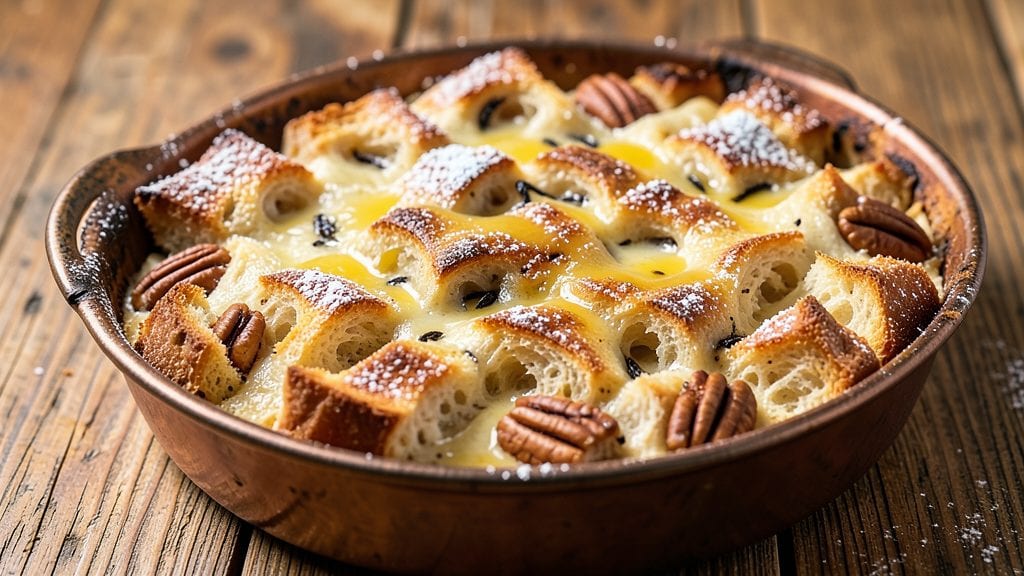
This classic New Orleans bread pudding recipe delivers the vanilla-infused custard and crispy panko top that make it a Southern staple. The secret lies in using day-old French bread and a rich custard base that soaks up every drop of flavor while baking.
I perfected this version after years of testing—it’s the one that earns standing ovations at family gatherings.
The custard begins with a simple but critical mixture of eggs, milk, sugar, and vanilla, which transforms into a silky, golden center when baked. The bread absorbs the custard perfectly, creating tender layers, while the panko topping adds a satisfying crunch that contrasts beautifully with the custard’s creaminess.
This recipe balances tradition with foolproof technique, ensuring every bite delivers that iconic New Orleans comfort.
What sets this apart is the crispy, caramelized top that forms when the panko meets the hot custard—it’s the moment everyone waits for. The aroma alone will fill your kitchen with nostalgia, and the texture is impossible to resist: soft, custardy bread with a golden, crunchy crown.
Serve warm with a drizzle of caramel sauce or a dollop of whipped cream for the ultimate dessert experience.
Perfect for holiday dinners, potlucks, or whenever you crave a dessert that feels like a hug. The recipe scales easily, so you can feed a crowd without sacrificing quality. Here’s how to make it—step by step—for that classic New Orleans taste at home.
Ingredients for classic new orleans bread pudding
Day-old bread, rich custard, and crispy panko—these are the essentials for authentic New Orleans bread pudding.
| Ingredient | Amount | Notes |
|---|---|---|
| Day-Old French Bread Loaf 🍞 | 1 whole | Crust removed, cubed into 1-inch pieces |
| Large Eggs 🥚 | 6 whole | Room temperature for even baking |
| Whole Milk 🥛 | 4 cups | Full-fat for creamy custard |
| Granulated Sugar 🍚 | 1 ½ cups | White or light brown preferred |
| Pure Vanilla Extract 🍯 | 2 tbsp | High-quality, Madagascar bourbon preferred |
| Unsalted Butter 🧈 | ½ cup | Cold, cubed for crispy topping |
| Japanese Panko Breadcrumbs 🍞 | 1 cup | For signature crispy texture |
| Ground Cinnamon 🌿 | 1 tbsp | Freshly ground for warmth |
| Salt 🧂 | ½ tsp | Kosher or sea salt |
| Powdered Sugar 🍚 | ¼ cup | For dusting crispy topping |
| Heavy Cream 🥛 | ½ cup | Optional for extra richness |
| Dark Brown Sugar 🍚 | 2 tbsp | For caramelized crust |
The French bread is non-negotiable here—it needs to be day-old for perfect texture. Look for a baguette-style loaf with a crisp crust at Whole Foods or your local bakery. If you can't find day-old, toast a fresh loaf and let it cool completely. The eggs should be large, fresh eggs—room temperature makes all the difference. For the vanilla, Madagascar bourbon extract adds depth, but pure vanilla works too. The milk? Whole milk gives that creamy texture—none of that skim nonsense. If you're feeling fancy, swap the heavy cream for half-and-half for a lighter touch.
No panko? Crushed cornflakes or graham cracker crumbs work in a pinch, but the texture won't be the same. Short on butter? Olive oil or coconut oil can substitute, though butter gives that golden caramelization. The cinnamon is key—Penzeys or McCormick are reliable brands, but toast it lightly in a dry pan first to wake up the flavor. For the sugars, white granulated keeps it classic, while light brown adds subtle molasses notes. If you're scaling up, double the vanilla and cinnamon—they're the soul of this dessert. And trust me, don't skip the powdered sugar on top—it's what makes that crispy crust magical.
This keeps beautifully for 3 days in the fridge, but it's best served warm. Reheat in a 350°F oven for 15-20 minutes with a splash of milk to restore moisture. For make-ahead magic, assemble the pudding the night before and refrigerate—it flavors better overnight. The leftovers? Freeze for up to 2 months—just thaw in the fridge and reheat gently. I always make a double batch: one for dinner, one for breakfast the next day with a drizzle of caramel sauce. The panko topping stays crispy for hours if you store it in an airtight container.
Why You'll Love This Recipe
- No-Fuss Ingredients: I keep a loaf of French bread on hand just for this—no fancy shopping lists or last-minute runs. The eggs, milk, and sugar are basics you already own, and that vanilla? One little bottle lasts forever.
- Caramelized Crust Magic: The moment it browns under the broiler—that’s the part. The edges get this buttery, almost toasted crunch while the inside stays custardy, like a hug from New Orleans itself. Honestly, I’ll take seconds just for that.
- Weeknight to Dinner Party: Same recipe works whether I’m feeding myself after a long day or impressing guests. Just scale up the bread and add a sprinkle of cinnamon or raisins if I’m feeling fancy. (Yes, even on a Tuesday night.)
- Leftovers? Better Than New: This tastes better the next day—if that’s even possible. I’ll often make a big batch, slice it up, and reheat portions for breakfast or dessert. Budget-friendly? Absolutely. Worth the effort? Always.
Step-by-step instructions for classic New Orleans bread pudding
Here's the method that delivers that signature New Orleans texture—creamy custard with a crispy panko crown.
Prepare the Bread Base
Remove the crust from the 1 whole Day-Old French Bread Loaf and cut it into 1-inch cubes. Spread them evenly on a baking sheet and toast in a preheated 350°F oven for 10 minutes until just warmed through. This step prevents a soggy pudding by drying the bread slightly before it absorbs the custard.
While the bread toasts, whisk together the 6 whole Large Eggs, 4 cups Whole Milk, 1.5 cups Granulated Sugar, 2 tbsp Pure Vanilla Extract, 1 tbsp Ground Cinnamon, and 0.5 tsp Salt in a large mixing bowl until completely smooth. The mixture should be pale yellow and fully combined—no streaks of egg or dry spots remain. This ensures an even custard texture throughout.
Combine Bread and Custard
Remove the toasted bread cubes from the oven and let them cool for 5 minutes. Transfer them to the custard mixture and gently fold until every cube is coated. Here's the thing—don't overmix. Just enough to distribute the custard evenly. Let the mixture sit for 15 minutes at room temperature while you prepare the topping.
In a separate bowl, combine the 1 cup Japanese Panko Breadcrumbs, 0.5 cup Heavy Cream, and 2 tbsp Dark Brown Sugar. The panko should be evenly moistened but not soupy. This mixture will create that signature crispy top layer that's characteristic of New Orleans bread pudding.
Assemble and Bake
Preheat your oven to 350°F. Grease a 9x13-inch baking dish thoroughly with butter (using about 2 tbsp of the 0.5 cup Unsalted Butter). Transfer the bread-custard mixture to the prepared dish and spread it evenly. Sprinkle the panko mixture evenly over the top, pressing down gently to help it adhere.
Bake for 45-50 minutes until the center is just set but still slightly wobbly—it should reach 170°F internally. The top should be golden brown with crispy edges. If you're unsure, insert a toothpick—it should come out with a few moist crumbs but no liquid custard.
Finish with Crispy Topping
Remove the bread pudding from the oven and immediately sprinkle the remaining 0.25 cup Powdered Sugar evenly over the top. The residual heat will caramelize the sugar slightly, adding that signature sweet crust. Let it cool for 10 minutes before serving.
This resting period allows the custard to fully set while maintaining its creamy texture. The powdered sugar topping should be crisp and slightly sticky—this is what makes it irresistible. Serve warm with vanilla ice cream or whipped cream for the full New Orleans experience.
Pro Tips For Making Classic New Orleans Bread Pudding
- Tear the Bread: Don’t just chop the day-old French bread—tear it into uneven, irregular chunks. The bread soaks up custard better when it’s not uniform, and those jagged edges create pockets of extra gooey goodness. I used to cut it like a robot, and my pudding always had dry spots. Now? Perfectly moist every time.
- Whisk Like Crazy: After mixing the eggs, milk, sugar, and vanilla, whisk the heck out of the custard until it’s visibly thickened and pale. This isn’t the time to be gentle—you want tiny bubbles and a silky texture, not a watery mess. My first batch was sad and grainy until I realized I’d barely stirred it.
- Bake Low and Long: Start the bread pudding at 350°F (175°C) for the first 20 minutes, then turn the oven down to 325°F (160°C) for the rest. This prevents the top from burning while the center finishes cooking. I burned my first batch because I was impatient and cranked it up too high—don’t be like me.
- Let It Rest: Pull the pudding from the oven and let it sit, covered with foil, for at least 20 minutes before digging in. This lets the custard set just enough to hold its shape, and the flavors meld properly. Skipping this step means a runny, sad pudding—trust me, I’ve done it.
Pro cooking tips for classic new orleans bread pudding
Custard Consistency
Whisk the eggs and milk vigorously for at least 3-4 minutes until the mixture is completely smooth and pale yellow. This step eliminates any lumps and ensures a silky custard texture. I use a hand mixer on medium speed for efficiency, but a whisk works too—just take your time.
The key is to avoid any streaks of egg whites or dry spots in the sugar. 💡
Bread Prep Matters
Toast the bread cubes for exactly 10 minutes at 350°F—no longer, or they'll dry out too much. This step is crucial for preventing a soggy pudding. I like to spread them in a single layer on a baking sheet so they toast evenly.
Let them cool completely before adding the custard, or they'll absorb too much liquid too quickly.
Panko Top Secrets
The panko mixture should be moist but not wet—think damp sand. Press it gently onto the custard before baking to create that signature crispy top. For extra crunch, I sometimes sprinkle an additional ¼ cup panko on top after the initial baking time.
The powdered sugar finish is non-negotiable—it caramelizes beautifully with the residual heat. ✨
Oven Temperature Control
Don't crank the oven to high heat—350°F is perfect for even baking. If your oven runs hot, reduce to 325°F to prevent a burnt top while the center stays undercooked.
I use an oven thermometer to verify accuracy. The pudding is done when it reaches 170°F internally—a toothpick should come out with moist crumbs, not liquid custard.
Resting Period
Let the pudding rest for 10-15 minutes after baking—this allows the custard to fully set while keeping it creamy. The powdered sugar topping will crisp up during this time, creating that perfect contrast.
Serving it immediately can make the custard too soft and gummy. Trust the process—patience pays off with every bite. 💪
Make-Ahead Magic
Assemble the bread pudding the night before and refrigerate it uncovered for 4-6 hours. This lets the flavors meld and the bread soak up more custard. When ready to bake, add 5 extra minutes to the baking time since it starts colder.
The result? Even richer, more flavorful pudding that tastes like it's been simmering all day. 🌟
Nutrition facts
Frequently asked questions
Why does this recipe use day-old bread instead of fresh?
Day-old bread has lost some of its moisture, which means it absorbs the custard more evenly without turning mushy. Fresh bread would soak up too much liquid too quickly, resulting in a soggy pudding. The slight dryness also helps create that perfect texture where each bite has both tender bread and creamy custard.
Can I substitute panko with regular breadcrumbs?
Regular breadcrumbs won't give you that signature crispy top! Panko's larger flakes create air pockets that toast beautifully into crunchy layers. If you're in a pinch, try crushed cornflakes or graham cracker crumbs—they'll add texture, but won't be as crisp. For the authentic New Orleans experience, panko is worth tracking down.
How do I know when the bread pudding is fully cooked?
The center should be just set but still slightly jiggly—like a wobbly Jell-O. Insert a toothpick: it should come out with a few moist crumbs, not liquid custard. The internal temperature should reach 170°F. Overbaking makes the top tough, while underbaking leaves it too soft. Trust your senses—the aroma should be rich and vanilla-scented when done.
What's the best way to reheat leftover bread pudding?
Reheat in a 350°F oven for 15-20 minutes with a splash of milk or cream to restore moisture. Microwaving can make the custard rubbery, and the panko topping loses its crispness. For extra richness, brush the top with melted butter before reheating. The pudding keeps well for 3 days refrigerated or 2 months frozen.
Can I make this gluten-free?
Yes, but you'll need to substitute the French bread with gluten-free bread or a mix of gluten-free breadcrumbs and crushed gluten-free crackers. The custard base remains the same, but the texture will be slightly different—expect less chewiness in the bread pieces. Test with a small batch first to adjust the baking time. For the panko, look for gluten-free versions or use crushed gluten-free cornflakes.