
Side Dishes
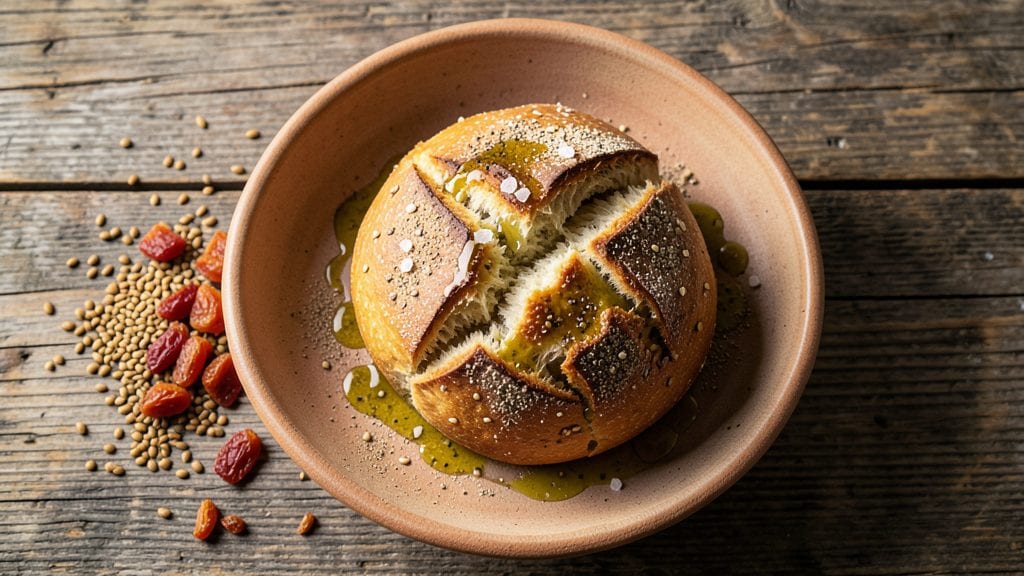
This Essene bread recipe brings an ancient loaf to life with its nutty depth and wholesome texture—perfect for those seeking a vegan-friendly, whole-grain alternative.
Rooted in Essene traditions, this flatbread relies on simple ingredients like whole wheat flour, water, and a touch of olive oil to create a dense, flavorful loaf that’s both hearty and satisfying. The absence of dairy or eggs makes it accessible for dietary restrictions while preserving its historical authenticity.
The beauty of Essene bread lies in its simplicity and versatility—just five core ingredients transform into a loaf with a rich, nutty flavor and satisfying chew. Unlike modern breads, this recipe skips yeast and leavening agents, relying instead on a slow fermentation process that develops depth over time.
The result is a bread that’s sturdy enough for sandwiches yet tender enough to enjoy on its own, with a subtle earthiness that pairs beautifully with soups, stews, or fresh vegetables.
Baking Essene bread requires patience, but the process is straightforward: mix, shape, and bake at a steady temperature for about 30 minutes until golden and firm. The key to success is ensuring even heat distribution, which guarantees a consistent texture throughout.
This bread’s historical significance—dating back to ancient communities—makes it more than just a meal; it’s a connection to a tradition of nourishment that prioritizes whole grains and minimal processing.
Once baked, Essene bread holds up well for 3-4 days when stored in an airtight container, making it ideal for meal prep or sharing. Its dense yet moist crumb and lack of artificial additives make it a standout choice for health-conscious bakers.
Whether you’re exploring ancient recipes or simply craving a wholesome loaf, this bread delivers on both flavor and tradition.
Ingredients for essene bread
Five core ingredients transform into a dense, nutty loaf with ancient tradition.
| Ingredient | Amount | Notes |
|---|---|---|
| Whole Wheat Flour 🌾 | 3 ½ cups | Unbleached, high-protein preferred |
| Extra-Virgin Olive Oil 🫒 | ¼ cup | Cold-pressed, fruity variety |
| Filtered Water 💧 | 1 ½ cups | Room temperature preferred |
| Sea Salt 🧂 | 1 ½ tsp | Diamond Crystal preferred |
| Ground Flaxseed 🌿 | 2 tbsp | For binding, freshly ground |
| Sesame Seeds 🌰 | 2 tbsp | Toasted for nutty depth |
| Cumin Seeds 🌿 | 1 tsp | Toasted lightly for aroma |
| Ground Coriander 🌿 | 1 tsp | Freshly ground preferred |
The foundation begins with whole wheat flour, where quality matters—opt for high-protein, unbleached varieties like King Arthur or Bob’s Red Mill. Whole Foods bulk bins often carry premium options, but standard grocery store brands work perfectly. The extra-virgin olive oil should be cold-pressed and fruity, not bitter; California Olive Ranch or Colavita are reliable choices. Sesame and cumin seeds should be toasted lightly in a dry pan before grinding—they unlock deeper flavors. For flaxseed, ground fresh is non-negotiable; pre-ground loses potency within weeks.
No sesame seeds? Sunflower seeds work as a neutral substitute, though flavor will differ slightly. Running low on cumin? Ground coriander at double the amount mimics its earthiness. The flaxseed binding can be swapped for chia seeds at equal weight, but texture may vary. For a more rustic touch, add 1 tbsp of ground almonds—it enhances the nutty profile. Water temperature is critical: too cold slows fermentation; too hot activates enzymes prematurely. Room temperature (around 70°F) ensures optimal rise.
This bread reaches peak freshness 24 hours after baking—the fermentation deepens its flavor. Store in an airtight container with a paper towel to absorb moisture; lasts 5-6 days at room temperature or 2 weeks refrigerated. For longer storage, slice and freeze portions—reheat in a 350°F oven for 5-7 minutes to restore crispness. The dense crumb holds up beautifully in sandwiches or as a side, making it ideal for meal prep.
Why You'll Love This Recipe
- No-Knead Nightmare Over: I mix, pour, and forget—no standing at the counter for 20 minutes. The flaxseed acts like a natural binder, so the dough holds together without fuss. Honestly, I’ve made it while scrolling through emails.
- Earthy Olive Oil Magic: That rich, peppery olive oil soaks into the crust, giving it a nutty depth you won’t find in store-bought loaves. The sea salt cuts through the whole wheat’s heaviness, leaving you with a bread that’s crisp outside, tender inside—like a hug from Italy.
- Weeknight Superstar: Slice it for breakfast, toast it for dinner, or pack it in lunches—this bread survives everything. Between us, I’ve even used it to soak up marinara like a sponge. It’s the one loaf that does it all without judging your schedule.
- Pantry Goldmine: A bag of flour and a bottle of olive oil last for months, and the flaxseed stretches the dough further than yeasted bread. I’ve made three loaves from this recipe for under $5—leftovers? More like leftovers I’ll actually eat. (Yes, even on a Tuesday night.)
Step-by-step instructions for ancient whole grain loaf
This method preserves Essene bread's rustic integrity while ensuring consistent texture and flavor.
Prepare the Hydrated Flour Mixture
In a large mixing bowl, combine the 3.5 cups whole wheat flour with the 2 tbsp ground flaxseed, 2 tbsp sesame seeds, 1 tsp cumin seeds, and 1 tsp ground coriander. Mix thoroughly to ensure even distribution of the seeds and spices throughout the flour. This step creates a flavor base that will develop further during hydration.
Add the 0.25 cup extra-virgin olive oil and 1.5 tsp sea salt to the flour mixture. Using your hands or a wooden spoon, work the oil into the flour until it forms a crumbly, sandy texture. The olive oil will help create a tender crumb while adding its characteristic fruity depth. This is where the bread's nutty complexity begins to form.
Hydrate and Knead the Dough
Gradually add the 1.5 cups filtered water to the flour mixture while stirring continuously. The dough will initially resist, forming a stiff, shaggy mass. This is normal with whole wheat flour, which absorbs moisture differently than white flour. Continue mixing until the dough comes together into a cohesive, slightly sticky ball.
Transfer the dough to a lightly floured surface and knead vigorously for 8-10 minutes. You're not looking for smooth elasticity here—whole wheat dough develops gluten differently. Instead, focus on creating a uniform texture where the seeds and spices are evenly distributed. The dough should be firm but pliable, with just enough stickiness to hold its shape when pressed.
Rest and Shape the Loaf
Shape the dough into a round loaf about 8 inches in diameter and place it seam-side up in a well-oiled loaf pan. The oil prevents sticking and creates a crisp exterior. Cover the pan tightly with plastic wrap and let the dough rest at room temperature for 2 hours. This resting period allows the flour to fully hydrate and the gluten to relax slightly, which prevents cracking during baking.
During this time, the dough will develop a slightly sticky surface and may rise slightly. This is normal and indicates proper hydration. If the dough doesn't rise at all, don't worry—Essene bread relies more on oven spring than yeast fermentation. The key is ensuring the dough reaches room temperature before baking.
Bake to Golden Perfection
Preheat your oven to 375°F. When fully preheated, bake the loaf for 45-50 minutes until the top is deep golden brown and the internal temperature reaches 205°F when measured with an instant-read thermometer. The bread should sound hollow when tapped on the bottom. This indicates proper doneness and a well-developed crumb structure.
For the final 5 minutes of baking, increase the oven temperature to 400°F to create a crisp exterior crust. This step intensifies the nutty flavors and creates that characteristic Essene bread texture. Remove the loaf from the oven and transfer it to a wire rack to cool completely before slicing. The bread will continue to firm up as it cools, making it easier to slice cleanly.
Pro Tips For Making Essene Bread
- Soak the Flaxseed: DESCRIPTION: Dump the ground flaxseed into your filtered water first, stir like you mean it, then let it sit for 5 minutes before adding flour. This guarantees the flaxseed actually thickens the batter—no more wondering why your bread turned out gummy or dense. (I used to skip this, and the texture suffered.)
- Mix by Hand: DESCRIPTION: Skip the mixer for this one—whole wheat flour is stubborn, and overmixing turns it tough. Use a wooden spoon or your hands to fold the dough just until combined, then let it rest. You’re not kneading bread here; you’re making a simple, rustic loaf.
- Salt the Olive Oil: DESCRIPTION: Toss the sea salt directly into the olive oil before mixing it into the batter. The salt dissolves better and distributes evenly, so every bite has that bright, balanced flavor instead of just the edges. (Yes, even if the recipe says to add it later.)
- Bake Until Golden: DESCRIPTION: The bread’s done when the top cracks and turns a deep golden brown, not when it looks done. Whole wheat needs that extra time—pull it out too soon, and it’ll stay dense and pale. Cover loosely with foil if the top browns too fast, but push for that crust.
Serving suggestions for this dish
Traditional Serving Style
Essene bread was historically served as a staple accompaniment to simple meals in ancient communities. The Essenes ate it alongside lentil stews, roasted vegetables, or olive oil drizzled over fresh greens.
I recommend serving slices warm with a drizzle of extra-virgin olive oil and a sprinkle of toasted sesame seeds to enhance its nutty depth. The dense texture holds up perfectly to hearty soups or as a base for vegan "open-faced" sandwiches. 🌿
Modern Pairings
This bread pairs beautifully with Mediterranean-inspired dishes. Try it with hummus and roasted red peppers, or use it to scoop up white bean and herb dips. For a protein boost, serve with grilled halloumi or marinated tofu.
The subtle earthiness of Essene bread also complements spicy harissa or smoky chipotle sauces—the contrast creates a balanced bite. I often pair it with roasted eggplant and tahini for a complete plant-based meal.
Breakfast Adaptations
Transform Essene bread into a rustic breakfast loaf by toasting slices and topping with almond butter, sliced banana, and a sprinkle of cinnamon. For a savory twist, spread with garlic-herb vegan cream cheese and sliced cucumber.
The dense texture makes it ideal for breakfast sandwiches without falling apart. I also love serving it with avocado mash and a pinch of smoked paprika for a brunch-worthy dish. 🥖
Meal Prep Ideas
Slice the cooled loaf and store in an airtight container with a paper towel to maintain crispness. Toast slices in a toaster oven at 350°F for 3-5 minutes before serving to restore freshness.
Pack slices with nut butter and jam for on-the-go lunches, or use them as vegan "breadcrumbs" for coating proteins like tofu or tempeh. The bread’s sturdy texture holds up well in meal prep containers for up to 5 days.
Dessert Twist
For a sweet variation, brush warm slices with melted maple syrup and sprinkle with crushed walnuts or pumpkin seeds. The nutty base pairs surprisingly well with dark chocolate ganache or caramelized bananas.
I’ve also experimented with a cinnamon-sugar coating before baking for a crisp, sweet loaf. Serve with fresh berries for a dessert that feels both indulgent and wholesome. 🍯
Cultural Presentation
To honor its ancient roots, serve Essene bread on a wooden board with olive wood skewers for dipping into garlic-infused oil or tahini. The rustic presentation elevates the dish while staying true to its historical origins.
For a modern touch, arrange slices in a stacked display with accompanying dips in small bowls. The bread’s earthy tones and texture make it a versatile centerpiece for both casual and formal vegan meals. 🌍
Nutrition facts
Frequently asked questions
Why does Essene bread not use yeast?
This ancient recipe relies on natural fermentation from whole grains and seeds rather than commercial yeast. The slow rise develops deeper, nuttier flavors while keeping the bread dense and hearty. This method also aligns with Essene dietary principles of simplicity and whole foods.
Can I make Essene bread without a loaf pan?
Shape the dough into a round flatbread (about 1-inch thick) and bake on a parchment-lined tray at 375°F for 25-30 minutes. For extra crispiness, brush with olive oil before baking. This creates a traditional flatbread style similar to ancient preparations.
How do I fix if my dough is too sticky?
Add 1-2 tablespoons more whole wheat flour gradually while kneading until the dough becomes manageable. Avoid over-flouring—just enough to make it pliable. If it cracks during baking, brush with olive oil for moisture. The stickiness is normal with whole grains but can be adjusted.
What's the best way to store leftover Essene bread?
Wrap cooled slices in parchment paper and store in an airtight container with a paper towel to prevent sogginess. It stays fresh for 5-6 days at room temperature or 2 weeks refrigerated. For longer storage, freeze slices and toast directly from frozen.
Can I substitute whole wheat flour with white flour?
While possible, it will lose the bread's nutty depth and nutritional benefits. For a lighter texture, use a 50/50 blend of whole wheat and white flour, but expect less flavor complexity. The traditional recipe relies on whole grains for its signature taste and texture.