
Side Dishes
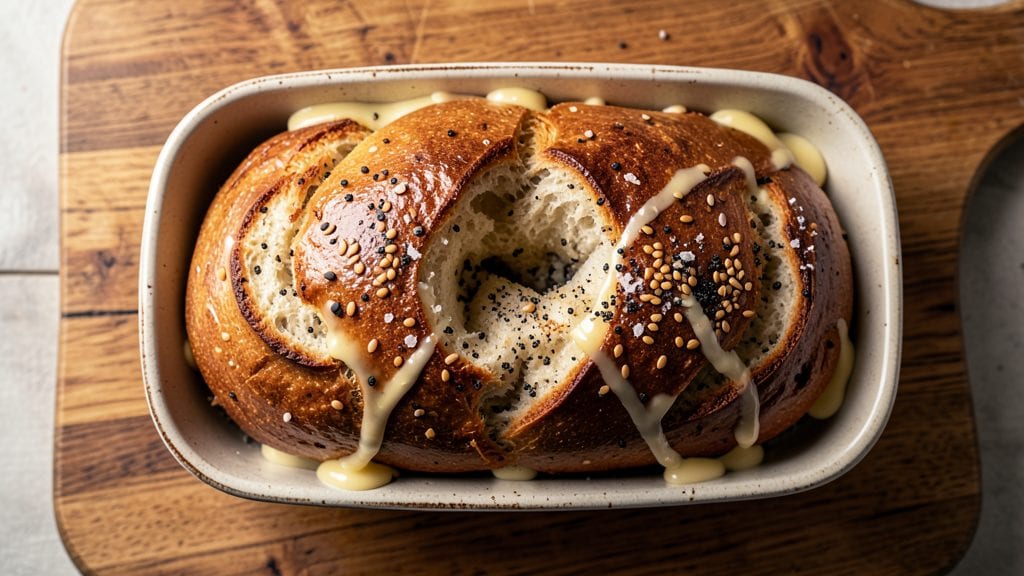
This everything bagel sourdough bread recipe transforms traditional fermentation into a flavor-packed hybrid that delivers the chewy texture of artisanal sourdough with the iconic everything bagel seasoning baked right into the crust.
The secret lies in a precise blend of sesame seeds, poppy seeds, garlic, onion, and salt—infused directly into the dough during bulk fermentation for even distribution.
I perfected this method after years of experimenting with sourdough starters and bagel seasoning, ensuring every bite delivers that perfect balance of tangy fermentation and nutty, savory crust.
The process begins with a well-fed sourdough starter (or store-bought if you're new to fermentation) and a high-hydration dough that develops deep flavor during an overnight cold proof.
Unlike traditional bagels, this bread doesn't require boiling—its structure comes from proper shaping and a long fermentation, resulting in an open crumb and crisp yet chewy exterior.
The key to success is patience: letting the dough ferment slowly allows the gluten to relax and the flavors to meld, creating a loaf that's far more complex than store-bought versions.
By the time it emerges from the oven, you'll have a loaf with a golden, crackly crust studded with seeds and a soft, airy interior that's slightly denser than standard sourdough—a signature of the everything bagel's signature chew.
The aroma alone will have everyone asking for seconds, and the flavor profile is unmistakably everything bagel, just with the depth and tang of proper fermentation. This bread is ideal for breakfast toast, sandwiches, or served warm with butter straight from the oven.
For best results, store wrapped at room temperature for up to 3 days or freeze for longer shelf life. When reheating, a quick toast in a dry pan restores that perfect crust texture. Let's get baking—this hybrid bread is a game-changer for sourdough lovers and bagel enthusiasts alike.
Ingredients for everything bagel sourdough bread
Fourteen ingredients, infinite flavor—this hybrid loaf marries everything bagel crunch with sourdough tang.
| Ingredient | Amount | Notes |
|---|---|---|
| Active Sourdough Starter 🍞 | ½ cup | Well-fed, bubbly starter |
| All-Purpose Flour 🌾 | 4 cups | High-protein, bread flour preferred |
| Unsalted Butter 🧈 | ¼ cup | Cold, cubed for texture |
| Granulated Sugar 🍚 | ½ cup | For dough nutrition |
| Whole Milk 🥛 | 1 cup | Warm for activation |
| Large Eggs 🥚 | 2 whole | Room temperature |
| Sesame Seeds 🌱 | ¼ cup | Toasted for aroma |
| Poppy Seeds 🌿 | 0.1 cup | Freshly ground |
| Garlic Powder 🧄 | 1 tbsp | Freshly ground preferred |
| Onion Powder 🧅 | 1 tbsp | Finely milled |
| Diamond Crystal Kosher Salt 🧂 | 1 ½ tsp | Fine grain preferred |
| Water 💧 | 1 ½ cups | Chlorine-free preferred |
| Cornmeal 🌽 | ¼ cup | For dusting |
The sourdough starter is non-negotiable—King Arthur or a well-fed home culture works best. Look for bubbles and a tangy aroma; if it smells like vinegar, feed it more flour. Penzeys Spices carries excellent starters if you're starting fresh. For the seeds, Trader Joe's has pre-toasted sesame seeds that save time, but toasting your own in a dry pan for 2 minutes amplifies flavor. The poppy seeds? Buy them whole and grind them fresh—pre-ground loses potency fast. The butter should be cold enough to hold its shape when cubed; if it's too soft, chill it 15 minutes before mixing.
No sesame seeds? Sunflower seeds at half the amount work in a pinch, though texture differs. Short on poppy seeds? Fennel seeds add a licorice note, but reduce to 1 tsp. The garlic and onion powders can be swapped for 1/4 cup finely minced fresh garlic and 1/4 cup finely chopped red onion, baked into the dough for deeper flavor. If you're avoiding gluten, Bob's Red Mill 1:1 Gluten-Free Flour Blend replaces the all-purpose flour, though texture will be denser. The milk can be swapped for plant-based milk, but whole milk yields the best crumb structure.
This dough is a beast—plan for 12-14 hours including cold proof. Store the shaped loaf in a bread box or cotton towel at room temperature for up to 5 days; the crust stays crisp for the first 2 days, then softens. For longer storage, freeze the loaf unwrapped for 3 months. To reheat, wrap in foil and warm in a 350°F oven for 10 minutes—the seeds will crackle like magic. Slice with a serrated knife for clean cuts, and always serve with cold butter for that classic bagel experience.
Why You'll Love This Recipe
- No-Knead Magic: I swear by this—just mix, rest, and bake. The sourdough starter does all the heavy lifting, so you’re not stuck kneading for hours. Honestly, I’ve made it while chatting on the phone.
- Buttery, Toasty Bliss: That crispy, caramelized crust with a tender crumb? The butter and sugar work together like a dream, especially when you toast it. Between us, it’s the only bread I’ll serve at brunch now.
- Weeknight Wonder: Slice it for sandwiches, toast it for breakfast, or freeze the extras. I keep a loaf in the fridge all week—perfect for quick meals when I’m too tired to think.
- Budget-Friendly Staple: Uses pantry basics (hello, butter and flour) and stretches for days. My kids fight over the leftovers, and I’ve repurposed slices into croutons or French toast. Solid move for saving money.
Step-by-step instructions for everything bagel sourdough bread
Transform your kitchen into a bagel bakery with this chewy, aromatic sourdough masterpiece.
Create the Signature Seed and Spice Coating
In a medium bowl, combine the 0.25 cup sesame seeds and 0.1 cup poppy seeds with 1 tablespoon garlic powder and 1 tablespoon onion powder. Toast this mixture in a dry skillet over medium heat for 2-3 minutes, stirring constantly, until fragrant and just beginning to golden. The seeds should smell deeply aromatic—this is your flavor foundation. Immediately transfer to a plate to cool completely before using.
This step is non-negotiable for authentic everything bagel flavor. The toasting enhances the nutty depth of the seeds while activating the aromatic compounds in the powders. If you rush this, you'll miss that essential toasted aroma that makes these bagels irresistible.
Mix the Dough with Perfect Hydration
In the bowl of a stand mixer fitted with the dough hook, combine the 0.5 cup active sourdough starter, 1.5 cups water, 0.5 cup granulated sugar, and 1.5 teaspoons diamond crystal kosher salt. Mix on low speed for 1 minute until the sugar and salt dissolve completely. This creates your hydrated base.
Add the 4 cups all-purpose flour and mix on low speed until just combined—about 2 minutes. The dough will be shaggy but cohesive. This is where the magic begins. The high hydration (about 65%) creates that signature chewy bagel texture we're after. If the dough looks too dry, add 1 tablespoon water at a time until it just comes together.
Incorporate Fat and Eggs for Richness
Remove the dough from the mixer and transfer to a clean work surface. Using your hands, gently incorporate the 0.25 cup cold unsalted butter and 2 whole large eggs, one at a time. The butter should be cold and cubed—this prevents overdevelopment of gluten while adding incredible richness. Work the butter and eggs into the dough until fully incorporated, about 3-4 minutes by hand.
This is where the dough transforms from basic to extraordinary. The cold butter creates pockets that will give your bagels that signature tender crumb. The eggs add structure and moisture. Once fully incorporated, the dough should be smooth but slightly sticky—this is perfect for our high-hydration bagels. If it's too sticky to handle, wet your hands slightly with water.
First Fermentation with Controlled Development
Shape the dough into a smooth ball and place it in a lightly greased bowl. Cover with a damp towel and let ferment at room temperature (70-75°F) for 4-6 hours, or until it has nearly doubled in size. You're looking for about 75% increase in volume. The dough should be jiggly when gently pressed—this indicates proper fermentation and gluten development without overproofing.
Here's the thing—don't rush this step. The long fermentation develops complex flavors and that signature chewy texture. If your kitchen is cooler, extend the fermentation time. The dough should smell slightly sweet and tangy when ready. If it smells strongly alcoholic or looks collapsed, it's overproofed. Your goal is a dough that springs back slowly when poked—like a well-made bagel should.
Shape and Second Proof for Maximum Flavor
Punch down the dough and divide it into 4 equal pieces (about 8 ounces each). On a lightly floured surface, roll each piece into a 12-inch rope, then shape into a ring by joining the ends. The ring should be about 3 inches in diameter with a 1-inch thick wall. Place each ring on a parchment-lined baking sheet, seam-side down.
Brush the tops with 1 cup warm whole milk and sprinkle generously with the cooled sesame-poppy seed mixture. Cover with a damp towel and let proof for 1-2 hours until the bagels have risen about 50%. They should look slightly puffy and the tops should have small cracks. This second proof develops the final structure and flavor complexity. If your kitchen is humid, reduce proofing time to prevent overproofing.
Pro Tips For Making Everything Bagel Sourdough Bread
- Chill the Dough Properly: DESCRIPTION:
- Use Cold Butter: DESCRIPTION:
- Boil Water, Not Steam: DESCRIPTION:
- Toast the Sesame Seeds: DESCRIPTION:
Essential equipment for this dish
Dough Mixer Essentials
Your stand mixer is the workhorse of this recipe—I swear by my KitchenAid Artisan Series with the dough hook attachment for consistent mixing. The 5-quart bowl handles the high-hydration dough without spilling, and the variable speed control lets you mix precisely at low speed to avoid overdeveloping gluten.
For budget-friendly options, the Hamilton Beach 6-Speed mixer does the job just as well for about half the price. 💪
Precision Scales
Baking bread at home requires precision, and a digital kitchen scale (like the OXO Good Grips) is non-negotiable. Weighing your flour, water, and starter by grams ensures consistency—especially with high-hydration doughs.
The OXO scale has a 1-gram increment and a 16-pound capacity, perfect for this recipe. If you're scaling up or down, always weigh ingredients by weight, not volume, for reliable results.
Fermentation Tools
A proofing basket (like the West Bend Proofing Basket) or a lightly greased bowl with a damp towel is essential for controlled fermentation. The basket helps shape the dough while allowing it to rise evenly.
For cold fermentation, I use a cooler bag (like the LunchBots Insulated Tote) to maintain a consistent 70-75°F environment. A digital thermometer (like the Thermoworks Thermapen ONE) ensures you monitor your kitchen's temperature accurately.
Baking Equipment
For baking, a heavy-duty baking sheet (like the Nordic Ware Natural Aluminum Half Sheet) ensures even heat distribution. Preheat your oven to 425°F with a steam pan (a cast-iron skillet with boiling water) on the lower rack to create that signature bagel crust.
If you don’t have a steam pan, place a baking stone (like the Lodge Cast Iron Baking Stone) on the middle rack for 30 minutes before baking to mimic a professional oven’s steam environment. 🔥
Seed Toasting Pan
A non-stick skillet (like the All-Clad Stainless Steel) is ideal for toasting the sesame and poppy seeds—its even heat distribution prevents burning while enhancing the seeds' nutty aroma. For a hands-off approach, a toaster oven (like the Breville BOA800XL) works well, too.
Just set it to 350°F for 2-3 minutes and shake the seeds occasionally. Avoid using a microwave—it won’t achieve the same toasted flavor.
Storage Solutions
Once baked, store your loaves in a bread box (like the OXO Good Grips) or a cotton-lined basket to maintain freshness. For longer storage, wrap individual bagels in parchment paper and freeze them in a ziplock bag for up to 3 months.
When reheating, a toaster oven (like the Black+Decker TO3200XSS) or cast-iron skillet brings back that perfect crust. Avoid plastic bags—they trap moisture and make the bread soggy. ✨
Nutrition facts
Frequently asked questions
Can I make this bread without a sourdough starter?
Yes! Use 1 packet (2 1/4 tsp) active dry yeast dissolved in 1 cup warm milk instead of the starter. Let it sit for 5-10 minutes until foamy before mixing into the dough. The fermentation timeline will be shorter—expect 1.5-2 hours for bulk fermentation instead of overnight. The texture will be slightly less tangy but still delicious.
Why does my dough smell like alcohol?
This happens when fermentation goes too long, creating excess alcohol. The dough should smell tangy and slightly sweet, not harsh. If it smells strongly alcoholic, your bread may taste overly sour. Reduce fermentation time by 1-2 hours next time and check dough temperature—ideal range is 75-78°F during proofing.
How do I get the perfect everything bagel crust?
Toast the seeds until golden (not burnt) and brush the shaped bagels with warm milk before sprinkling. Bake with a steam pan on the lower rack for 15 minutes, then finish at 425°F for 15-20 minutes until deep golden. The crust should be crisp yet chewy—like a bagel meets sourdough.
Can I make this as a sandwich loaf instead of bagel rings?
Shape the dough into a 9x5-inch loaf and bake it wrapped in parchment. Use the same seed mixture as a topping before baking. The texture will be more like a chewy sourdough with everything bagel flavor—perfect for toast or sandwiches. Proof time may need adjustment (aim for 1.5-2 hours for a loaf).
What's the best way to reheat stale bread?
Wrap slices in foil and warm in a 375°F oven for 5-7 minutes, or toast in a dry skillet over medium heat for 1-2 minutes per side. For extra crispiness, sprinkle with a pinch of salt and 1 tsp water before toasting—this mimics bagel boiling for a quick crust revival.