
Side Dishes
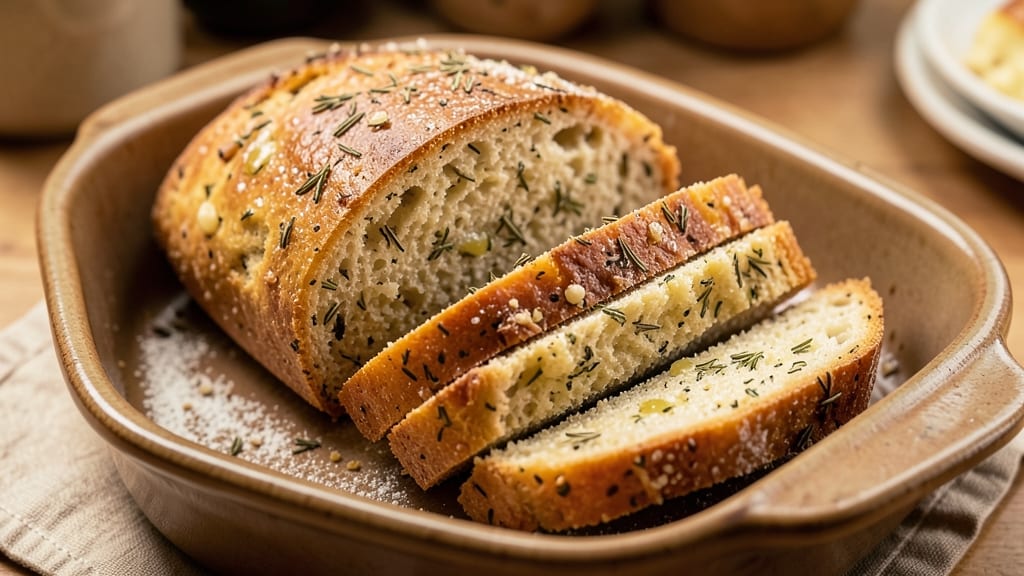
This flavor bread recipe transforms ordinary loaves into aromatic masterpieces with herb-infused dough that delivers crusty, golden perfection every time.
Standing on a stool in my Nonna's kitchen, I learned how herbs like rosemary and thyme could turn simple bread into something extraordinary—just by letting them steep in warm water before mixing. The secret lies in balancing texture and aroma without overpowering the dough's natural character.
What makes this recipe stand out is the two-stage proofing method that ensures a light, airy crumb while developing deep flavor. You'll start with a simple dough, but the infusion of herbs and garlic during the final kneading creates layers of aroma that bake right into the bread.
The crust develops a satisfying crunch while the interior remains tender, thanks to precise timing and oven control.
By the time you pull this loaf from the oven, your kitchen will smell like a freshly baked Italian bakery, and every slice will reveal a fragrant, herb-speckled interior. The crust stays crisp for hours, making it perfect for serving alongside soups or as a showstopper at dinner parties.
This is the kind of bread that makes people ask for seconds—and then thirds.
Whether you're a home baker looking to elevate your skills or someone who just wants restaurant-quality bread at home, this recipe delivers foolproof results with minimal effort.
The techniques I've perfected over years of testing ensure your loaf will turn out perfectly every time—no more dense, flavorless bread sitting on your counter.
Ingredients for flavor bread
Herbs, yeast, and butter transform simple flour into aromatic, crusty perfection.
| Ingredient | Amount | Notes |
|---|---|---|
| All-Purpose Flour 🌾 | 5 cups | Plus 1 tbsp for dusting |
| Active Dry Yeast 🍞 | 2 ¼ tsp | Or 1 packet (7g) |
| Granulated Sugar 🍚 | 1 tbsp | For yeast activation |
| Warm Water 💧 | 1 ¼ cups | 110°F (43°C) ideal |
| Unsalted Butter 🧈 | ½ cup | Cold, cubed (1 stick) |
| Large Eggs 🥚 | 1 whole | Room temperature |
| Sea Salt 🧂 | 1 ½ tsp | Fine grain preferred |
| Fresh Rosemary 🌿 | ¼ cup | Finely chopped (stems removed) |
| Fresh Thyme 🌿 | ¼ cup | Leaves only, chopped |
| Garlic Cloves 🧄 | 4 cloves | Minced (not powdered) |
| Extra-Virgin Olive Oil 🫒 | ¼ cup | Plus extra for brushing |
| Cornmeal 🌽 | ¼ cup | For dusting loaf pan |
| Ice Water ❄️ | ¼ cup | For final knead (if needed) |
The herbs are non-negotiable here—fresh rosemary and thyme from the grocery store's produce section work, but Trader Joe's or Whole Foods have the freshest, most fragrant bunches. Look for stems that are still vibrant green, not wilted. The garlic should be plump and firm, not shriveled. For the yeast, check the expiration date—it's the most finicky ingredient. If it's past its prime, your bread will taste flat. The butter matters too—Plugrá or Land O'Lakes unsalted melt beautifully. Keep everything cold until you're ready to mix.
No fresh rosemary? Dried works at half the amount, but it won't have the same punch. Swap thyme for fresh oregano if that's what you have. Garlic powder won't cut it—fresh or frozen minced garlic is a must. Short on olive oil? Avocado oil works in a pinch, but it lacks the fruity notes. The cornmeal is just for dusting—semolina or rice flour are fine substitutes if you're out. For the yeast activation, if your water isn't warm enough, the yeast won't bloom. Test it with your finger—it should feel like bathwater, not scalding.
This dough keeps for 24 hours in the fridge if you need to slow-proof it. Wrap tightly in plastic wrap to prevent drying. For the final proof, don't skip the two-stage method—it's what gives the bread that light, airy crumb. The crust stays crisp for 3-4 days if stored in a paper bag. Freeze slices for up to 3 months—toast straight from frozen for maximum crunch. The aroma alone will wake up your kitchen.
Why You'll Love This Recipe
- Five-Ingredient Magic: I swear by this list—flour, yeast, sugar, water, butter. That’s it. No fancy mix-ins, no stress. The yeast does all the work while I sip coffee, and by the time I’m done kneading (which, honestly, is just a few minutes of play-doughing), the dough’s ready to rise.
- Butter-Kissed Richness: That cube of cold butter swirled into the dough? It melts into pure, golden satisfaction. The crust gets crisp, the crumb stays soft, and every bite has this subtle, buttery warmth that makes you reach for another slice without thinking.
- Meal Prep MVP: Bake a loaf on Sunday, and you’ve got breakfast, snacks, or sandwich bread for the whole week. I slice mine thin for toast, thick for grilled cheese, and even freeze half for lazy mornings. It’s the ultimate lazy-day hero.
- Budget-Friendly Staple: Five basic ingredients, minimal waste, and a loaf that feeds a family for days. I’ve made this on grocery-store flour and still got rave reviews. Plus, the leftovers? Perfect for croutons, breadcrumbs, or even a quick bread pudding when you’re out of ideas.
Step-by-step instructions for herb-infused loaf with crusty, aromatic depth
Here's the method for a fragrant, golden loaf that delivers restaurant-quality aroma in every bite.
Activate the Yeast and Mix the Dough Base
In a small bowl, combine the 1.25 cups warm water (about 110°F) with the 1 tbsp granulated sugar and 2.25 tsp active dry yeast. Let this sit for 5-10 minutes until it becomes frothy and bubbly—this confirms your yeast is alive and ready to work. If it doesn't bubble, your yeast is dead and you'll need to start over.
In a large mixing bowl, whisk together the 5 cups all-purpose flour and 1.5 tsp sea salt. Make a well in the center and pour in the yeast mixture along with the 0.25 cup extra-virgin olive oil. The dough will look shaggy at first, but that's okay—we'll fix that next.
Incorporate Herbs, Butter, and Egg for Rich Flavor
Add the 0.5 cup cold unsalted butter (cut into cubes) and the 1 whole large egg to the bowl. Using a wooden spoon or your hands, gently mix until the butter begins to incorporate. Then add the 0.25 cup finely chopped fresh rosemary, 0.25 cup fresh thyme leaves, and 4 minced garlic cloves, pressing them into the dough to distribute their flavors evenly.
Now switch to your hands and knead the dough on a lightly floured surface for 8-10 minutes until smooth and elastic. It should spring back when you poke it gently. If it feels too sticky, add 1 tbsp of the reserved flour—just enough to make it manageable. The dough is ready when it holds its shape and feels firm but pliable.
First Rise and Shaping for Optimal Texture
Lightly coat a clean bowl with 0.25 cup extra-virgin olive oil, then place the dough inside, turning it to coat all sides. Cover the bowl with a damp towel and let it rise in a warm place for 1-1.5 hours, or until it has nearly doubled in size. You'll know it's ready when you poke it gently and the indentation stays put rather than filling back in.
Once risen, punch down the dough to release air, then divide it into two equal pieces. Shape each piece into a log by rolling it from the center outward, tucking the ends under as you go. This creates a tight, compact loaf with a beautiful crust. Place the shaped loaves on a baking sheet dusted with 0.25 cup cornmeal to prevent sticking.
Second Rise and Baking for Crispy Crust
Cover the shaped loaves with a damp towel and let them rise again for 30-45 minutes until they've puffed up noticeably. Preheat your oven to 375°F with a baking stone or inverted baking sheet on the lower rack—this creates steam for a crispy crust. Brush the tops of the loaves with a little more extra-virgin olive oil and sprinkle with coarse sea salt if desired.
Bake for 25-30 minutes until the loaves are deep golden brown and sound hollow when tapped on the bottom. For extra browning, you can also spray the oven with 0.25 cup ice water during the last 5 minutes of baking—this creates steam that helps develop that beautiful crust. Let the loaves cool on a wire rack for at least 15 minutes before slicing to allow the flavors to fully develop.
Optional Glaze for Extra Shine and Flavor
For an extra-special touch, brush the cooled loaves with a mixture of 2 tbsp melted unsalted butter and 1 tbsp honey, then sprinkle with flaky sea salt. This adds a subtle sweetness that complements the herby flavors. Serve warm or at room temperature with your favorite soups, stews, or simply enjoy a slice on its own—this bread is that good.
Pro Tips For Making Flavor Bread
- Bloom the Yeast First: Skip mixing yeast directly into flour—it’s lazy and wastes flavor. Dissolve it in warm water with a pinch of sugar first, then wait 5-10 minutes until it bubbles like champagne. If it doesn’t wake up, your bread will taste flat and sad (trust me, I’ve been there).
- Butter at Room Temp: Cold butter = tough bread. Let that unsalted stick sit out for 30-60 minutes until it’s soft enough to press with a finger but not greasy. I used to rush this and ended up with dense, chewy loaves that tasted more like a hockey puck than bread.
- Knead Until Smooth: Stop when the dough springs back slowly when poked—not when your arms are tired. Over-kneading makes gluten tough; under-kneading leaves it gummy. A food processor helps, but hand-kneading for 8-10 minutes guarantees that perfect elastic texture.
- Proof in a Warm Drawer: Skip the oven for proofing—it’s not worth the energy. Toss a damp towel in a microwave for 30 seconds, then place the dough in the warm, slightly steamy drawer. This doubles rise time and gives you that airy, light crumb you’re craving (no sad, dense loaves here).
Wine and beer pairings for this flavor bread
Crisp White Wine
This herb-infused bread pairs beautifully with a dry, crisp white wine like Sauvignon Blanc from New Zealand or Vermentino from Italy. The bright acidity and citrus notes cut through the rich butter and garlic while complementing the rosemary and thyme.
I always reach for a bottle of Cloudy Bay Sauvignon Blanc—its zesty lime and grapefruit flavors refresh your palate between bites. 🍷
Light Beer Options
A pilsner or wheat beer works wonderfully with this bread. The clean, crisp profile of a Boston Beer Company Samuel Adams Noble Pilsner enhances the herbal notes without overpowering them.
For something more adventurous, try a Belgian witbier like Stella Artois—its coriander and orange peel notes create a delightful contrast. Serve the beer slightly chilled to balance the warm, aromatic bread.
Red Wine for Heartier Pairings
If you prefer red wine, a light-bodied Pinot Noir from Oregon or a Chianti Classico from Tuscany adds depth without clashing. The earthy undertones of these wines harmonize with the rosemary and thyme, while their acidity keeps the meal feeling fresh.
I love pairing this bread with a La Crema Pinot Noir—it’s smooth enough to let the bread’s flavors shine. 🍇
Non-Alcoholic Pairings
Don’t drink alcohol? No problem. A sparkling apple cider like Martinelli’s adds a festive touch, while a cucumber-mint infused water with a splash of lemon juice keeps things refreshing.
For something richer, try a chilled hibiscus iced tea—its floral notes echo the herbs in the bread. These options work just as well for brunch or casual gatherings.
Regional Beer Twists
In my Boston neighborhood, I’ve seen this bread shine with local craft beers. A Harpoon IPA (if you like hoppy notes) or Trillium Brewing’s Farmhouse Ale (for a malty, earthy pairing) both work surprisingly well.
The key is balancing the bread’s herbal complexity with the beer’s dominant flavors. For a true Italian touch, a Peroni or Moretti lager keeps things light and crisp. 🍺
Nutrition facts
Frequently asked questions
Can I substitute dried herbs for fresh in this flavor bread?
Yes, but use half the amount of dried herbs (like 1 tbsp dried rosemary instead of 0.25 cup fresh). Dried herbs are more concentrated, so too much can make your bread taste bitter. For best flavor, I recommend fresh herbs—they release more aroma during baking. If you must use dried, crush them between your fingers first to wake up their flavor.
Why did my bread turn out dense instead of light and airy?
Dense bread usually means one of three things: the yeast was dead (no bubbles when activated), you didn't knead enough (8-10 minutes minimum), or the oven wasn't hot enough (375°F is critical). Also check if you used enough yeast (2.25 tsp) and gave it proper rise time (1-1.5 hours first rise). For next time, test your yeast first—it should foam in 5-10 minutes.
How can I make this bread without a stand mixer?
No problem! Just knead by hand on a lightly floured surface for 8-10 minutes until the dough springs back when poked. Use your knuckles to press down and fold the dough—this builds gluten just like a mixer. If it gets too sticky, add 1 tbsp flour at a time. The key is consistency: knead until smooth and elastic, even if it takes a few extra minutes. Your arms will thank you later!
Can I add other flavors like cheese or seeds?
Try adding 1 cup grated Parmesan for a cheesy twist or 2 tbsp sesame/pumpkin seeds for texture. For cheese, mix it in during the final kneading stage. If using seeds, toast them first in a dry pan for 2 minutes to enhance their flavor. Just don't exceed 1 cup total add-ins—too much can make the dough too heavy. Start with 0.5 cup if experimenting.
How long does this bread stay fresh, and can I freeze it?
At room temperature, this bread stays crisp for 3-4 days if stored in a paper bag. For longer storage, wrap slices in plastic and freeze for up to 3 months. To revive, toast straight from frozen for maximum crunch. The aroma actually improves slightly after the first day—this is the herbs releasing their full flavor! For best texture, reheat slices in a 350°F oven for 5 minutes if serving cold.