
Side Dishes
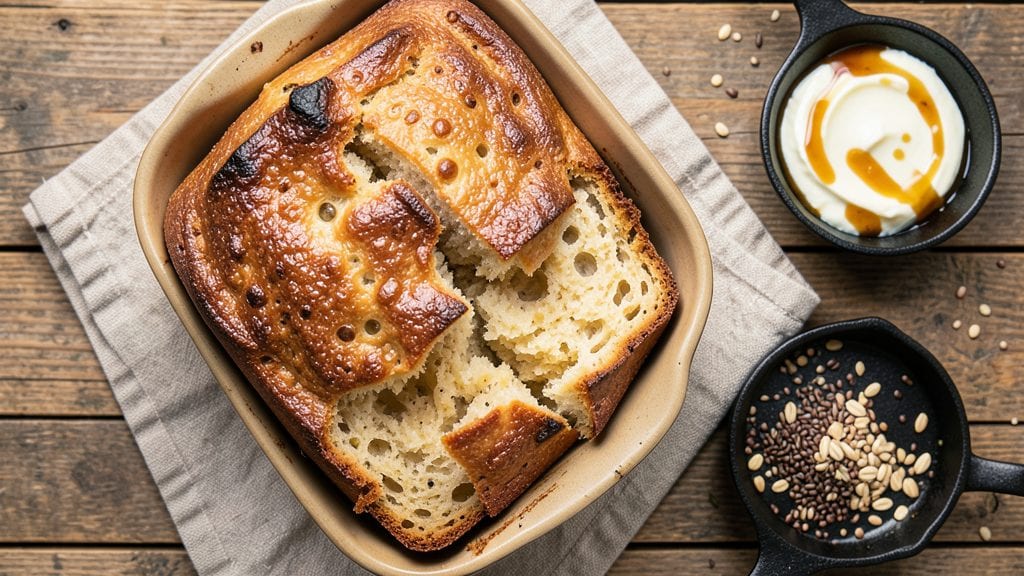
This kombucha bread recipe transforms a humble loaf into a tangy, fermented masterpiece that balances sweetness and acidity in every bite. The key lies in using kombucha as both a leavening agent and flavor enhancer, creating a vegan bread with a crisp crust and airy crumb.
I developed this recipe after experimenting with fermented starters, and the results are nothing short of impressive—complex flavors without dairy or yeast.
The process begins with fermenting a kombucha-infused dough, which adds depth and tanginess while keeping the bread light. You’ll mix whole grains, kombucha, and plant-based fats to create a dough that rises beautifully in the oven.
The baking time is precise—just 45 minutes at 375°F—to achieve that perfect golden-brown crust and tender interior. This isn’t your average bread; it’s a flavor experience.
What you’ll end up with is a loaf that’s crisp on the outside, soft and slightly chewy inside, and infused with the bright, tangy notes of kombucha. The swirls of sweetness from the fermentation create a perfect balance, making it ideal for sandwiches, toast, or simply enjoying on its own.
The best part? It’s entirely plant-based and packed with probiotics from the kombucha.
For extra flair, top with everything bagel seasoning or a drizzle of maple glaze before baking. This bread keeps well for days, making it perfect for meal prep or gifting. Let’s get started on this fermented twist on a classic staple.
Ingredients for kombucha bread
Fermented tang meets whole-grain goodness—just these 12 ingredients transform your kitchen into a probiotic bakery.
| Ingredient | Amount | Notes |
|---|---|---|
| Kombucha 🍶 | 1 ½ cups | Unflavored, room temperature, 1-2% acidity |
| Whole Wheat Flour 🌾 | 3 ½ cups | Unbleached, high protein preferred |
| All-Purpose Flour 🌾 | 1 ½ cups | For lighter texture |
| Maple Syrup 🍁 | ½ cup | Grade B for richer flavor |
| Vegan Butter 🧈 | ½ cup | Melted, unsalted, full-fat |
| Active Dry Yeast 🍞 | 1 tbsp | Vegan-certified, not instant |
| Apple Cider Vinegar 🍏 | 1 tbsp | For fermentation boost |
| Ground Flaxseed 🌰 | 1 tbsp | Mixed with 3 tbsp water for egg substitute |
| Sea Salt 🧂 | 1 ½ tsp | Diamond Crystal preferred |
| Olive Oil 🫒 | 2 tbsp | Extra-virgin, for dough oil |
| Everything Bagel Seasoning 🧂 | 2 tbsp | For topping, optional |
| Cold Water 💧 | 1 ½ cups | For dough hydration |
The kombucha is non-negotiable here—homemade with 1-2% acidity delivers the best fermentation punch. GT's Synergy or Health-Ade are my go-tos from the store, but your own SCOBY brew takes it to another level. That said, any unflavored kombucha works—just avoid the sweetened varieties. The flours? Bob's Red Mill whole wheat gives the best texture, but King Arthur works too. For the flax egg, grind your own seeds (store-bought is fine, but freshly ground has more binding power). The maple syrup isn't just sweetener—it feeds the yeast during fermentation, creating those signature tangy swirls.
No kombucha? Apple cider vinegar plus 1 tsp sugar per cup of water mimics the acidity, though the flavor won't be identical. Short on whole wheat flour? Substitute spelt flour at a 1:1 ratio—it's lighter and adds a nutty depth. The everything bagel seasoning is optional but adds that perfect crunchy contrast. Trader Joe's or Schar brands are my top picks for vegan-friendly seasoning blends. For the yeast, if you're in a pinch, nutritional yeast at double the amount can work, though it won't rise as dramatically. The olive oil matters—use something with low smoke point like extra-virgin, not refined. And yes, you can make this with just all-purpose flour, but where's the fun in that?
This dough ferments best at 70-75°F for 4-6 hours, so plan ahead if your kitchen runs cold. Once baked, it keeps for 5-7 days wrapped in a cotton towel—better than plastic, which traps moisture. For longer storage, slice and freeze portions for up to 3 months. The crust stays crisp for about 2 days, so I recommend toasting slices before serving. Pro tip: Brush warm slices with melted vegan butter for that fresh-from-the-oven feel anytime. Leftovers? Toss them in a bagel toaster—absolute game-changer.
Why You'll Love This Recipe
- No Mixer Needed: Honestly, this is one of those recipes where you grab a bowl, dump everything in, and boom—you’re done. The kombucha’s acidity does the heavy lifting, so no kneading, no fuss. Just mix, shape, and bake while your coffee brews.
- Fruity, Tangy Surprise: Between the kombucha’s effervescent kick and the maple syrup’s caramel depth, this bread isn’t just flavorful—it’s interesting. My kids call it "the weird bread," but honestly? It’s the only one they’ll eat with their peanut butter.
- Weekend Leftovers, Weeknight Hero: This bread holds up like a champ. Slice it fresh for brunch, save half for sandwiches later, or toss it in the freezer for lazy days. It’s the kind of thing that turns a simple lunch into something special without the extra effort.
- Budget’s Your Buddy: I’ve got kombucha on hand for drinking anyway, so why not use it here? The flours and maple syrup stretch farther than store-bought loaves, and honestly, you’ll make this again just because it’s that good. My grocery bill thanks me.
Step-by-step instructions for kombucha bread
This tangy-sweet loaf transforms fermented tea into golden, textured perfection with minimal fuss.
Prepare the Flaxseed Egg Substitute and Activate the Yeast
In a small bowl, whisk together the 1 tablespoon ground flaxseed with 3 tablespoons cold water. Let this mixture sit for 5 minutes until it thickens into a gel-like consistency—this replaces eggs in our vegan dough. I like to test the readiness by inserting a clean finger; it should feel slightly tacky but not wet.
Meanwhile, in a separate small bowl, combine the 1.5 cups kombucha with the 1 tablespoon apple cider vinegar and 1 tablespoon active dry yeast. Stir gently and let it sit for 5-10 minutes in a warm spot until it becomes frothy. You'll see tiny bubbles forming on the surface—this confirms your yeast is alive and ready to work its magic. If it doesn't bubble within 10 minutes, start fresh with new yeast.
Mix the Wet and Dry Ingredients for the Dough Base
In a large mixing bowl, melt the 0.5 cup vegan butter in 2 tablespoons olive oil over low heat until fully liquid. Remove from heat and let cool slightly. Add the 0.5 cup maple syrup and stir until combined—this creates our sweet, tangy foundation.
In a separate medium bowl, whisk together the 3.5 cups whole wheat flour, 1.5 cups all-purpose flour, and 1.5 teaspoons sea salt. Sift this mixture lightly to aerate the flour, which helps create a lighter texture in our bread. Gradually pour the wet ingredients into the dry while mixing with a wooden spoon until a shaggy dough forms. Here's the thing—don't overmix yet. We want to preserve the gluten development for later when we knead.
Combine All Ingredients and Knead the Dough
Add the frothy yeast-kombucha mixture and flaxseed gel to the dough. Mix vigorously with your hands or a dough whisk until everything comes together. The dough will feel sticky at first—this is normal given the kombucha's moisture content. Gradually add 1 cup cold water (from the 1.5 cups total) as needed to bring the dough together into a cohesive mass.
Turn the dough onto a lightly floured surface and knead for 8-10 minutes until smooth and elastic. Here's what to watch for: the dough should spring back slowly when poked with your finger, and it should feel slightly tacky but not wet. If it's too dry, add 1 tablespoon cold water at a time until you reach the right consistency. The goal is a dough that's soft but not sticky enough to cling to your fingers.
First Rise and Prepare the Kombucha Swirl Dough
Place the dough in a lightly greased bowl, cover with a damp towel, and let it rise in a warm place for 1.5-2 hours or until doubled in size. You'll know it's ready when the dough feels light and springs back immediately when pressed gently. This first rise develops the gluten structure and allows the yeast to ferment properly.
While the dough rises, prepare the swirl component by mixing 0.5 cup kombucha, 0.25 cup maple syrup, and 1 tablespoon everything bagel seasoning in a small bowl. This tangy-sweet mixture will create beautiful swirls through our bread. Once the dough has risen, gently deflate it and roll it out into a 12x16-inch rectangle on a floured surface. Spread the kombucha mixture evenly over the surface, leaving a ½-inch border around the edges.
Shape, Second Rise, and Bake to Golden Perfection
Starting from the long side, tightly roll the dough into a log. Pinch the seam to seal, then coil the log into a spiral shape on a parchment-lined baking sheet. Cover loosely with plastic wrap and let it rise for another 45-60 minutes until puffy. The spiral shape creates those beautiful swirl patterns when baked, and the second rise ensures a light, airy texture.
Preheat your oven to 375°F. Brush the top of the bread with any remaining kombucha mixture and sprinkle generously with everything bagel seasoning. Bake for 35-40 minutes until the top is deep golden brown and the internal temperature reaches 190°F. The bread will smell incredible—tangy, sweet, and slightly nutty from the whole wheat flour. For extra crispiness, broil for 1-2 minutes at the end, watching closely to prevent burning.
Let the bread cool on a wire rack for at least 30 minutes before slicing. The longer you wait, the easier it will be to achieve clean slices without crumbling. Each bite should deliver a perfect balance of tangy kombucha flavor, sweet maple notes, and a satisfying crunch from the whole wheat crust.
Pro Tips For Making Kombucha Bread
- STRAIN YOUR KOMBUCHA: DESCRIPTION: Don’t use the fizzy, vinegary liquid straight from the bottle—strain it first through a fine-mesh sieve or cheesecloth to remove yeast and sediment. I learned this the hard way when my first batch turned out dense and tangy instead of light and slightly sweet.
- WEIGH YOUR FLOUR: DESCRIPTION: Whole wheat and all-purpose flour vary wildly in density. Use a kitchen scale for precision—1 cup of whole wheat isn’t the same as 1 cup of all-purpose. I used to eyeball it, and my bread would either collapse or turn rock-hard.
- LET THE DOUGH REST: DESCRIPTION: Skip the urge to bake immediately after mixing. Let the dough sit covered at room temp for at least 30 minutes—this lets the kombucha’s acids mellow and the gluten relax. My grandmother swore by this, and she was right: the texture is noticeably better.
- BRUSH MAPLE SYRUP: DESCRIPTION: Instead of mixing it into the dough, brush a thin layer of maple syrup on the loaf before baking. It caramelizes into a glossy crust without making the bread gummy. Sounds weird, but it works—and it’s the thing that makes this bread taste like a bakery loaf.
Essential equipment for perfect results
Fermentation Tools
You’ll need a large mixing bowl (I use my 5-quart stainless steel Cambro) to handle the sticky kombucha dough—it’s deep enough to contain any splashes.
A damp kitchen towel or plastic wrap keeps the dough moist during rises, while a small bowl (like my Pyrex measuring cup) works perfectly for activating yeast and prepping the swirl mixture.
For precision, a digital kitchen scale (I love the OXO Good Grips) ensures accurate measurements, especially with flours and liquids. 🌱
Kneading Essentials
A lightly floured surface (I keep a large cutting board or marble pastry mat at the ready) prevents sticking during kneading. For shaping the spiral, a rolling pin (my Nordic Ware is a workhorse) helps flatten the dough evenly.
A bench scraper (like the OXO Good Grips) comes in handy for dividing dough and cleaning up edges. Avoid plastic tools—they can trap moisture and make cleanup messy. ✨
Baking Gear
Preheat your oven with a parchment-lined baking sheet (I use Duralex for its heat resistance) to prevent sticking. A wire cooling rack (my Amazon Basics rack) keeps the bread crisp as it cools.
For checking doneness, an instant-read thermometer (I swear by Thermoworks Thermapen) ensures the 190°F internal temp without overbaking. A pastry brush (like King Arthur’s) helps apply the final kombucha glaze. 🔥
Budget-Friendly Swaps
No fancy tools? A large glass bowl works for mixing, and a wooden spoon suffices for kneading. Skip the scale? Use measuring cups (like OXO’s stainless set)—just level them off for accuracy.
For shaping, a clean, smooth countertop and your hands do the trick. The only non-negotiable is a thermometer—oven temps fluctuate, and this bread needs precision. 💡
Pro Upgrades
For serious bakers, a proofing box (like Breville’s) maintains 75°F for consistent rises. A dough scraper with silicone edges (my Jamie Oliver one) glides under sticky dough without tearing.
For storage, amber glass jars (like Le Parfait) preserve freshness and block light. These upgrades save time and elevate texture—worth it if you bake often. 💛
Nutrition facts
Frequently asked questions
Why does this bread use kombucha instead of water?
Kombucha adds probiotics and a complex tangy flavor that water can't replicate. The fermentation process creates natural leavening while balancing the sweetness from maple syrup. The acidity also helps break down gluten, resulting in a lighter crumb compared to traditional whole wheat bread.
Can I make this bread without yeast?
Yes! Replace the yeast with 1 tablespoon baking soda and 1 tablespoon apple cider vinegar for a quick-rise version. The kombucha's natural acidity will activate the baking soda, creating lift. Bake immediately after mixing—no rising time needed. The texture will be denser but still delicious.
How do I know when the dough is fully risen?
Press your finger gently into the dough—if it springs back slowly (not immediately), it's ready. For the first rise, look for doubling in size (1.5-2 hours). For the second rise, the spiral should look puffy and feel light when touched. A warm spot like near the oven with the light on helps speed up fermentation.
What if my bread turns out too dense?
Density usually means underproofed dough or over-kneading. Try these fixes: Let the dough rise longer (up to 3 hours for first rise), reduce whole wheat flour by ½ cup (whole grains absorb more liquid), or knead gently for 5-7 minutes instead of 10. For extra lift, add 1 teaspoon baking powder to the dry ingredients.
Can I add other flavors to this bread?
Swap the everything bagel seasoning for cinnamon + 1 tbsp maple syrup for a sweet version, or add 1 tbsp dried herbs (like rosemary or thyme) for savory. For extra tang, mix 1 tbsp lemon zest into the swirl mixture. Just adjust the liquid if adding wet ingredients to maintain dough consistency.