
Breakfast & Brunch
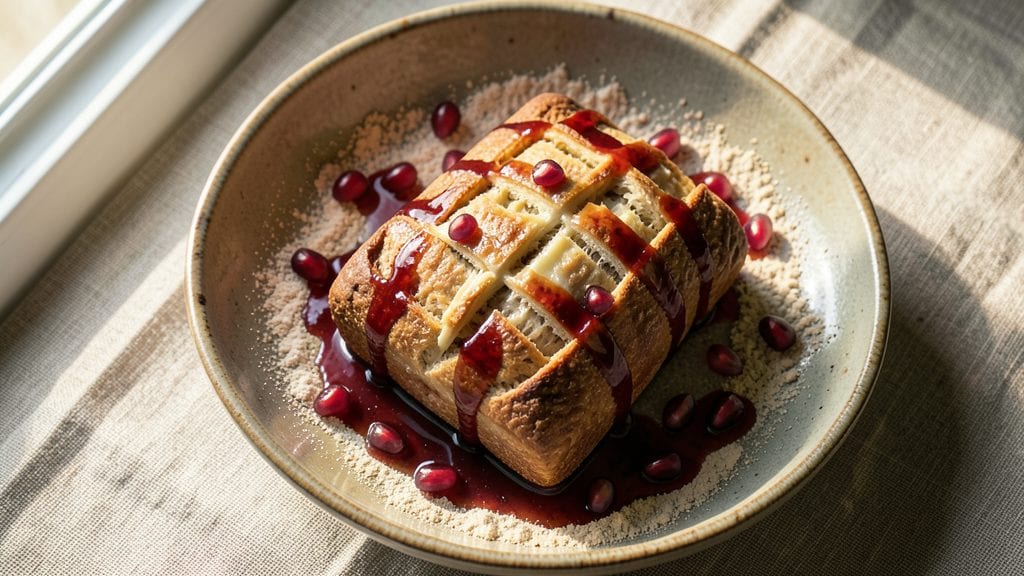
This pomegranate bread recipe transforms ordinary baking into a jewel-toned masterpiece with ruby seeds swirled through golden dough and a crispy top that cracks just right. The first time I baked this, my kitchen smelled like a Middle Eastern bakery, and every slice became an instant favorite at breakfast tables.
What makes it special is the balance—sweet enough to satisfy cravings but with subtle tartness from the pomegranate molasses that keeps it sophisticated.
The process is straightforward but requires patience: kneading the dough until silky smooth, letting it rise twice for maximum flavor, and folding in those vibrant pomegranate seeds just before baking.
The bread develops a caramelized crust that contrasts beautifully with the tender crumb inside, while the seeds add bursts of juicy sweetness in every bite. It’s the kind of bread that makes weekend mornings feel like a celebration.
By the time it emerges from the oven, you’ll have a loaf that’s perfect for breakfast toast, brunch accompaniments, or even dessert with a drizzle of honey. The pomegranate seeds stay plump and juicy, adding texture and color that make this bread visually stunning.
This recipe delivers restaurant-quality results with just a few simple ingredients and about an hour of hands-on time.
Serve it warm with butter, or let it cool slightly for crispy toast. The versatility makes it ideal for any meal—whether you’re hosting a brunch or simply treating yourself to something extraordinary. Here’s how to make it happen in your own kitchen.
Ingredients for pomegranate bread
Four cups flour, a splash of molasses, and those ruby seeds make this bread unforgettable.
| Ingredient | Amount | Notes |
|---|---|---|
| All-Purpose Flour 🌾 | 4 cups | Spooning and leveling for accuracy |
| Granulated Sugar 🍚 | ½ cup | White or light brown preferred |
| Instant Yeast 🍞 | 2 ¼ tsp | Freshly opened for best rise |
| Unsalted Butter 🧈 | ½ cup | Cold, cubed for easier mixing |
| Pomegranate Molasses 🍇 | ¼ cup | For that signature tart-sweet balance |
| Large Eggs 🥚 | 1 whole | Room temperature for even mixing |
| Milk 🥛 | ½ cup | Warm, not hot, for yeast activation |
| Salt 🧂 | 1 tsp | Fine sea salt preferred |
| Pomegranate Seeds 🍇 | ½ cup | Freshly unshelled for juicy bursts |
| Honey 🍯 | 1 tbsp | Lightly warmed for easy incorporation |
| Vanilla Extract 🌸 | 1 tsp | Pure vanilla for authentic flavor |
| Poppy Seeds 🌱 | 1 tbsp | Optional for nutty crunch |
| Sesame Seeds 🌿 | 1 tbsp | For extra texture contrast |
| Coarse Sugar 🍚 | ¼ cup | For that signature crunchy top |
The pomegranate molasses is non-negotiable here—it’s what gives this bread that signature tart-sweet balance. Look for it in the international aisle at stores like Whole Foods or Trader Joe's, or online if your local market doesn’t carry it. If you can’t find it, substitute half the amount with balsamic vinegar, but trust me, the real stuff makes all the difference. The pomegranate seeds should be plump and juicy—buy them fresh from a Middle Eastern or Mediterranean market if possible, or grab the jarred kind from the baking aisle. For the yeast, always check the expiration date—it’s the difference between a loaf that rises beautifully and one that flops. And the butter? Cold, cubed cubes mix better into the flour than melted butter ever will.
No pomegranate molasses? Substitute with a mix of orange juice and a touch of lemon juice—it won’t be identical, but it’ll add that bright acidity. Running out of poppy or sesame seeds? Toasted nuts or extra coarse sugar work in a pinch (just skip the seeds entirely if you’re in a rush). The vanilla extract can be swapped for vanilla bean paste if you’re feeling fancy, but imitation vanilla will taste off. For the milk, warm it slightly—microwave for 20 seconds—to help the yeast activate properly. And if you’re worried about the dough being too sticky, add a splash more flour, but don’t overdo it—this bread needs to stay tender. The coarse sugar on top? Don’t skip it—it’s what gives that signature crunchy crust.
This bread tastes even better the next day, so bake it the night before if you’re hosting brunch. Store it wrapped in a clean kitchen towel at room temperature for 2-3 days, or freeze the whole loaf for up to 3 months. To revive frozen bread, warm it in a 200°F oven for 10 minutes—it’ll smell like heaven. The seeds stay juicy for about 2 days after baking, so slice it fresh if you’re serving it right away. And if you’ve got leftovers? Toast them with butter—they’re even better the second time around.
Why You'll Love This Recipe
- No-Knead Magic: I swear by this dough—just mix, let it rise, and bake. No standing over a counter, no flour everywhere. The pomegranate molasses does all the work, deepening flavor while I scroll through my phone.
- Tart-Sweet Surprise: That first bite? Warm, buttery bread with a molasses kiss you won’t forget. The sugar caramelizes just enough to make it taste like autumn in a loaf—no fancy syrup needed.
- Breakfast to Brunch: Slice it toasted for weekend pancake stacks or pack it for lunch. My kids eat it plain, but I slather it with ricotta and honey when I’m feeling fancy. (Yes, even on a Tuesday night.)
- Budget-Friendly Staple: Pomegranate molasses stretches a dollar further than jam, and this loaf lasts days. Freeze half for lazy mornings—no wasted ingredients, just pure, reliable comfort.
Step-by-step instructions for pomegranate bread recipe
Here's how to create that signature ruby swirl and crunchy top every time.
Activate the Yeast and Mix Wet Ingredients
In a small bowl, combine the 0.5 cup warm milk, 1 tbsp honey, and 2.25 tsp instant yeast. Let it sit for 5-7 minutes until frothy—this confirms your yeast is active. If it doesn't bubble, start over with fresh yeast.
In a separate large bowl, whisk together the 1 whole large egg, 0.25 cup pomegranate molasses, 1 tsp vanilla extract, and 1 tsp salt. The mixture should be smooth with no lumps. I like to use a whisk for this step to fully incorporate the molasses and create a silky base for the dough.
Combine Dry Ingredients and Form the Dough
In the same large bowl, add the 4 cups all-purpose flour and gently stir to form a shaggy dough. The flour should absorb the wet ingredients completely, but don't overmix—just until combined. Here's where it gets good: add the 0.5 cup unsalted butter, cut into small cubes, and work it into the dough using your hands or a wooden spoon.
Once the butter is fully incorporated, turn the dough onto a lightly floured surface and knead for 5-7 minutes until smooth and elastic. You'll know it's ready when it springs back slowly when pressed. If the dough feels too sticky, add flour 1 tablespoon at a time—but don't add too much or your bread will be dense.
Create the Pomegranate Swirl and Shape the Loaf
Divide the dough in half. For each half, roll into a 12-inch rectangle about ½-inch thick. Sprinkle ¼ of the 0.5 cup pomegranate seeds evenly over one half, then fold the other half over to create a sealed swirl. Roll each swirl tightly into a log shape, sealing the edges to trap the seeds inside.
Place both dough logs seam-side down in a 9x5-inch loaf pan that's been lightly greased with butter. Cover with a clean kitchen towel and let rise in a warm place for 1-1½ hours or until doubled in size. The dough should puff up noticeably and feel springy when pressed gently with your finger.
Add Topping and Bake to Golden Perfection
Preheat your oven to 350°F. In a small bowl, mix together the 0.5 cup granulated sugar, 1 tbsp poppy seeds, 1 tbsp sesame seeds, and 0.25 cup coarse sugar. Sprinkle this mixture evenly over the risen dough in the loaf pan, pressing down lightly so it sticks.
Bake for 45-50 minutes until the bread is deep golden brown and sounds hollow when tapped on the bottom. The internal temperature should reach 190-200°F when checked with an instant-read thermometer. If the top browns too quickly, tent loosely with foil after 30 minutes to prevent over-browning while the center finishes baking.
Cool and Slice for Maximum Flavor
Remove the bread from the oven and let it cool in the pan for 10 minutes, then transfer to a wire rack to cool completely. This resting period is crucial—it allows the crumb to set and prevents a gummy texture. The swirls should be visible through the crust, and those ruby pomegranate seeds will pop with every bite.
Slice the bread while still slightly warm for the best texture. The center should be tender with moist crumb, while the top remains delightfully crunchy. Store leftovers wrapped in plastic at room temperature for up to 3 days or freeze for longer storage. The flavors actually improve overnight as the pomegranate molasses infuses deeper into the bread.
Pro Tips For Making Pomegranate Bread
- Bloom Yeast Properly: Mix the instant yeast with the warm water and sugar first—let it sit for 5 minutes until foamy before adding flour. I used to skip this and wondered why my dough never rose right; the yeast needs that little head start to work its magic with the pomegranate molasses’ acidity.
- Whisk Molasses First: Stir the pomegranate molasses into the wet ingredients before adding butter—it dissolves better and prevents clumpy dough. I learned this after pulling apart a dense loaf; the molasses was just sitting in pockets instead of blending in.
- Don’t Overmix the Dough: Once the flour goes in, stop mixing after 30 seconds—just until combined. Overworking it turns the bread tough, and pomegranate bread’s texture should stay tender. I’ve ruined batches by turning it into a chewy brick.
- Use Cold Butter: Cut the unsalted butter into cubes and chill it for 15 minutes before mixing—it creates better pockets for rise and a lighter crumb. Warm butter makes the dough greasy and gummy; trust me, your bread will thank you.
Dietary considerations for this recipe
Gluten-Free Adaptation
For a gluten-free version, swap the all-purpose flour for a 1:1 gluten-free baking flour blend like King Arthur Measure for Measure or Bob's Red Mill. Add 1 teaspoon xanthan gum to help bind the dough.
The pomegranate molasses and seeds remain the same, but you may need to increase the milk by 1-2 tablespoons—gluten-free dough tends to be stickier. Let the dough rise for 10-15 minutes longer since gluten-free flours rise slower. 💫
Dairy-Free Option
Replace the ½ cup unsalted butter with ½ cup dairy-free butter (like Miyoko's or Earth Balance) or ½ cup coconut oil (solid, not melted). Use ½ cup unsweetened almond milk or oat milk instead of regular milk—just warm it to 100°F to activate the yeast.
The texture stays tender, but the flavor becomes slightly nuttier, which pairs beautifully with the pomegranate. ✨
Lower Sugar Version
Reduce the ½ cup granulated sugar to ¼ cup and the ¼ cup coarse sugar to 2 tablespoons. Replace the remaining ¼ cup granulated sugar with ¼ cup honey or maple syrup to keep moisture.
The pomegranate molasses already adds natural sweetness, so this adjustment keeps the bread flavorful without being overly sweet. The crust will be slightly less crisp, but the crumb stays soft. 🍯
Nut-Free Adjustments
Skip the poppy and sesame seeds entirely—they’re the only nutty ingredients here. Instead, sprinkle extra coarse sugar or crushed freeze-dried raspberries on top for color and crunch. For added texture, try toasted pumpkin seeds (pepitas) if nut-free is required. The bread’s flavor remains rich without relying on seeds. 🌱
Vegan-Friendly Swaps
Use flax eggs (1 tablespoon ground flaxseed + 3 tablespoons water per egg) instead of the large egg. Replace the ½ cup unsalted butter with ½ cup vegan butter or coconut oil. For the milk, use ½ cup unsweetened almond milk warmed to 100°F.
The dough may require 1 extra tablespoon of flour to hold together. The final bread is just as moist and flavorful! 🌿
Allergen-Friendly Notes
Always check labels on pomegranate molasses and vanilla extract—some brands process in facilities with nuts or dairy. If avoiding sesame, omit it entirely and use extra coarse sugar or crushed pistachios (if no nut allergies).
For egg-free bakers, the flax egg works perfectly without altering texture. Keep these swaps handy for inclusive baking! 💪
Nutrition facts
Frequently asked questions about pomegranate bread
Can I substitute pomegranate molasses with something else?
Yes, but the flavor will differ slightly. Try ½ cup orange juice + 1 tablespoon lemon juice for brightness, or ¼ cup balsamic vinegar + 1 tablespoon honey for depth. The molasses gives that signature tart-sweet balance, so no substitute will be identical—but these work in a pinch!
How do I store pomegranate bread to keep it fresh?
Wrap the cooled loaf in a clean kitchen towel and store at room temperature for 2-3 days. For longer storage, freeze the whole loaf (up to 3 months) and thaw at 200°F for 10 minutes to revive. The seeds stay juicy for 2 days after baking, so slice fresh if serving immediately.
Why did my bread turn out dense instead of light and fluffy?
This usually happens from overmixing the dough or underproofing. Knead just until smooth (5-7 minutes), and let it rise until doubled in size (about 1-1½ hours). Also, ensure your yeast is fresh—old yeast won’t activate properly. A warm spot (like a turned-off oven with a bowl of hot water) helps speed up rising.
Can I make this bread without a loaf pan?
Shape the dough into a free-form loaf or round and bake on a parchment-lined sheet. Brush with milk or egg wash before baking for a crispier crust. The baking time may increase by 5-10 minutes, so check at 40 minutes for doneness.
What’s the best way to serve pomegranate bread?
Toast slices with butter for breakfast, or serve warm with jam for brunch. It’s also perfect with tea or coffee! For dessert, drizzle with honey or sprinkle with powdered sugar. The pomegranate seeds add a festive touch to any meal.