
Desserts
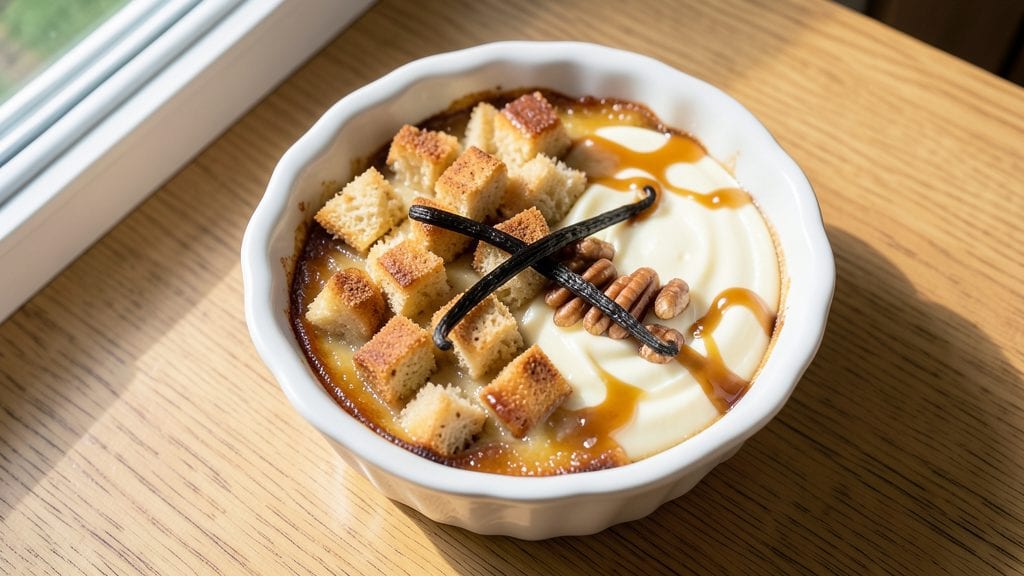
This preppy kitchen bread pudding recipe transforms simple ingredients into a dessert that looks like it belongs on a country club menu. The secret lies in swirling vanilla bean custard through buttery, toasted bread cubes and finishing with a golden, crackly crust that begs for seconds.
I developed this version after years of baking bread pudding—it’s the one that finally earned me compliments even from the most critical dessert judges.
The magic begins with day-old brioche or challah, lightly toasted to create that perfect balance of softness and texture. A rich vanilla custard—infused with real vanilla bean for depth—soaks into the bread while baking, creating tender layers.
The buttery crust forms on top, offering a satisfying crunch that contrasts beautifully with the custard’s velvety finish. Every bite delivers a symphony of flavors: warm vanilla, buttery bread, and a hint of cinnamon that ties it all together.
What makes this recipe stand out is its restaurant-quality presentation without requiring advanced skills. The swirl technique ensures each slice reveals layers of custard and bread, while a sprinkle of cinnamon sugar on top adds that final preppy touch.
It’s the kind of dessert that feels indulgent yet comes together with straightforward steps—perfect for brunch, dinner parties, or impressing guests with minimal effort.
Serve it warm with a scoop of vanilla ice cream or a drizzle of caramel sauce for extra elegance. The leftovers reheat beautifully, making it ideal for meal prep. Here’s how to create this crowd-pleasing classic in your own kitchen.
Ingredients for preppy kitchen bread pudding
Simple ingredients elevated to country club dessert perfection with vanilla bean swirls and golden crust.
| Ingredient | Amount | Notes |
|---|---|---|
| Day-Old Brioche or Challah Bread 🍞 | 12 oz | Cubed into 1-inch pieces |
| Large Eggs 🥚 | 6 whole | Room temperature preferred |
| Heavy Cream 🥛 | 1 ½ cups | Full-fat for creaminess |
| Whole Milk 🥛 | ½ cup | Warmed slightly for custard |
| Vanilla Bean 🌿 | 1 whole | Split lengthwise for seeds |
| Granulated Sugar 🍚 | 1 cup | Light brown works too |
| Unsalted Butter 🧈 | ½ cup | Cold, cubed for crust |
| Ground Cinnamon 🌶️ | 1 tbsp | Plus extra for topping |
| Salt 🧂 | ½ tsp | Fine sea salt preferred |
| Vanilla Extract 🍯 | 1 tbsp | Pure alcohol-free if preferred |
| All-Purpose Flour 🌾 | 2 tbsp | For thickening custard |
| Cinnamon Sugar 🍚 | ¼ cup | Mix equal parts sugar and cinnamon |
The bread is the foundation—brioche or challah gives that signature preppy texture. Day-old loaves work best, but fresh works in a pinch if lightly toasted first. For brioche, Whole Foods or local bakeries have the best quality; challah from the freezer section at Kroger or Publix is reliable. Avoid pre-sliced bread—it dries out too fast. If you can't find brioche, Italian bread or sourdough add depth. Cube it uniformly for even baking. I always toast mine lightly with a sprinkle of cinnamon sugar before mixing with custard—that first bite of warm, spiced bread is what makes this dessert irresistible.
No vanilla bean? Pure vanilla extract plus a pinch of ground vanilla bean powder mimics the depth. The custard needs to be silky—whisk eggs and sugar until pale before adding liquids. Heavy cream should be cold when mixing to prevent curdling. For a richer version, replace half the milk with half-and-half. The butter crust requires cold cubes—don't skip chilling the butter before pressing into the bread. If you're short on time, microwave butter 40 seconds to soften before cubing. The cinnamon sugar topping can be made ahead and stored in a jar for up to 2 weeks—just shake before using.
This dessert reheats beautifully—5 minutes at 350°F warms it perfectly. Store leftovers covered at room temperature for up to 3 days or refrigerate for 5 days. For make-ahead convenience, assemble the pudding in a baking dish, cover, and refrigerate overnight before baking. The crust stays crisp for 24 hours post-baking if kept at room temperature. Portion into individual ramekins for elegant serving—each portion gets that restaurant-quality presentation without extra effort.
Why You'll Love This Recipe
- No-Waste Magic: I swear by this trick—toss in that stale brioche or challah instead of throwing it out. The bread soaks up the custard like a dream, and suddenly, you’ve got a dessert that feels fancy without the fuss.
- Vanilla-Kissed Luxury: That split vanilla bean? Chef’s kiss. The custard gets this rich, floral depth that makes it taste like a bakery’s secret. Honestly, skipping it would be a crime—it’s the difference between "good" and "I’ll drive 20 minutes for this again."
- Breakfast or Dessert: Serve it warm with a drizzle of honey for brunch, or let it chill overnight for a no-fuss dessert. My kids ask for it after school snacks, and my husband sneaks bites at midnight. (Yes, even on a Tuesday night.)
- Fridge Hero: This thing actually improves overnight—the custard thickens, the edges get golden, and it reheats in minutes. I make a big batch on Sundays, and by Thursday, I’m still pulling slices out of the fridge like a lazy genius.
Step-by-step instructions for vanilla bean bread pudding
Here's how to create a luxurious bread pudding with signature vanilla swirls and a golden crust.
Prepare the Bread and Custard Base
Preheat your oven to 375°F. Cut the 12 oz day-old brioche or challah bread into 1-inch cubes and toss them in a large bowl with 1 tablespoon ground cinnamon. This ensures every bite carries that warm spice aroma throughout. Spread the cinnamon-coated bread cubes evenly in a 9-inch baking dish—they should fit snugly without overcrowding.
In a separate bowl, whisk together the 6 whole large eggs, 1.5 cups heavy cream, 0.5 cup whole milk, 1 cup granulated sugar, 0.5 teaspoon salt, and 1 tablespoon vanilla extract until fully combined. Scrape the seeds from the 1 whole vanilla bean and add them to the mixture along with the empty pod. This creates those signature vanilla swirls while infusing deep flavor. Let the custard sit for 5 minutes at room temperature to allow the vanilla to bloom fully.
Assemble and Bake the Bread Pudding
Pour the custard mixture evenly over the cinnamon-coated bread cubes in the baking dish. Gently press down to ensure the bread soaks up the custard completely—this prevents a watery center. Let it rest for 15 minutes while the bread absorbs the liquid. You'll notice the surface becomes slightly sticky, which is perfect for creating that signature crust.
Dot the top with 0.5 cup cold cubed unsalted butter, pressing some pieces into the custard. This creates pockets of rich, buttery flavor that melt into the pudding during baking. Sprinkle the remaining 0.25 cup cinnamon sugar evenly over the top, pressing lightly so it adheres. Bake for 45-50 minutes until the edges are golden brown and the center is just set—it should still have a slight wobble when gently shaken.
Create the Buttery Crust and Finish
Remove the bread pudding from the oven and immediately sprinkle 2 tablespoons all-purpose flour evenly over the top. This creates a crisp, buttery crust that contrasts beautifully with the custard. Return it to the oven for 5-7 minutes until the flour forms a golden, crackly crust. Watch closely—this final step transforms your bread pudding from ordinary to extraordinary.
Let the bread pudding rest for 10 minutes before serving. This allows the custard to set slightly and makes it easier to slice. Serve warm with a dollop of whipped cream or a scoop of vanilla ice cream to complement the rich flavors. The crust should be crisp yet tender, the custard silky with those signature vanilla swirls, and every bite should be infused with warm cinnamon notes.
Pro Tips For Making Preppy Kitchen Bread Pudding
- CUT BREAD IN EVEN SLICES: Use a serrated knife and cut the brioche or challah into ½-inch thick slices—no thicker, or the center stays doughy. I learned this the hard way when my first batch had a gummy middle because I eyeballed it. A ruler helps if you’re like me and can’t judge ½-inch by sight.
- WHISK EGGS UNTIL THICK: Beat the eggs and cream mixture until it’s noticeably thicker—about 3-4 minutes with a whisk. This coats the bread better and prevents a watery pudding. I used to skip this, and the result was always sad, like soggy bread soup.
- BAKE AT 325°F, NOT HIGHER: The oven should be at 325°F—any hotter, and the top burns before the center sets. I was in a hurry once and cranked it to 375°F; the outside was dark, but the middle was still raw. Patience here saves you from a lopsided disaster.
- SCRAPE THE VANILLA BEAN: Split the vanilla bean, scrape out the seeds, and add both the seeds and the scraped pod to the custard. The pod adds depth you won’t get from extract alone. I was skeptical until I tried it—now I never go back.
Troubleshooting this recipe
Overbaking Risks
One of my biggest mistakes early on was baking the bread pudding until it looked perfectly golden—only to find the center was dry and rubbery. The key is stopping when the edges are golden and the center still has a slight wobble when gently shaken.
Use a toothpick to test—it should come out with a few moist crumbs, not completely dry. Overbaking turns the custard grainy and saps the tenderness that makes this dessert so beloved. 🔥
Custard Curdling
If your custard separates or curdles, it’s often because the eggs were too cold or the milk was too hot. Always use room-temperature eggs and warm the milk to 120°F before mixing. Whisking the eggs and sugar until pale before adding liquids also helps stabilize the mixture.
If curdling happens, strain the custard through a fine-mesh sieve to remove any lumps before pouring over the bread. This saves the dish without sacrificing flavor.
Uneven Bread Soaking
When the custard doesn’t fully absorb into the bread, it’s usually because the bread cubes weren’t pressed down enough. After pouring the custard, gently press the bread down with a spatula to ensure every cube is saturated.
If the pudding still looks wet after baking, it’s likely because the bread was too fresh—day-old bread absorbs custard better. For fresh bread, toast it lightly first to dry it out slightly before mixing.
Butter Crust Fails
The flour-and-butter crust is what gives this pudding its signature crunch, but it’s easy to mess up. If the crust turns out soggy, it means the butter wasn’t cold enough or the pudding was overbaked.
Dot the top with cold, cubed butter and let it sit for 15 minutes before adding the flour. The flour should be sprinkled on immediately after removing the pudding from the oven to trap the moisture and create that crackly texture.
If the crust sticks, let the pudding rest for 10 minutes before slicing.
Vanilla Swirls Disappearing
If your vanilla bean swirls aren’t visible in the custard, it’s likely because the custard was overmixed or the vanilla bean wasn’t scraped properly. Always scrape the seeds from the pod and add the empty pod to the custard—it continues to infuse flavor even after baking.
Let the custard sit for 5 minutes after mixing to allow the vanilla to bloom fully before pouring it over the bread. This ensures those signature swirls stay intact and visible in every slice. ✨
Nutrition facts
Frequently asked questions
Can I use regular vanilla extract instead of a vanilla bean?
Yes, but the flavor will be less complex. For the best results, use 1 tablespoon pure vanilla extract plus a pinch of ground vanilla bean powder (or ½ teaspoon vanilla bean paste). This mimics the depth of fresh vanilla bean without the swirls. The custard will still taste delicious, just slightly more subtle.
How can I make this bread pudding ahead of time?
Assemble the pudding in a baking dish, cover, and refrigerate overnight (up to 24 hours). When ready to bake, add the butter and cinnamon sugar, then bake as directed. For make-ahead serving, bake it fully, cool, then reheat individual portions at 350°F for 5-7 minutes—this restores the crust's crunch.
What’s the best bread for this recipe?
Brioche or challah are ideal for their buttery texture and slight sweetness. If unavailable, try Italian bread, sourdough, or even brioche buns—just avoid dense breads like whole wheat, which absorb custard unevenly. For extra flavor, lightly toast the cubes with cinnamon sugar before mixing.
Why does my bread pudding have a watery center?
This usually happens when the bread wasn’t pressed down enough to absorb the custard. After pouring, gently press cubes with a spatula to ensure saturation. If using fresh bread, toast it lightly first to dry it out slightly. Bake until the center has a slight wobble—overbaking dries it out, but underbaking leaves it soggy.
Can I make this gluten-free?
Yes, but texture may differ. Use a 1:1 gluten-free bread blend (like King Arthur’s) and replace flour with gluten-free all-purpose flour. The custard will still work, but the crust may lack crispness. For a richer flavor, add ½ teaspoon xanthan gum to the custard to improve binding.