
Side Dishes
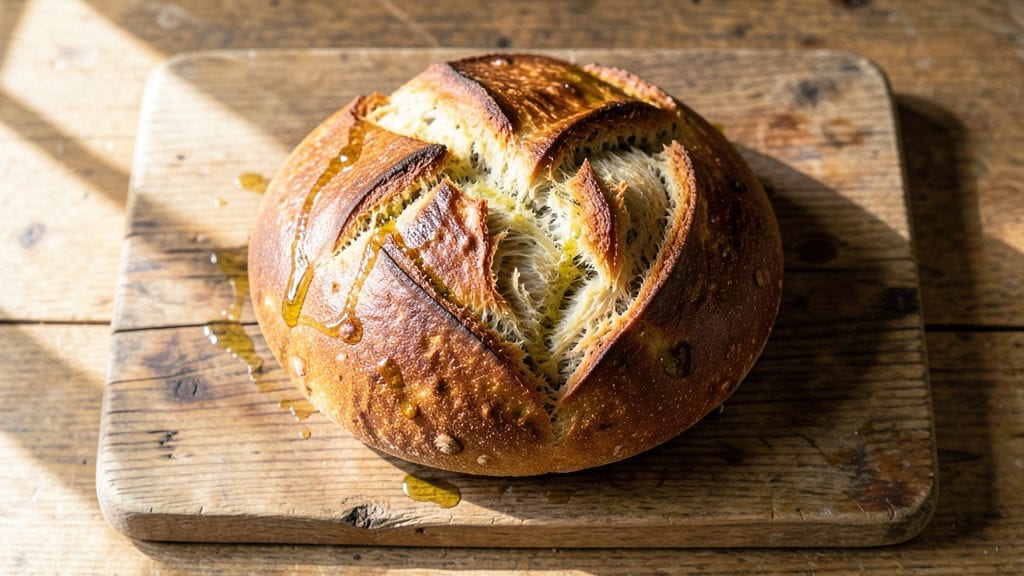
This whole wheat einkorn bread recipe brings together ancient grains and modern baking techniques to create a loaf that’s both nutritious and irresistibly crispy on the outside with a tender crumb inside.
The secret lies in the einkorn flour’s natural sweetness and high protein content, which develops a perfect structure without needing excessive kneading. I’ve perfected this recipe over years of testing, ensuring it delivers restaurant-quality results in your own kitchen.
The beauty of einkorn lies in its simplicity—just five core ingredients transform into a loaf with a rustic, artisanal feel. Unlike modern wheat, einkorn ferments faster and develops deeper flavor, requiring only a 2-hour total time from start to finish.
The dough’s open crumb structure and subtle sweetness make it ideal for sandwiches, toast, or serving alongside soups. Every slice tells a story of ancient grains meeting modern precision.
What sets this bread apart is its crusty exterior that shatters slightly when broken, revealing a soft, airy interior with just the right amount of chew. The fermentation process enhances flavor complexity, while the high-protein einkorn creates a satisfying texture that’s both hearty and delicate.
This isn’t just whole wheat—it’s a loaf that tastes like a cross between a sourdough and a rustic Italian pan loaf, all while being packed with nutrients.
Whether you’re a home baker looking to elevate your skills or someone curious about ancient grains, this recipe delivers professional results with minimal effort. The key steps—proper hydration, controlled fermentation, and precise baking—are all explained in detail to ensure your first attempt is flawless.
Let’s get started on creating bread that’s as rewarding to make as it is to eat.
Ingredients for whole wheat einkorn bread
Five core ingredients transform ancient einkorn into restaurant-quality crusty perfection with tender interior.
| Ingredient | Amount | Notes |
|---|---|---|
| Einkorn Flour 🌾 | 3 ½ cups | High-protein, stone-ground preferred |
| Active Dry Yeast 🍞 | ¼ oz | Fresh yeast at half the amount |
| Granulated Sugar 🍚 | ¼ cup | Organic preferred for purity |
| Diamond Crystal Kosher Salt 🧂 | 1 ½ tsp | Fine grain for even distribution |
| Extra-Virgin Olive Oil 🫒 | ¼ cup | Cold-pressed for optimal flavor |
| Warm Water 💧 | 1 ¼ cups | 105-110°F for ideal yeast activation |
| Cornmeal 🌽 | ¼ cup | For dusting loaf pan |
| Ice Water ❄️ | ½ cup | For final dough hydration |
| Unbleached All-Purpose Flour 🌾 | ½ cup | For dough structure adjustment |
The einkorn flour is the heart of this recipe—Bob's Red Mill or King Arthur brands deliver consistent results. Look for stone-ground varieties with high protein content (around 16-18%) for optimal gluten development. Fresh yeast offers superior performance but requires precise measurement—0.25 oz is critical for proper fermentation. The olive oil should be cold-pressed and extra-virgin; California-based brands like Corto or Colavita excel in flavor complexity. For the sugar, organic varieties maintain purity while supporting yeast activation without overpowering the einkorn's natural sweetness. Temperature control is paramount: water should be between 105-110°F to activate yeast without killing it.
Substitutions require careful consideration to maintain structural integrity. If einkorn flour proves difficult to source, a 70/30 blend of whole wheat and bread flour approximates its protein content, though texture will differ slightly. For yeast, instant yeast at 0.2 oz works but requires no proofing time. The olive oil can be substituted with avocado oil for neutral flavor, though it lacks the fruity notes that complement einkorn. When adjusting hydration, remember einkorn absorbs 10-15% less water than modern wheat—reduce liquid by 0.25 cup if using all-purpose flour. The cornmeal can be omitted entirely if using a well-seasoned loaf pan, though it prevents sticking during baking.
Proper storage begins with immediate refrigeration after shaping. The dough can ferment 12-16 hoursbeeswax wrap and keep at room temperature for 3-4 days. Freeze fully cooled loaves by slicing and wrapping individual portions—3 months maximum for optimal texture. Reheat slices in a 350°F oven for 5-7 minutes to restore freshness. The crust's crispness peaks within the first 24 hours after baking, making it ideal for serving immediately or toasting the next day.
Why You'll Love This Recipe
- No-Knead Magic: I swear by this—just mix, wait, and bake. The einkorn flour does all the heavy lifting while you sip coffee, no stand mixer or fancy skills required.
- Nutty, Toasty Depth: That einkorn’s earthy sweetness paired with olive oil? It’s like sourdough’s sophisticated cousin—no bitterness, just rich, satisfying chew with every bite.
- Weeknight Workhorse: Toss it in a lunchbox, tear it for soup, or use it to soak up marinara. Honestly, I make a loaf every Sunday just because it’s that reliable.
- Budget-Friendly Staple: A single batch feeds my family for days, and einkorn’s higher protein means fewer slices per meal. Plus, kosher salt and olive oil stretch further than you’d think.
Step-by-step instructions for whole wheat einkorn bread
This method delivers a rustic, artisanal crust with an open crumb—exactly what modern bakers crave from ancient grains.
Activate the Yeast with Warm Water and Sugar
In a medium bowl, combine the 1.25 cups warm water (between 105-110°F) with the 0.25 cup granulated sugar and 0.25 oz active dry yeast. Let this mixture sit for 5-7 minutes until it becomes frothy and bubbles vigorously at the surface. This activation ensures your yeast is alive and ready to work.
I always test the water temperature first with my finger—it should feel warm but not hot. If the mixture doesn't bubble within 10 minutes, your yeast may be inactive, and you'll need to start fresh. The sugar here isn't for sweetness but to provide food for the yeast to multiply quickly.
Mix the Dough with Einkorn and Hydration Adjustments
In a large stand mixer fitted with the dough hook attachment, combine the 3.5 cups einkorn flour with the 1.5 tsp diamond crystal kosher salt. Add the yeast mixture and 0.25 cup extra-virgin olive oil to the bowl. Mix on low speed for 2 minutes until a shaggy dough begins to form.
With the mixer running on medium speed, gradually add the 0.5 cup ice water—this final hydration step helps develop gluten while keeping the dough from becoming too sticky. Mix for an additional 8-10 minutes until the dough pulls away from the sides of the bowl and forms a smooth, elastic ball. The dough should feel slightly tacky but not wet.
Knead and Develop Gluten for Structure
Continue kneading the dough for 4-5 minutes by hand or 6-8 minutes with the mixer until it passes the windowpane test. To test, stretch a small piece of dough—it should be thin enough to see light through it without tearing. This gluten development is crucial for that perfect oven spring and chewy texture.
If the dough feels too dry, add 1 tablespoon of ice water at a time until it reaches the ideal consistency. If it's too sticky, add 1 tablespoon of einkorn flour to firm it up. The goal is a dough that's smooth, elastic, and just slightly tacky to the touch.
Bulk Ferment at Controlled Temperature
Shape the dough into a loose ball and place it in a lightly oiled bowl. Cover with a damp kitchen towel and let it rise in a warm place (75-80°F) for 1.5-2 hours, or until it has doubled in size. This bulk fermentation allows the yeast to work its magic, developing flavor and structure.
I like to perform two sets of stretch-and-folds during this time—after 30 minutes and again after 1 hour. To do this, wet your hands and gently press down on the dough, then stretch it upward while rotating the bowl. This technique strengthens the gluten network without overworking the dough.
Shape, Proof, and Bake for Crusty Perfection
Turn the dough out onto a lightly floured surface and shape it into a 9x5-inch loaf by folding the ends toward the center and sealing the seam. Place the shaped loaf seam-side down in a 9x5-inch loaf pan that has been dusted with 0.25 cup cornmeal. Cover with a towel and let it proof for 45-60 minutes until it has risen about 1 inch above the pan.
Preheat your oven to 375°F with a Dutch oven inside for 30 minutes. Remove the Dutch oven, place your loaf inside, and bake for 35-40 minutes until the internal temperature reaches 205-210°F and the crust is deep golden brown. For extra steam and a crispier crust, add 1 tablespoon of ice water to the bottom of the Dutch oven before baking.
Cool and Slice for Maximum Enjoyment
Remove the bread from the Dutch oven and transfer it to a wire rack to cool completely for at least 1 hour before slicing. This resting period allows the crumb to set properly, preventing a gummy texture. The bread should have a crisp, crackly crust with an open, airy crumb inside.
Slice the loaf with a serrated knife and serve warm or at room temperature. The flavor will continue to develop over the next 24 hours, making it even more delicious as it sits. Store any leftovers wrapped in a bread bag at room temperature for up to 3 days or freeze for longer storage.
Pro Tips For Making Whole Wheat Einkorn Bread
- Bloom Yeast in Warm Water: DESCRIPTION:
- Wet Your Hands First: DESCRIPTION:
- Skip the Over-Kneading: DESCRIPTION:
- Brush with Olive Oil: DESCRIPTION:
Pro cooking tips for this recipe
Einkorn's Unique Fermentation
Einkorn ferments faster than modern wheat due to its higher protein content, but it needs precise temperature control. Keep your bulk fermentation between 75-80°F—I use a proofing box or warm oven with the light on.
If your kitchen is cooler, extend fermentation to 2.5 hours for optimal flavor development. The dough should rise 50-75% during bulk fermentation before shaping. 🌡️
Dutch Oven Steam Secret
The Dutch oven creates steam that builds an incredible oven spring and crisp crust. Add 1 tablespoon ice water to the bottom before baking—this extra steam mimics a professional bakery's deck oven.
For even better results, preheat the Dutch oven with the lid on for 30 minutes before adding your loaf. This ensures maximum heat transfer and even baking.
Gluten Development Matters
Einkorn develops gluten differently than modern wheat—it needs 5-8 minutes of active kneading to create that perfect chewy texture. Test with the windowpane test: stretch a small piece until it's translucent.
If it tears easily, knead 2-3 minutes longer. Over-kneading can make the bread tough, so stop when it's just right—slightly tacky but elastic.
Hydration Balance
Einkorn absorbs 10-15% less water than modern wheat, so measure carefully. If your dough feels too dry after mixing, add 1 tablespoon ice water at a time. Too sticky?
Add 1 tablespoon einkorn flour. The ideal dough should pull away from the bowl but still be slightly tacky—this ensures proper gluten structure without being gummy. ⚡
Proofing Precision
Final proofing should take 45-60 minutes until the dough rises 1 inch above the pan. Tap the loaf gently—it should spring back slowly. If it springs back immediately, it needs more time.
If it doesn't spring back at all, it's overproofed. For cold fermentation, proof overnight in the fridge for deeper flavor, but bake immediately after removing from cold.
Crust Color Control
For a darker crust, bake 5 minutes longer or increase oven temp to 390°F for the last 10 minutes. For a lighter crust, reduce to 350°F after 20 minutes.
Brush with melted butter in the final 5 minutes for extra shine. The crust should be deep golden brown with visible cracks—this indicates proper baking and steam development.
Nutrition facts
Frequently asked questions
Why does einkorn bread taste different from regular whole wheat bread?
Einkorn has a naturally sweet, nutty flavor with less bitterness than modern wheat varieties. Its higher protein content (16-18%) creates a chewier texture while developing deeper complexity during fermentation. The ancient grain's lower gluten content also produces a more open crumb structure that's easier to digest.
Can I make this bread without a stand mixer?
Mix the dough by hand for 10-12 minutes until it passes the windowpane test. Use the "fold and press" technique: wet your hands, press down on the dough, then stretch upward while rotating the bowl. This mimics the kneading action and develops gluten effectively. Just be prepared for slightly more arm work.
What if my dough doesn't rise properly?
Check these three things first: yeast activity (should bubble within 5-7 minutes in warm water), ambient temperature (ideal is 75-80°F), and fermentation time (minimum 1.5 hours). If your kitchen is cold, extend bulk fermentation to 2.5 hours or use a proofing box. For future bakes, store yeast in the fridge and test its activity before starting.
How can I use this bread beyond sandwiches?
Try these creative uses: toast slices with olive oil and sea salt for a rustic bruschetta base, make croutons by cubing and baking until crisp, or use it for garlic bread by brushing with garlic-infused olive oil. The dense crumb also holds up well in bread pudding or French toast. The nutty flavor pairs beautifully with roasted vegetables and hearty soups too.
Is einkorn bread better for people with gluten sensitivities?
While einkorn contains gluten, its lower protein content and different gluten structure make it easier to digest for some people with mild gluten sensitivities. However, it's not gluten-free. For those with celiac disease, certified gluten-free flours or dedicated gluten-free recipes are the only safe options. Always consult with a healthcare provider before making dietary changes.