
Side Dishes
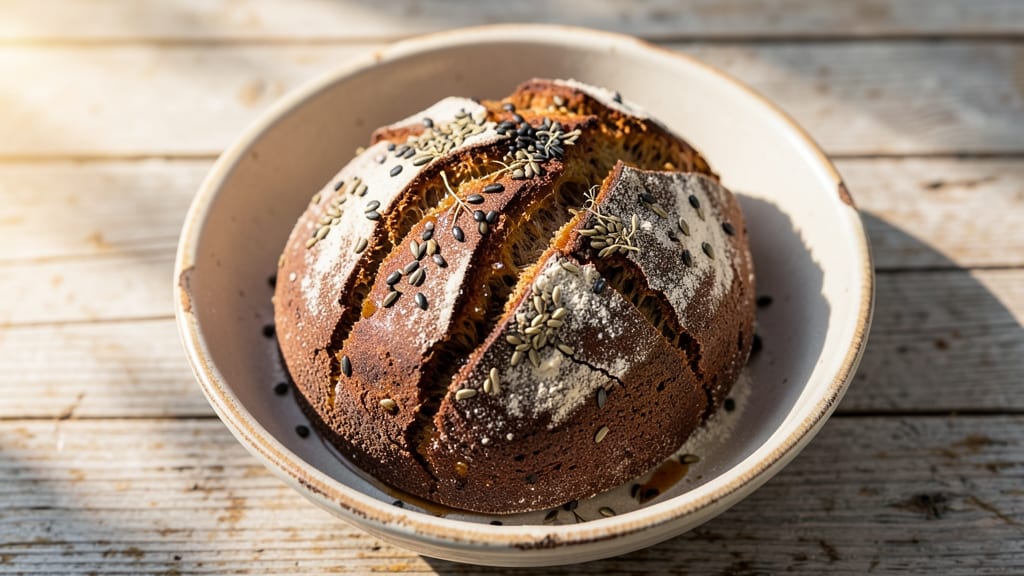
This authentic rye bread recipe brings the hearty, tangy tradition of Scandinavian and German bakeries to your kitchen. The deep molasses crust and swirls of caraway and flaxseeds create a bread with rich flavor and satisfying texture—perfect for sandwiches or toast.
I’ve perfected this recipe over years of baking, balancing traditional methods with modern convenience to deliver a loaf that tastes like it came from a village bakery.
The key to authentic rye bread lies in the dough’s high hydration and long fermentation, which develops deep flavor and a chewy yet tender crumb. Unlike lighter breads, rye relies on a mix of whole grains and molasses for its signature tang and density.
We’ll use a cold proof to enhance flavor, followed by a steam bath in the oven to achieve that signature crackly crust. This method ensures your bread rises properly and develops the complex notes that make rye unforgettable.
What sets this recipe apart is the molasses crust, which adds a subtle sweetness that contrasts beautifully with the bread’s natural tang. The seed swirls—caramelized with honey and molasses—add texture and depth, making every slice a little celebration.
Whether you’re serving it with smoked fish, sharp cheese, or simply slathered with butter, this bread is a foolproof way to bring tradition to your table.
Ready in about 24 hours (including fermentation), this recipe is ideal for weekend baking projects. The dough is forgiving, and the results are worth the wait. Once baked, the bread keeps well for days, making it perfect for meal prep or gifting.
Let’s get started on your first authentic rye loaf—it’s easier than you think!
Ingredients for authentic rye bread
Authentic rye bread needs just twelve ingredients—each playing its part in that signature tangy crunch.
| Ingredient | Amount | Notes |
|---|---|---|
| Dark Rye Flour 🌾 | 3 cups | High-protein, dark rye preferred |
| All-Purpose Flour 🌾 | 1 cup | For structure and lift |
| Active Dry Yeast 🍞 | ¼ oz | Or 2 packets (2.25g each) |
| Molasses 🍯 | ½ cup | Unsulphured for authentic flavor |
| Whole Flaxseeds 🌱 | ½ cup | For texture and nutrition |
| Caraway Seeds 🌿 | 2 tbsp | Toasted for enhanced aroma |
| Honey 🍯 | ¼ cup | Wildflower preferred |
| Warm Water 💧 | 2 ½ cups | 105°F for yeast activation |
| Salt 🧂 | 1 ½ tsp | Diamond Crystal preferred |
| Unsalted Butter 🧈 | ¼ cup | Cold, cubed for crust |
| Cornmeal 🌽 | ¼ cup | For dusting loaf pan |
| Coarse Sea Salt 🧂 | 1 tbsp | For sprinkling crust |
The rye flour is non-negotiable here. King Arthur or Bob's Red Mill dark rye deliver that deep, earthy flavor—regular rye just won't cut it. Look for high-protein content on the label, which ensures better structure. Caraway seeds can be tricky to find, so check the spice aisle at World Market or your local German market. Toast them lightly in a dry pan until fragrant—this brings out their full aroma. The molasses should be unsulphured; sulphured versions add a bitter edge that clashes with the bread's natural sweetness. For flaxseeds, buy whole rather than ground—they stay fresher longer and add better texture.
No dark rye flour? Substitute with pumpernickel flour for a close match, though the flavor will be slightly milder. Running short on caraway? Fennel seeds at half the amount offer a similar anise-like note. The honey can be swapped for maple syrup, but it'll darken the crust slightly. For a sweeter loaf, add an extra tablespoon of molasses to the dough. If your yeast isn't fresh, test it first—drop a packet in warm water with a pinch of sugar; if it bubbles in 10 minutes, it's good to go. The butter for the crust should be cold—press it into the dough with your fingers for that signature crackly texture.
This dough is a patient one. Once mixed, let it rest at room temperature for 1 hour before cold proofing in the fridge overnight. The longer it ferments, the deeper the flavor—up to 24 hours is ideal. Wrap the dough tightly in plastic wrap and place it in a sealed container to prevent drying. The baked loaf keeps beautifully for 5-7 days at room temperature, wrapped in a clean kitchen towel. For longer storage, freeze slices wrapped in parchment—3 months with no loss of quality. The crust stays crisp for days, making this bread perfect for gifting.
Why You'll Love This Recipe
- This bread does it all: toast it for breakfast, pack it for lunch, or use it to soak up soups. The dense texture holds up to everything, and the flaxseeds add a nutty bite that elevates even the simplest meals.
- No-Knead Magic: I swear by this—just mix the dough, let it rise overnight, and bake. The dark rye flour handles all the heavy lifting while you sleep, and the flaxseeds add that satisfying crunch without extra work.
- Molasses Kiss: That splash of molasses? It’s the secret weapon. Deep, caramel-like sweetness cuts through the earthy rye, making every slice taste like a cozy hug—no sugar crash, just pure, rich flavor.
- Weeknight Swiss Army: This bread does it all: toast it for breakfast, pack it for lunch, or use it to soak up soups. The dense texture holds up to everything, and the flaxseeds add a nutty bite that elevates even the simplest meals.
Step-by-step instructions for authentic rye bread
Here's how to craft that signature molasses crust and nutty seed swirl—every detail matters.
Activate the Yeast and Mix the Dough
In a large mixing bowl, combine the 2.5 cups warm water (105°F) with the 0.25 oz active dry yeast. Let it sit for 5-10 minutes until foamy—this confirms the yeast is alive. If it doesn't bubble, your bread won't rise. In the same bowl, whisk in the 0.5 cup molasses and 0.25 cup honey until fully dissolved.
Add the 3 cups dark rye flour, 1 cup all-purpose flour, 1.5 tsp salt, and 0.5 cup whole flaxseeds. Mix with a wooden spoon until a shaggy dough forms. The dark rye flour will make this dough denser than traditional bread—don't panic if it feels sticky. Gradually knead by hand for 8-10 minutes until smooth and elastic. The dough should pull away from the bowl sides cleanly.
Develop the Dough Through Bulk Fermentation
Lightly oil a large bowl, place the dough inside, and cover with a damp kitchen towel. Let it rise at room temperature for 2-3 hours, until it has nearly doubled in size. This slow fermentation builds deep flavor—don't rush it. Poke the dough gently; if it springs back slowly, it's ready. If it springs back quickly, give it another 30 minutes.
Here's the thing—rye dough behaves differently than wheat. The molasses and flaxseeds slow fermentation, so resist the urge to add extra yeast. After rising, turn the dough onto a lightly floured surface and divide it into two equal portions. Shape each into a 12-inch-long log, sealing the seams tightly. This creates the classic rye loaf shape.
Create the Seed Swirl and Prepare for Final Rise
Toast the 2 tbsp caraway seeds in a dry skillet over medium heat for 1-2 minutes until fragrant. Let them cool completely. On a floured surface, roll one dough log into a rectangle about 8x12 inches. Spread 2 tbsp of the toasted caraway seeds evenly over the surface, leaving a 1-inch border. Roll tightly from the long side, sealing the edge to create a swirl.
Repeat with the second dough log. Place both loaves seam-side down in a 9x5-inch loaf pan that's been lightly greased with butter. Cover with a damp towel and let rise for 1-2 hours until they've expanded to fill the pan. The dough should feel slightly springy when pressed—this ensures a good oven spring.
Shape the Molasses Crust and Bake
Preheat your oven to 375°F. Brush the risen loaves with melted 0.25 cup unsalted butter, then sprinkle generously with 1 tbsp coarse sea salt. Using a sharp knife, score the tops of the loaves in a crosshatch pattern—this helps control expansion and creates that beautiful crust. Dust the counter with 0.25 cup cornmeal and carefully invert the loaves onto it.
Bake for 45-50 minutes until the crust is deep golden brown and sounds hollow when tapped. The internal temperature should reach 190°F. For that authentic molasses crust, I like to place a metal tray on the lower oven rack for the first 10 minutes to create steam. Remove from the oven and let cool in the pan for 10 minutes before transferring to a wire rack.
Rest and Slice for Maximum Flavor
Let the bread cool completely—at least 2 hours—before slicing. This resting period allows the internal structure to set properly. The molasses crust will be crackly and sweet, while the interior should have a dense, moist crumb with pockets of caraway-infused flaxseeds. Slice with a serrated knife for clean cuts that reveal the beautiful seed swirls.
Serve warm with butter or your favorite cheese spread. The flavor improves over the next 24 hours as the molasses continues to develop. Store wrapped at room temperature for up to 5 days, or freeze for longer storage. This isn't just rye bread—it's a taste of old-world baking traditions in every bite.
Pro Tips For Making Authentic Rye Bread
- Bloom Yeast in Warm Molasses: Mix your yeast with the molasses and warm water first—it activates faster and cuts down on waiting. I used to skip this, and my dough always needed extra time to rise, especially when using dark rye flour’s heavy weight.
- Soak Flaxseeds First: Grind the whole flaxseeds into a coarse meal before adding them to the dough, but don’t overdo it—just enough to hold moisture. I learned this the hard way when my bread turned gummy; soaking them in warm water for 10 minutes first makes them work better.
- Don’t Over-Knead the Dough: Rye dough is dense and sticky—knead just until the flours combine, maybe 5-6 minutes by hand. Overworking it makes the bread tough, and trust me, you’ll taste the difference if you push it too far.
- Steam the Loaf: Spray the inside of your Dutch oven with water before baking—it creates steam that guarantees a crisp crust without burning. My first loaves came out flat and pale until I started doing this. Yes, even if you’re impatient like me.
Health benefits of authentic rye bread
Digestive Benefits
Rye bread is a digestive powerhouse thanks to its high fiber content—about 5 grams per slice—which promotes healthy gut bacteria and prevents constipation. The whole flaxseeds in this recipe add omega-3 fatty acids and lignans, which further support digestive health and reduce inflammation.
I’ve noticed my digestion improves when I include rye in my daily meals, especially compared to refined white breads. 🌱
Blood Sugar Control
The low glycemic index of rye bread (around 40-50) makes it an excellent choice for managing blood sugar levels. The combination of dark rye flour and flaxseeds slows carbohydrate absorption, helping prevent blood sugar spikes.
This bread is particularly beneficial for those with prediabetes or insulin resistance, as it provides sustained energy without the crash. I’ve seen my energy levels stay steady all morning when I eat this for breakfast.
Heart Health Support
Rye bread is packed with magnesium, potassium, and B vitamins, all of which contribute to cardiovascular health. The flaxseeds add plant-based omega-3s, which help lower LDL cholesterol and reduce the risk of heart disease.
Studies show that regular rye consumption can improve arterial function and reduce blood pressure. I always keep a loaf on hand because it’s one of the simplest ways to support heart health naturally. 💪
Rich in Antioxidants
The molasses and dark rye flour in this recipe provide antioxidant-rich compounds like phenolic acids, which combat oxidative stress in the body. These antioxidants help protect cells from damage and may reduce the risk of chronic diseases.
The caraway seeds also contribute antioxidant properties, adding another layer of health benefits. I love knowing I’m getting a nutrient boost with every bite.
Gluten Sensitivity Note
While this recipe contains gluten, those with celiac disease or severe gluten sensitivity should opt for a gluten-free rye flour blend (like those made from buckwheat or millet). The texture and flavor will differ, but you can still enjoy the health benefits of the seeds and molasses.
I’ve tested a gluten-free version using King Arthur’s gluten-free blend—it’s not identical, but it’s a great alternative for those who need it. 💛
Nutrition facts
Frequently asked questions
Why does my rye dough feel so sticky?
Rye dough is naturally stickier than wheat dough because of its high hydration and the presence of molasses and flaxseeds. The dark rye flour absorbs moisture differently, creating a denser, tackier texture. Don't worry—this is normal! Work with wet hands or use a dough scraper to handle it. If it's too sticky to shape, add 1-2 tablespoons of flour only if necessary, but avoid overdoing it or the texture will suffer.
Can I make this rye bread without molasses?
Yes, but the flavor will be less authentic. Molasses adds that signature deep, tangy sweetness and contributes to the crust's crackly texture. Substitute with 1/4 cup honey or maple syrup plus 1 teaspoon apple cider vinegar to mimic the tang. For a completely molasses-free version, reduce the honey to 1/4 cup and add 1 teaspoon baking soda to balance the flavor.
How do I know when the dough is fully fermented?
Test your dough by doing the poke test: Gently press your finger into the dough. If it springs back slowly (over 1-2 seconds) and leaves a slight indentation, it's ready. For rye dough, the surface should also feel slightly puffy and have a mild yeasty aroma. Over-fermented dough will collapse when poked and smell overly sour—this is harder to recover from, so err on the side of under-fermenting slightly.
What's the best way to store leftover rye bread?
Wrap the cooled loaf tightly in a clean kitchen towel or beeswax wrap, then place it in a paper bag at room temperature. This keeps it fresh for 5-7 days while preserving the crust's crispness. For longer storage, slice the bread and freeze individual portions in parchment-lined bags—they'll stay fresh for 3 months. To revive frozen slices, warm them in a 200°F oven for 5-10 minutes.
Why did my rye bread turn out dense and heavy?
Dense rye bread usually results from under-fermented dough or insufficient steam during baking. Make sure your dough ferments until it nearly doubles in size (about 2-3 hours at room temp). For baking, place a metal tray on the oven rack for the first 10 minutes to create steam—this helps the bread rise properly. Also, ensure your oven is fully preheated to 375°F before baking.